
DEPLOY CS-6
N-STRIKE
 This may come as a bit of a surprise to you but I love Nerf blasters. Shocking, I know. As such, I like to keep up with the Nerf community of fans, while perhaps not in person, but at least for news and updates. If I have one problem with the Nerf community (sweeping generalization) it’s the seemingly arbitrary hatred most members have for certain blasters. If you read my review of the Crossbolt, you probably picked up on some of that. This week, I’ll be looking at another widely hated blaster, the Deploy CS-6.
THE BLASTER ITSELF
 The Deploy CS-6 was released in 2010 in the N-Strike line, not Elite, just regular. As with most clip-system blasters of that era, the internals are largely identical from one to the next. The Deploy’s selling point was its unique collapsible design that allowed it to be stored or carried in its more compact “flashlight mode,” a design choice that I suspect was made in response to the growing hype surrounding the real world firearm, the FMG9 from Magpul. In flashlight mode, there are only 2 controls. The first is the on/off switch for the single tiny red LED which comprises the flashlight portion of the blaster. The second control is the deploy button on the top side of the carry handle. This is where it gets interesting. Pressing the button causes the flashlight/magazine well portion of the blaster to swing down to the left, and the stock portion to shoot backward, exposing the grip and trigger. This was very exciting for me the first time I saw it because, at the time, I was deeply invested in the game Mass Effect which features, among many other things, folding/collapsible guns. Also, things that fold up are just
  cool. That’s a fact. It’s clear that the design of the Deploy was intended to be compact so some dimensions like the length of the stock feel a little small, but still perfectly usable. The sideways-facing magazine is a little finicky and not quite as smooth to operate as the Raider CS-35 but it just takes a little practice. The blaster can also still be used with the magazine well facing up although this does block the sights. I only have 2 real complaints about the function of the blaster, the first being that said magazine well does not lock into the downward position, so running around with a big old drum magazine sticking out the side means it’s going to bounce quite a bit. Second is just a problem inherent with the material, it creaks an awful lot, but with that many external moving parts, it’s not really surprising and is certainly not the deal breaker I’ve heard it described as. For its time, the Deploy’s performance was respectable. Nowadays, particularly since the launch of the Elite series, it doesn’t quite hold up. Darts hit moderately hard at close range but quickly lose momentum and end up diving into the ground. This probably isn’t helped
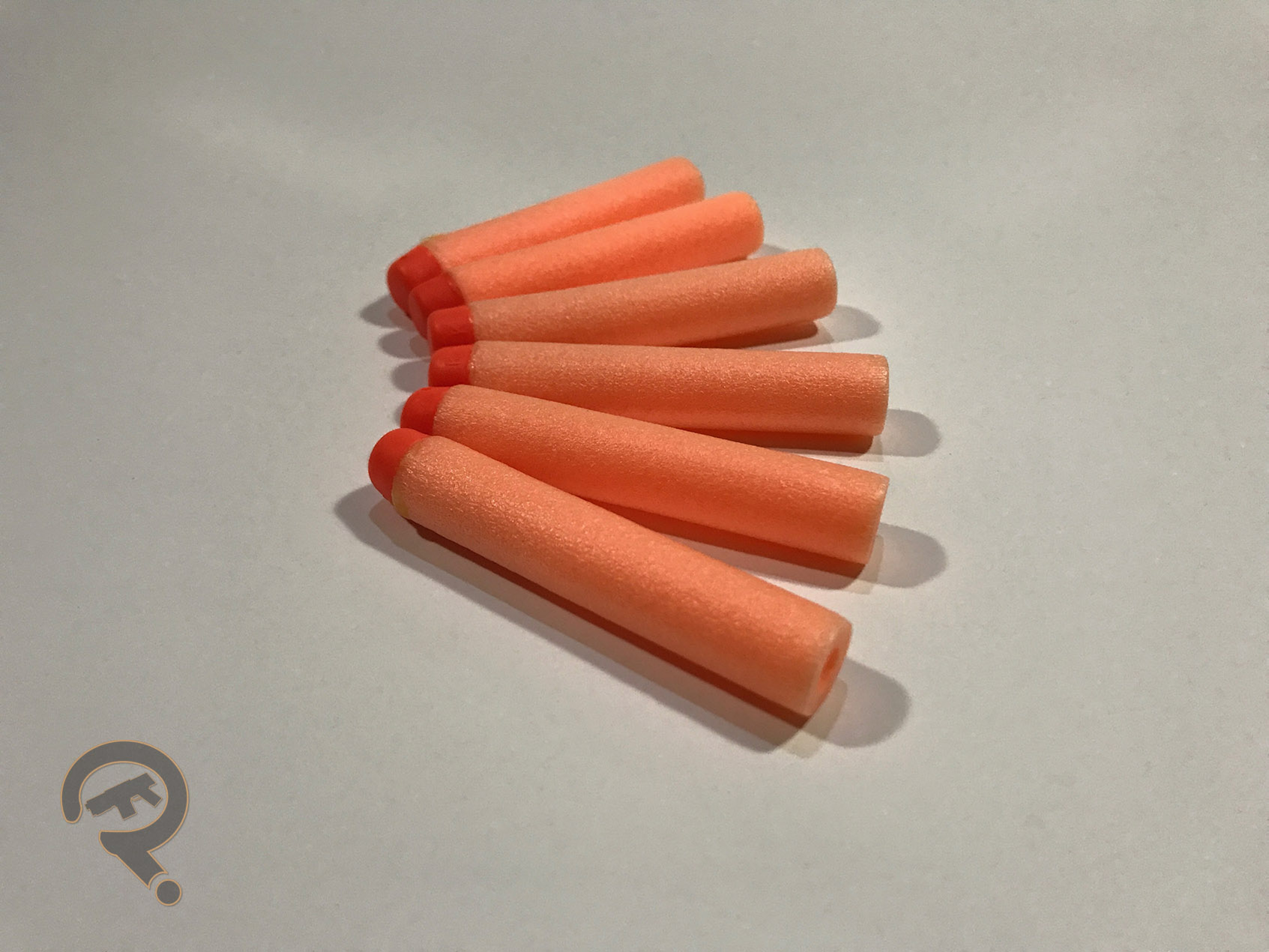 by the ammo as clip-system blasters were still using Streamline darts. Take all my complaints about Elite darts and cut the range back to a third and that’s Streamlines. To be honest, I doubt you’d get much of a response from busting into your siblings room and blasting away with this. It’s definitely an indoor blaster. The Deploy comes packaged with a 6-round magazine, 6 Streamline darts, and a sling.
THE ME HALF OF THE EQUATION
The Deploy has its problems, that’s true. But none of these are enough to make me say it’s a bad blaster. In fact, back in my collegiate Humans vs Zombies days, this blaster saved my figurative life a number of times thanks to it’s folding design which meant it could be tucked into a backpack with relative ease. So no, I don’t agree with the Nerf Community on this one. If you really don’t like the Deploy, send it to me, don’t chop it up with an axe and blow up the remains.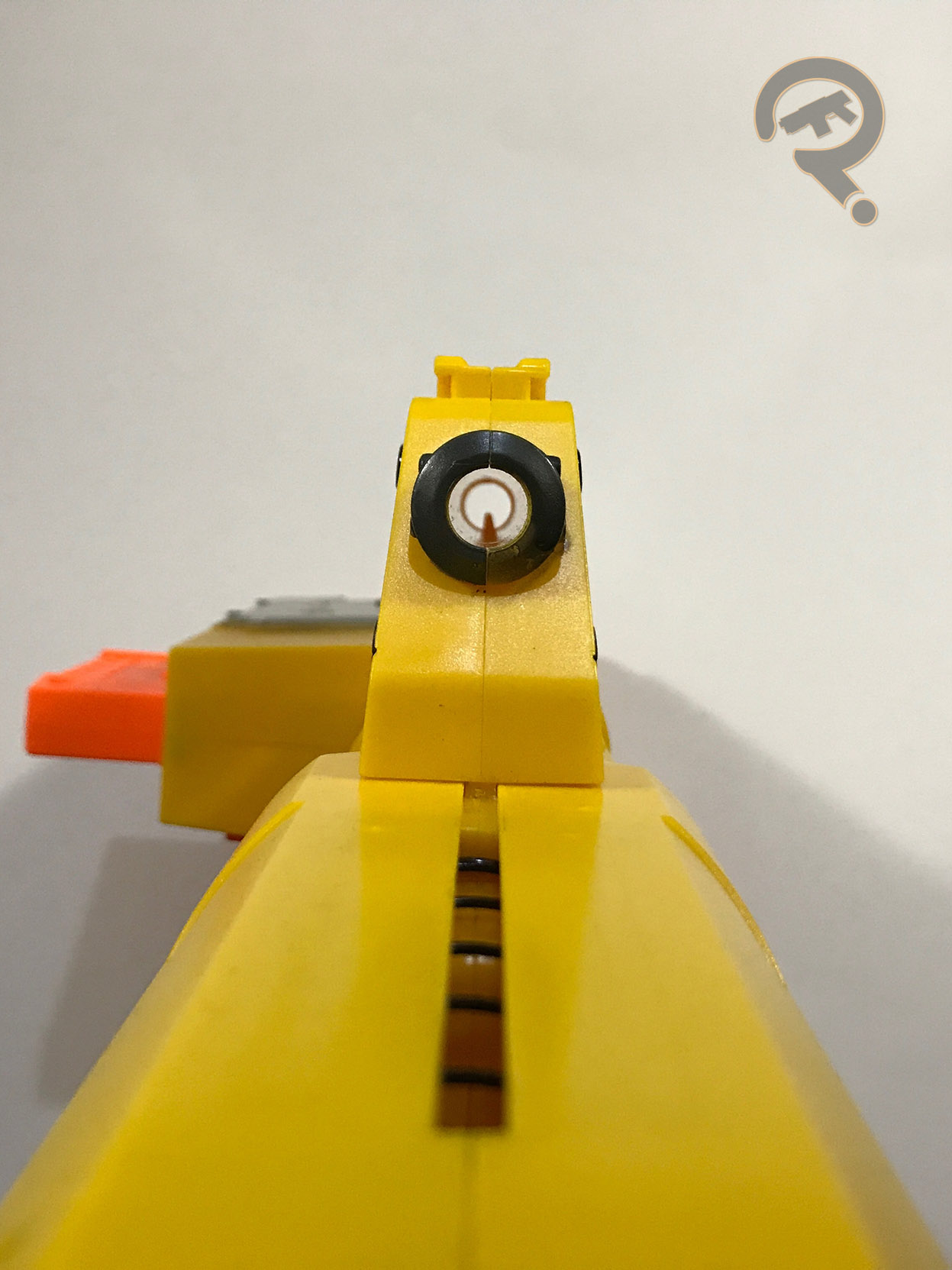

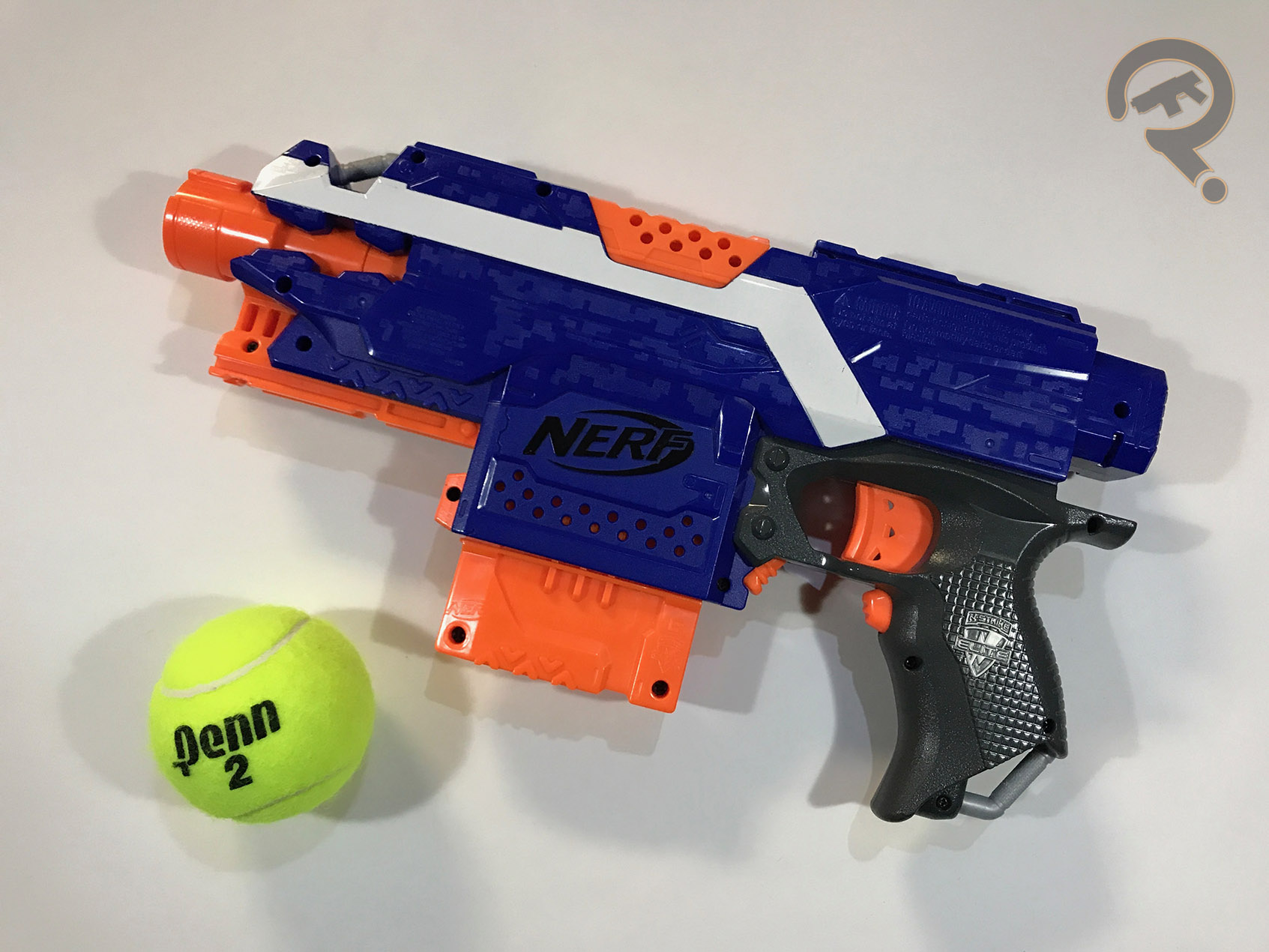


 The Figure In Question