#0728: Atom

ATOM

DC UNIVERSE CLASSICS

AtomGADCUC1

Sometimes, there are really, really cool figures of characters you like, that are held back by one tiny but hard to overlook flaw. Today, I’ll be looking at such a figure. I’ll get to the “why” of it in just a bit.

So, in the second season premier for The Flash, Barry fought a guy called Atom Smasher, aka Albert Rothstein. Rothstein comes from Earth 2, which was the home of the original 40s DC Comics characters. He’s also the godson of the original Atom, aka Al Pratt, who is the focus of today’s review. Unlike the later versions of Atom, who possessed the ability to shrink down to sub-atomic size (not unlike Marvel’s Ant-Man), Al was just a kind of short guy who was a good fighter. He was eventually given an assortment of powers after the fact, but those were kind of a retcon. Amongst other things, he served as a prototype for Justice Guild member Tom Turbine, from the Justice League episode “Legends.” And, he got a figure as part of one of the last series of DC Universe Classics. Yay for him!

THE FIGURE ITSELF
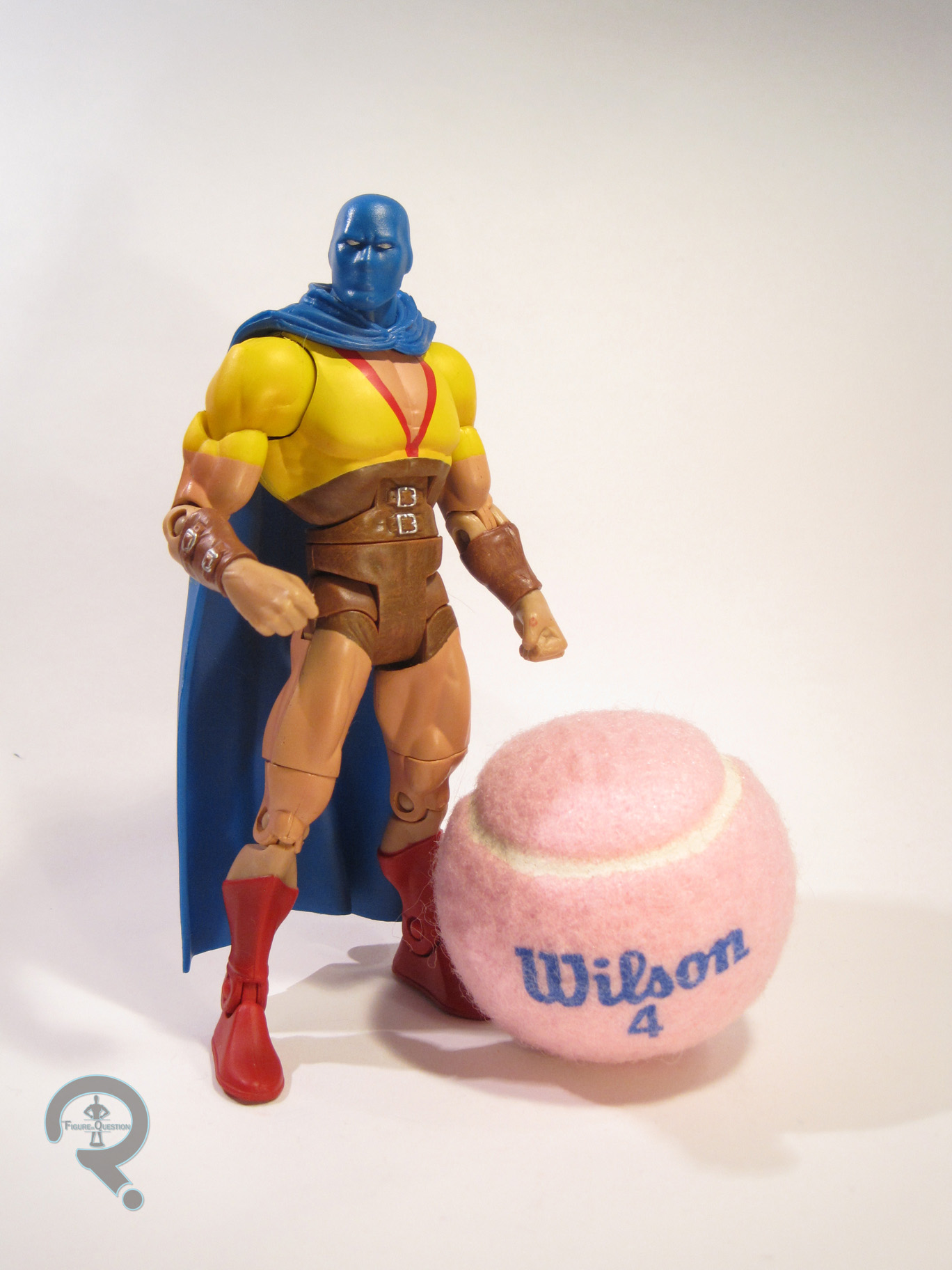
AtomGADCUC2Atom was released as part of Series 19 of Mattel’s DC Universe Classics, which was a whole series themed around the Justice Society of America, of which ol’ Al here was a member. Atom is presented here in his original costume from the 40s, which is definitely his more definitive of his two main looks. The figure stands about 6 ¼ inches tall and has 23 points of articulation. See that height? Remember when I mentioned he was a short guy? Yeah, Al’s listed height is 5’ 1”, which, in DCUC terms, should make this guy about 5 ½ inches tall. So, he’s about an inch too tall. This is because Atom is built on the larger male body (the same one used on the water-camo Aquaman from Series 7). Proportionally, it’s the best body Mattel had on hand; Al’s a pretty stacked guy; but it’s just too tall. It’s kind of a no-win scenario. A character like Al isn’t really privy to an all-new body sculpt, especially in a buck-based line like DCUC, so Mattel had to make due. Moving away from the size thing, Atom has a brand new head, forearms, abdomen, and shins. These are all nicely sculpted parts, and the buckles on the arms and abdomen are an especially nice touch, since they could have easily been painted on. The shins are a little bit shorter than previous pieces, so Mattel was clearly trying a little, but it’s not really a very noticeable difference. The cape is from Series 12’s Dr. Mid-Nite figure; it’s not a perfect match, but it’s close enough, and it’s a well-sculpted piece, so I can’t complain. For some reason, it sits out a bit from his back, which is a tad frustrating.  The paintwork on Atom is some of the best from this line. Some of the line work is fuzzy, but it’s pretty clean overall. The color work is really nice; everything is bold and vibrant, and he really just pops. The brown parts are meant to be leather, and so they’ve been given a slightly darker brown dry brushing, which is actually really effective in conveying the different texturing. Atom didn’t include any of his own accessories, but he did include the head and pelvis of STRIPE, the Collect-N-Connect figure for this series.

THE ME HALF OF THE EQUATION

The golden age Atom has long been one of my favorite JSA members. I was always a bit disappointed by DC Direct’s less than stellar attempt at the character, so I was intrigued by the DC Universe Classics version. I ended up finding this guy not long after he was released, while on a run to a nearby Target with my Dad. His size put me off at first, but the realization that this was probably the best version of the character I’d ever see in plastic, I went for it. I’m really happy I decided to get him, because, size issues aside, he’s actually a really nice figure.

#0388: Alan Scott & Solomon Grundy

ALAN SCOTT & SOLOMON GRUNDY

DC POCKET HEROES

Before Minimates made it onto the scene, minifigures hadn’t yet settled on being “block” figures. In 2002, DC Direct decided to do a line of smaller scale figures, which were inspired by Mego’s Pocket Super Heroes line of the 80s. Instead of dedicated character sculpts like the original figures, DC Direct opted for a basic body with add-on pieces, not unlike Minimates or LEGO Minifigures (or Kubricks, a contemporary of DC Pocket Heroes.) The line never really hit it big, but it was successful enough to get seven assortments of two-packs and four larger boxed sets. It covered characters from all over the DC Universe, but tended to focus more on “classic” characters and looks. Today, I’ll be taking a look at the line’s versions of Alan Scott, the Golden Age Green Lantern, and Solomon Grundy.

THE FIGURES THEMSELVES

Alan and Grundy were released in the third assortment of the first series of DC Pocket Heroes, released in December of 2002.

ALAN SCOTT

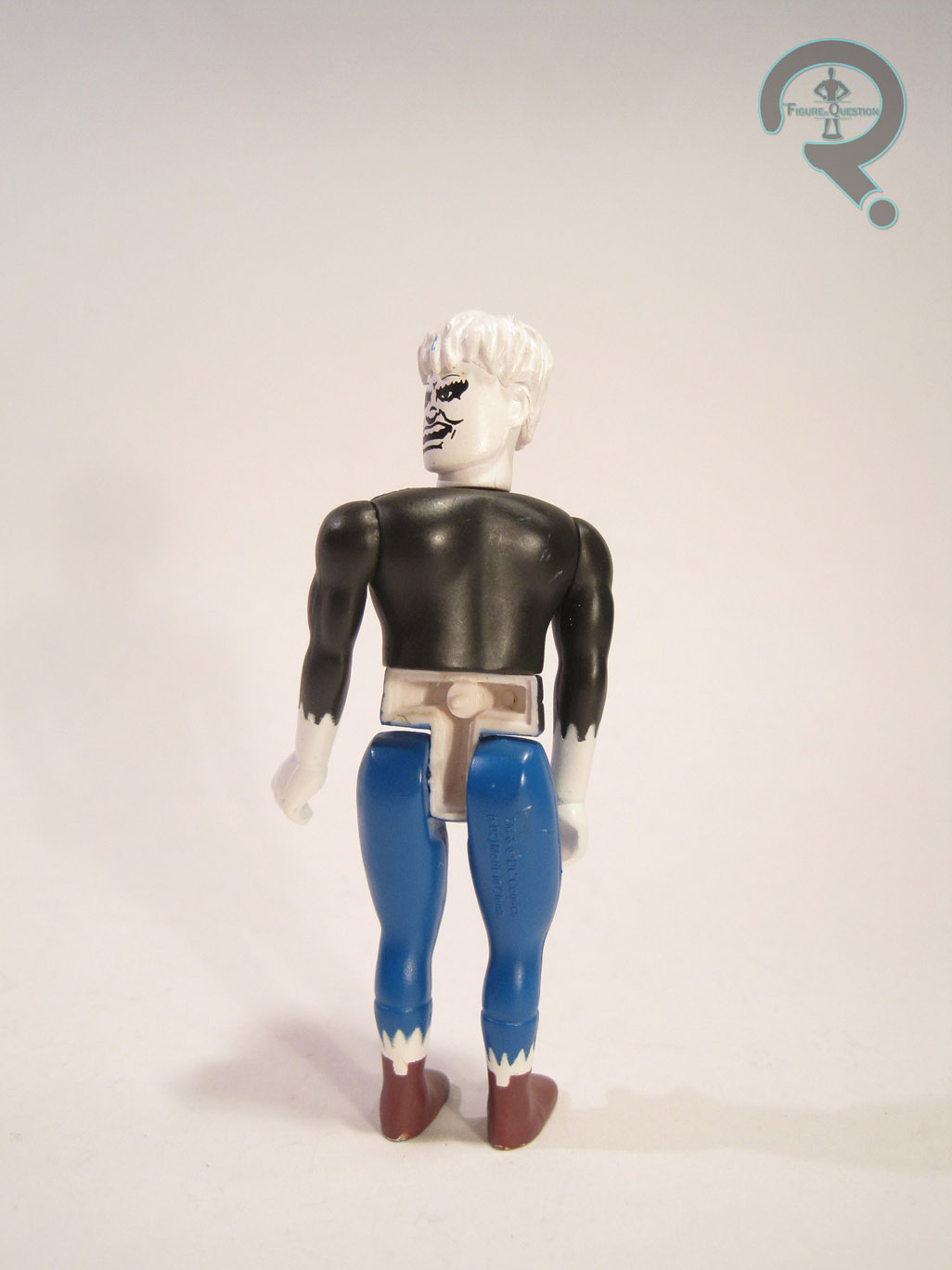
Alan Scott isn’t really anybody’s default Green Lantern, but he’s the original, making him very important. His figure is about 3 ½ inches tall and features 6 points of articulation. He’s based on Alan’s original appearance, back when he was THE Green Lantern. Admittedly, it’s a goofy design, and it doesn’t have the sleekness of the Silver Age design, but it’s not bad. He makes use of the standard Pocket Heroes body, with add-ons for the hair and cape/collar. Unlike Minimates, these pieces aren’t removable, making him a more traditional action figure. The hair and cape are both basic pieces for the line, but they suit the character well, so the re-use is certainly warranted. The base Pocket Heroes body is an interesting piece. It’s a lot clumsier in terms of design than other such bodies. It wasn’t as versatile as DC Direct wanted it to be. However, Alan is one of the characters that fits pretty well on it. The only real issue I see is that the sculpted boots don’t line up with Alan’s actual boots. I don’t know why they didn’t just leave the boots off the sculpt, but I guess that’s what they went with. The paint on Alan Scott is serviceable. It’s nothing amazing, and there are definitely some issues, especially on the color overlay of the boots (the green bleeds through the red, and the red bleeds through the yellow). He’s also got a gash of paint missing on his right eye. However, the paint is mostly bold and colorful, and it looks good for the character. Alan Scott included no accessories.

SOLOMON GRUNDY

Solomon Grundy. Born on a Monday. So, yeah… Grundy is technically a zombie, I guess, and he was a recurrent foe for a few of the Golden Age DC heroes. He had more than a few run-ins with Alan Scott, so this pairing is sensible. Grundy is about 3 ½ inches tall and he sports 6 points of articulation. He’s based on Grundy’s classic, more reserved design. Like Alan, he makes use of the standard Pocket Heroes body, with an add-on for his hair. The hair was new to this figure, though it would eventually see re-use on the line’s version of Bizarro. The body doesn’t work as well here as it did for Alan. The body is very clearly meant to be used for characters in tights, wearing boots. Grundy has neither of those, resulting in an odd looking figure. Obviously a generic suit body wouldn’t have really worked either, but this looks silly. The figure’s paint isn’t too bad, given that they had to work around the base body. Everything is relatively clean, and the detail lines are pretty sharp. The face is kind of gooney looking, though. An, to top it all off, my Grundy figure’s …uhh…backside… fell off right out of the package, which makes him look even sillier!

THE ME HALF OF THE EQUATION

I’ve always had a soft spot for the Golden Age Green Lantern. When I was in 2nd grade, I even dressed up as him for Halloween. So, it’s no surprise that I picked up his Pocket Heroes figure. He actually wasn’t as easy for me to get a hold of as some of the others, though. I actually ended up having to special order this set through a local comicbook store because it had sold out. All in all, Pocket Heroes are a sort of a goofy little set of figures. Some of them didn’t really work, but some of them really did. This set includes one of each.

#0209: Stargirl

STARGIRL

DC UNIVERSE CLASSICS

Stargirl

If you liked yesterday’s Aquaman review, you’ll be happy to know I’ll be taking a look at yet another DC Universe Classics figure today. This time around, it’s Stargirl, who is most commonly known for her association with the Justice Society of America. She’s one of DC’s better characters in recent years, and if you’d like to know more, you can check out her entry in the Backstories section, here.

THE FIGURE ITSELF

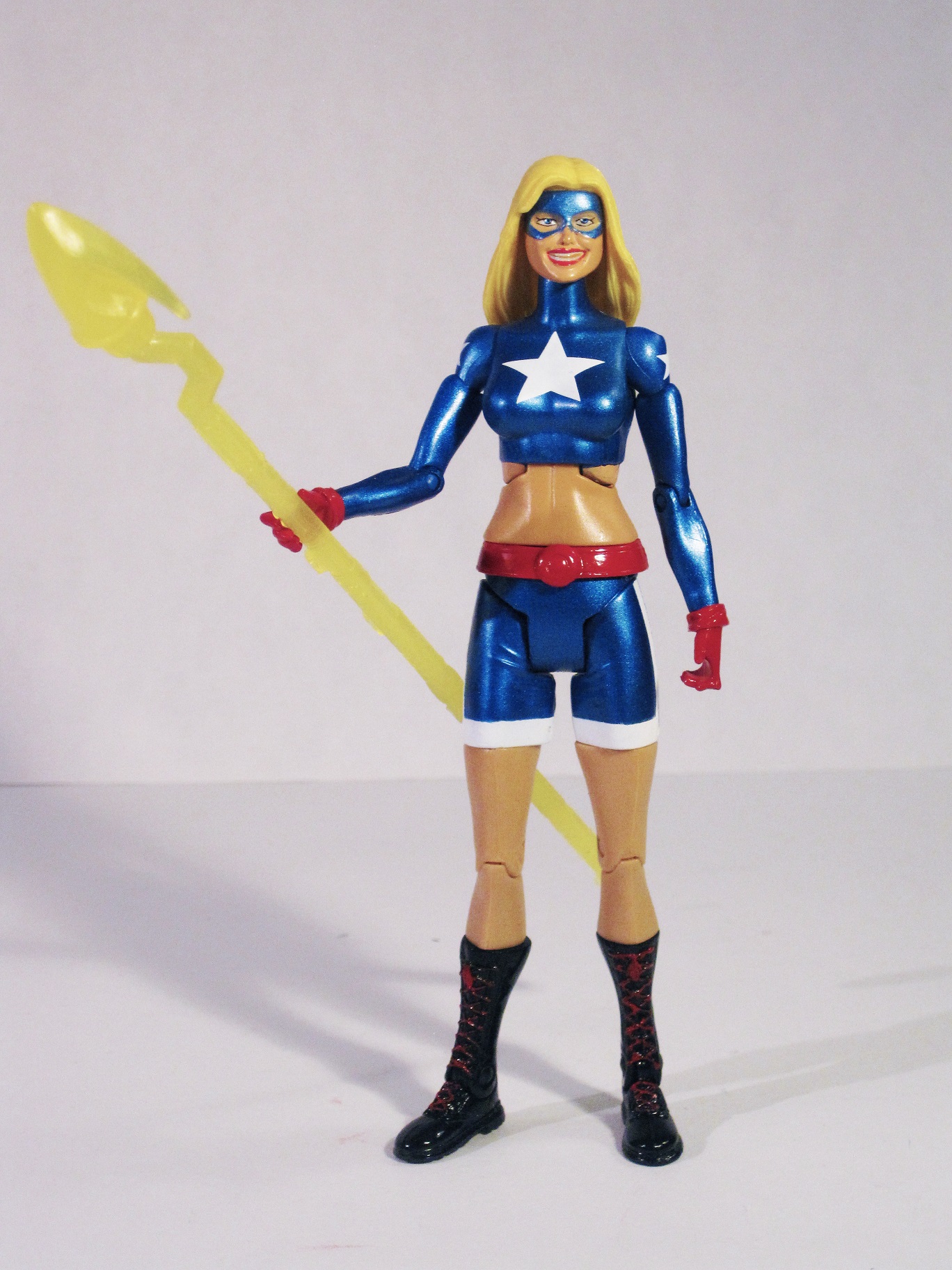
Stargirl was released in the 19th series of DC Universe Classics. The series was themed around the Justice Society, so her inclusion makes sense. Stargirl stands about 6 inches tall and features 25 points of articulation. Astoundingly for DCUC, Star Girl is almost an entirely unique sculpt. Only her forearms and boots are re-use, hailing from the 90s Supergirl from Mattel’s earlier line DC Super Heroes. The body sculpt is pretty decently done. She’s well-proportioned all around, and looks appropriate to the character. Sadly, the head doesn’t fair as well. They tried to give her a grinning expression, and she ends up looking a bit like the Joker. I’ll give them credit for trying something different, but it just didn’t work out. The paint work is all very clean, and I really like the metallic blue they used, but the head is once again hit the hardest. The paint on the teeth makes the sculpt look even worse, which is really sad. Stargirl includes her cosmic staff and a piece of series 19’s C-n-C, STRIPE. The staff is a nice piece, though it’s been molded in clear yellow for some reason, and she has a little bit of trouble holding it.

THE ME HALF OF THE EQUATION

Stargirl was picked up for me by my Dad. He found her in the store and knew I’d been looking for one, so he bought it for me. I know I kinda ragged on her, but I honestly don’t think Stargirl’s that bad a figure. Sure, the head sculpt leaves a bit to be desired, but I’ve seen worse and the rest of the figure is handled very well. Plus, it’s a character I like, so I’m just glad she got a figure at all.

#0029: Hawkman

HAWKMAN

DC REACTIVATED (DC DIRECT)

Okay, so today’s review marks a slight change in the format of the blog.  Up until now, I’ve been actually picking the figures I review, with a little bit of purpose, plus a slight bit of alphabetizing , with the occasional review of a figure I just got.  Well, here’s the thing:  That’s a lot of work.  And I’m lazy.  So, from here out, I’ve created a randomized list of all the stuff currently in my collection that I’ll be working from, with possibly a few deviations.  New stuff will still be filtered in when I get it, as that makes life easier.

On to today’s review!  We’re looking at Hawkman from DC Direct’s Reactivated! line.  This was a line where DC Direct would reuse older tooling with a few new pieces in order to create various classically styled versions of the characters.  The line was pretty well done, though it had the ability to be a bit hit and miss.

THE FIGURE ITSELF

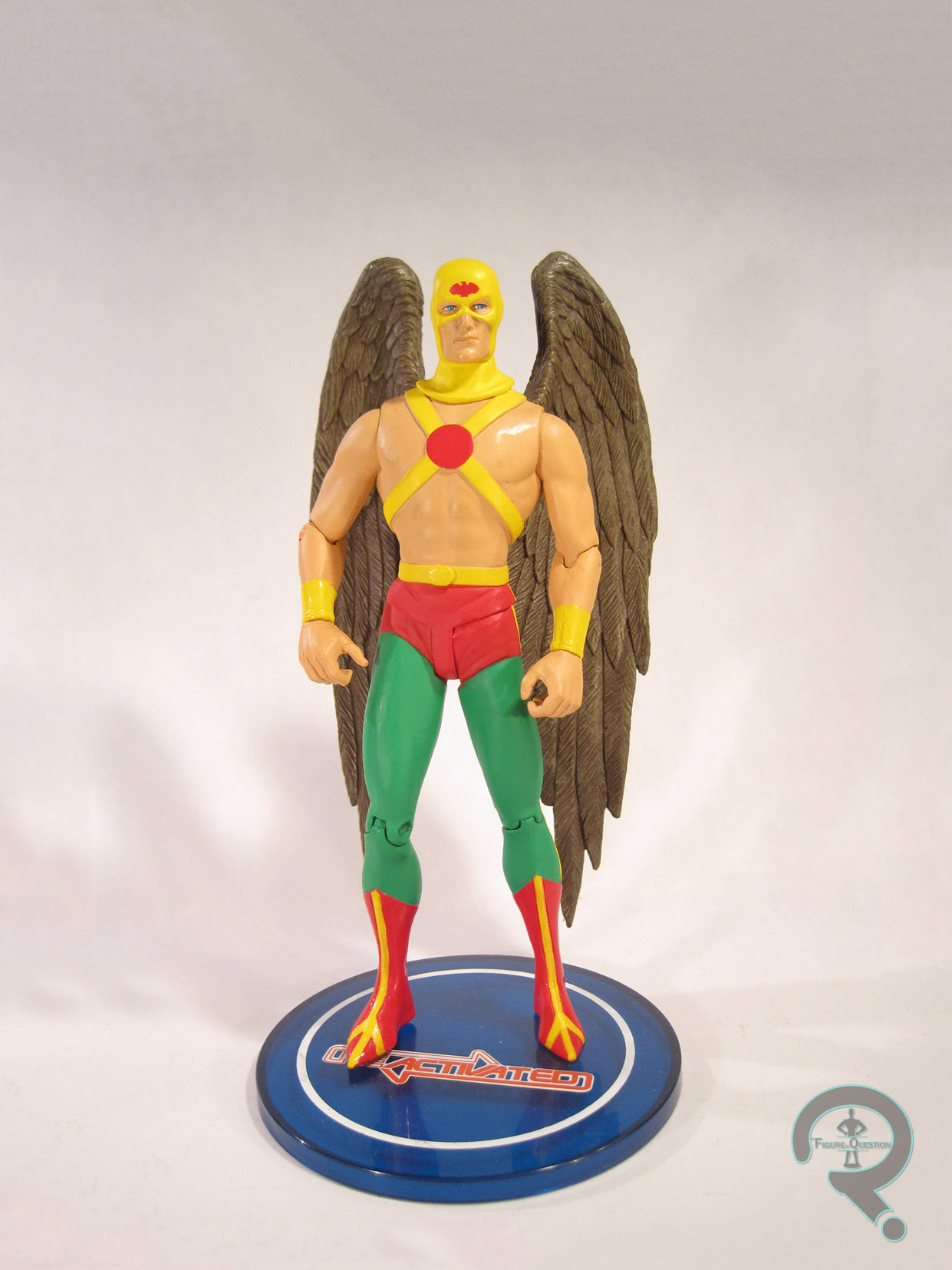
Hawkman was part of the fourth series of the Reactivated! line.  He’s depicted here in the costume his Earth 2 version* wore during the many Justice League /Justice Society team-ups of the 60s and 70s.  It’s pretty much just his basic costume, but instead of a helmet that resembled a hawk, he had a generic yellow cowl.  At least it had a hawk symbol on the forehead, I guess.  It’s far from his most memorable look, but it was a look he had for a good chunk of time.  Anyway, that’s the look this figure’s based on.  He stands about 6 ½ inches tall, which puts him in scale with some of DC Direct’s other lines.  (They weren’t really good at picking a consistent scale and sticking to it).  He’s got 13 points of articulation, and a basic translucent blue stand with the Reactivated! logo on it.  His sculpting is solid, with good proportions all around, and the paint is nice and clean.  The wings are nicely textured, and have a nice wash over them to bring out the details in the sculpt.

THE ME HALF OF THE EQUATION

I got this figure because I wanted a Hawkman for my JSA, and I was always really liked the old team-ups that this look was featured in.  That’s pretty much it.

*In the sixties, DC comics decided to relaunch a number of their characters, such as Green Lantern, Flash, and Hawkman with new takes on the characters.  When they decided to bring back the original versions of those characters, as well as explain why characters like Batman and Superman could be in their 30s in both the 40s and the 60s, DC decided to come up with the concept of the multiverse. They dubbed the main earth “Earth 1” and the older earth “Earth 2.”  This concept allowed them to tell stories on both earths without having to infringe upon the validity of the other.