
STRYFE
N-STRIKE ELITE
 If you’re a regular Nerf-er, you probably looked at the title of this weeks review and thought “what could this chuckle-head possibly have to say about the Stryfe that hasn’t already been said?” The answer is this: the Stryfe is vanilla ice cream. Feel free to quote me on that. Lost? That’s ok. Stick around and I’ll explain it to you.
THE BLASTER ITSELF
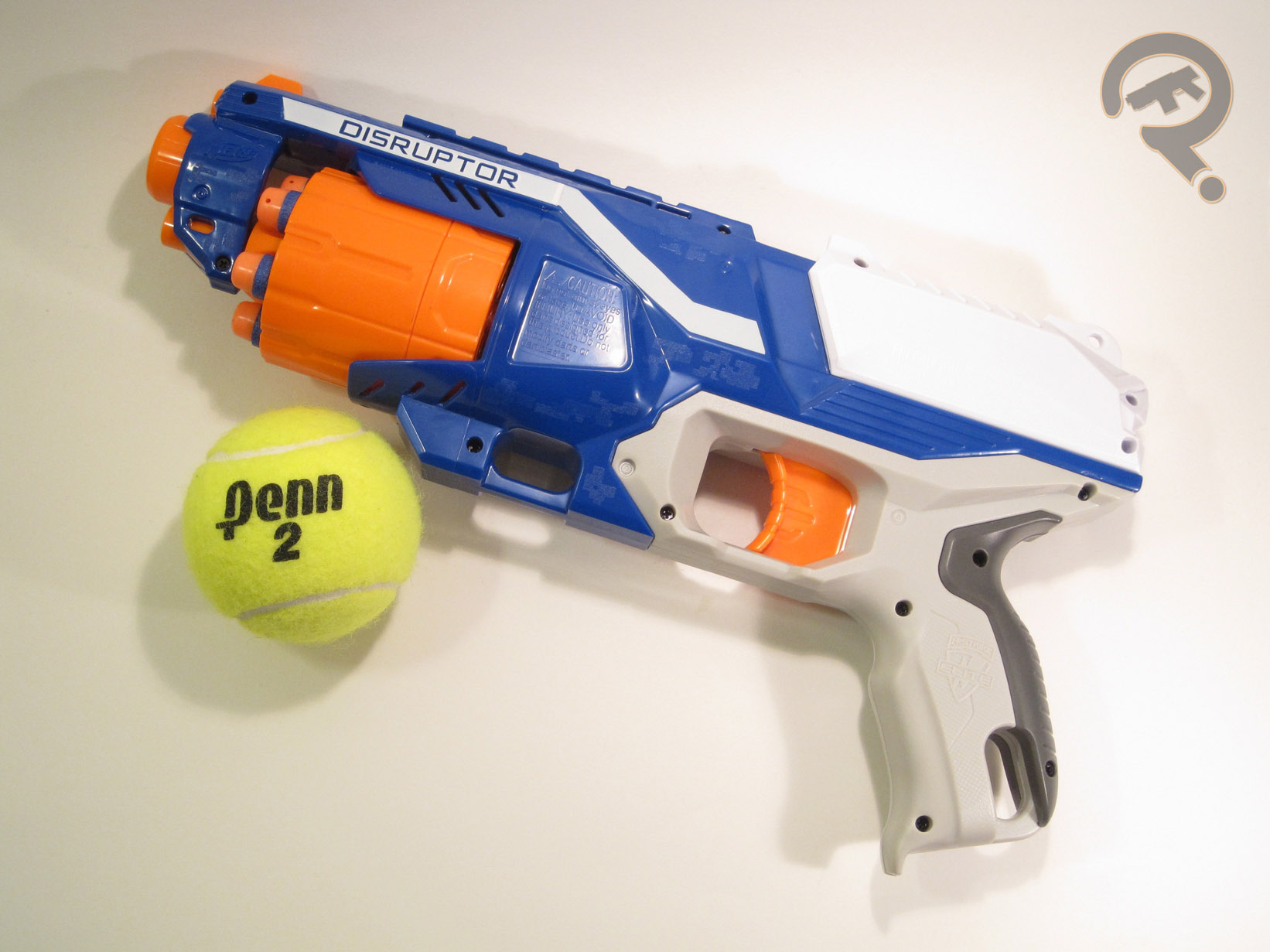
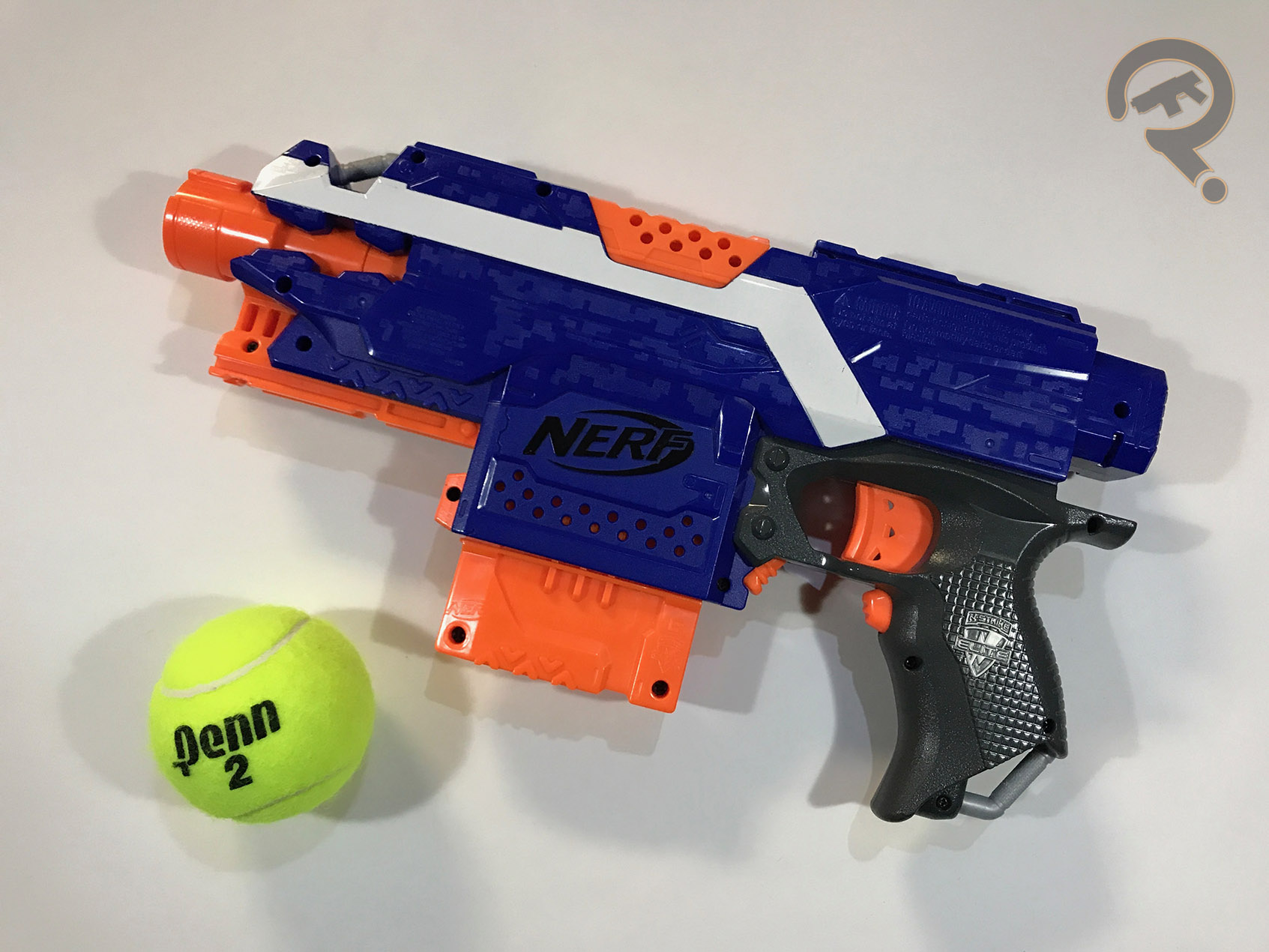 The Stryfe was released in 2013 as part of the N-Strike Elite series, which is Nerf’s core product line. It is an electronic, semi-automatic, magazine-fed, flywheel blaster, much like the Rayven before it. Really the only functional difference between the Stryfe and the Rayven is the position of the magazine. Now, allow me to explain the vanilla ice cream. The Stryfe is really nothing new (especially at time of writing this). It doesn’t offer any huge breakthroughs in dart blaster tech. Out of the box, it’s not a game-changer by any stretch of the imagination. In this sense, it’s kind of plain, vanilla, if you will. Now, this is not to say it’s bad either. Vanilla is still a tasty flavor, and as such, the Stryfe is a perfectly fine blaster. The grip is comfortable in-hand, magazines can be changed out quickly and easily and it only takes a couple seconds to rev up before firing. Once revved up, darts fly pretty well and hit with some considerable force, just so long as it has fresh batteries. Simple and mostly functional, but it doesn’t stand out in any real way, in fact, without some light modification, there’s a mechanical lock that prevents the trigger from being pulled if there isn’t a dart loaded and this lock doesn’t always work correctly. The result can be a fully loaded blaster
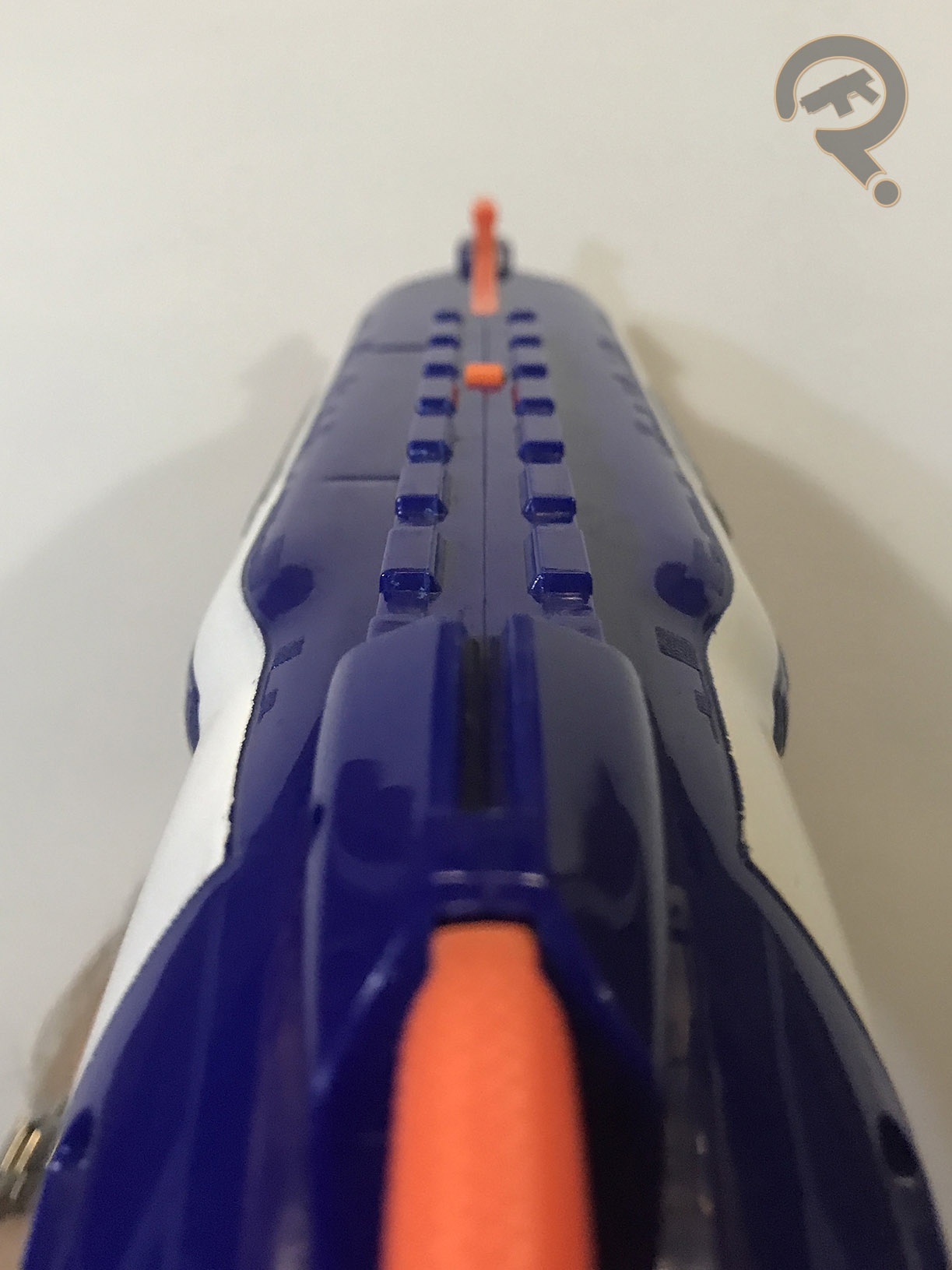
  that refuses to fire, but this starts to get into where the Stryfe really shines. I would say, tasty as it is, relatively few people eat vanilla ice cream entirely on its own. This applies to the Stryfe as well. While the blaster is serviceable out-of-the-box, the potential for modification is monumental and allows just about anyone to get in on it. The Stryfe features one attachment rail on the top of the blaster and one on the underside of the barrel. Additionally, the muzzle sports a barrel attachment lug, and there’s a connector to attach a stock as well. When it was released, there were a handful or so attachments that could be fitted to the Stryfe and that number has increased many fold thanks, in no small part, to the launch of the Modulus line. Throw some sprinkles on that ice cream. Of course, these are all external modifications only and don’t really add to the basic performance of the Stryfe, but what if you’re looking for a more serious upgrade? If you fancy yourself handy with a soldering iron, there’s no shortage of tutorials out there on how to rewire a Stryfe to increase voltage, swap out switches, use rechargeable LiPo batteries and so on. Now you’re looking at a decent little sundae with hot fudge or whipped cream or whatever, but there’s even more than that. Thanks to companies like Worker and a slew of others, there is a growing market for 3rd party modification kits, many of which are geared specifically for the Stryfe and they can get pretty in depth. If you’re looking to dress a Stryfe up like real-steel firearm or replace the flywheels to rifle the darts as you fire them, there are kits for just about anything. Now you’ve gone and stuck a brownie in with the ice cream. A regular, unmodified Stryfe requires 4 AA batteries and comes packaged with a 6-round magazine and 6 Elite darts.
THE ME HALF OF THE EQUATION
After all that talking-up of the potential modification options for the Stryfe, it may be a little surprising to know that I’ve only ever modified them to the point of removing that irritating lock. Maybe if I had more free time and money to spend on kits, I might have gotten more involved, but given the assortment of stuff available, I think it is more a question of when I get into more serious mods rather that if. And for the record, I totally eat vanilla by itself.



 The Figure In Question