The Blaster In Question #0037: First Order Stormtrooper Deluxe Blaster

BlasterInQuestion1

FIRST ORDER STROMTROOPER DELUXE BLASTER

STAR WARS
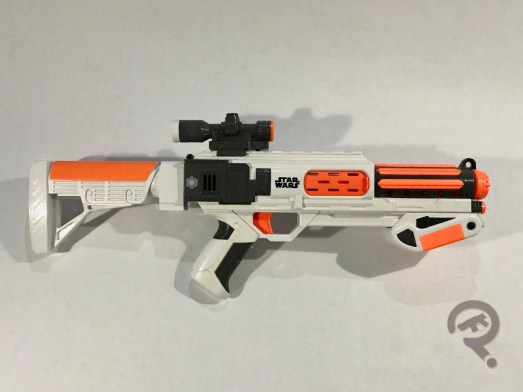
stormrifle1Look at this post.  Only Imperial Stormtroopers are so punctual.  Ok ok, technically this week’s blaster isn’t from the “empire” so to speak, but the First Order is basically the Empire 2.0, so yeah.  Also, I know there is a more recent First Order Stormtrooper Deluxe Blaster on the market now, but I couldn’t justify hefty price tag on that one just yet so we’re going with the older one.  But that’s enough about that, on with the review!

THE BLASTER ITSELF

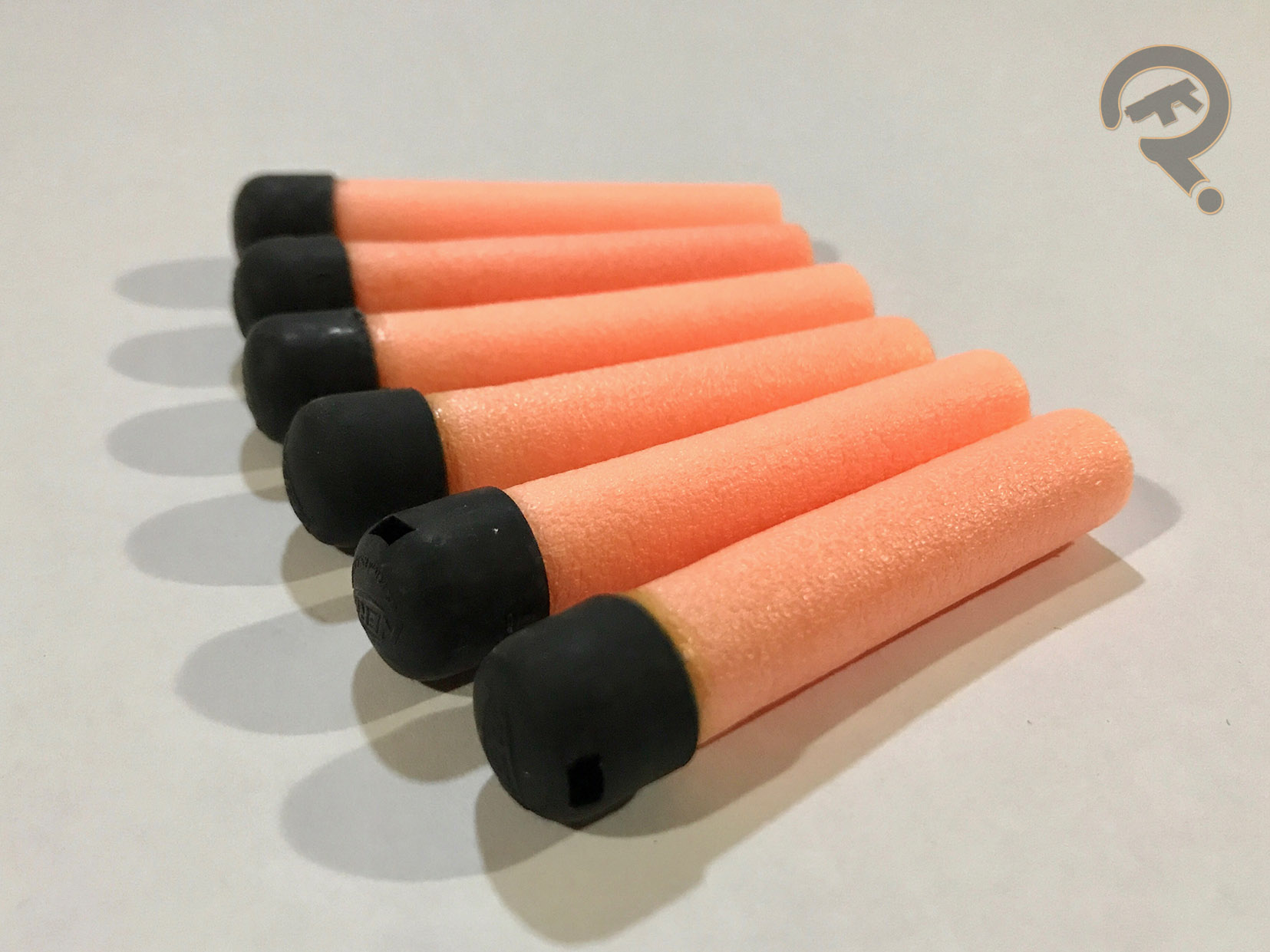
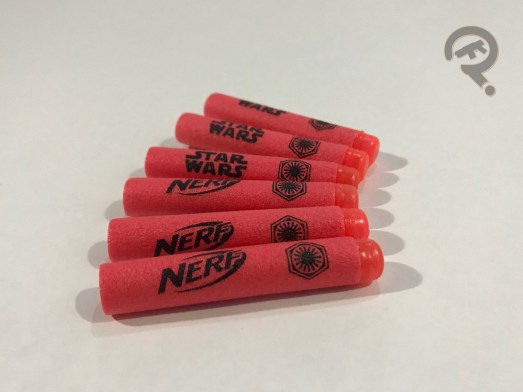
stormrifle2The First Order Stormtrooper Deluxe Blaster (the first one) was released in 2015 as part of Nerf’s Star Wars tie-in products, at the time, corresponding with the release of The Force Awakens.  Functionally, the blaster operates just like the N-Strike Elite Rampage, or Raider before it as it built on virtually the same internal mechanism using a pump-action magazine fed setup.  This makes a lot of sense as a design choice since it probably saved the good people at Hasbro some time and therefore money working out how the blaster was going to work.  Also, given that the Sterling Mk. IV SMG (the real steel firearm on which the F-11D Stormtrooper rifle is based) loads magazines from the side, I’d say the decision practically made itself.  The blaster looks and feels pretty good.  Leaving enough to clearly denoted it as a toy, the blaster resembles the prop from the film pretty closely.  Being modeled after a real world firearm, the ergonomics are pretty good.  The pistol grip is simple but does the job well.  The pump grip could be a little more rounded for comfort in my opinion, but it’s understandable squaring it off to accommodate the proportions of the blaster body.  As a fun side-note, most of the official promotional stormrifle3images for the blaster show it with the pump grip installed backwards.  The FOSDB also comes with a scope and stock accessories that fit onto standard Nerf attachment rails and lugs, respectively.  The scope is very low-profile and actually provides quite a nice sight picture for what that’s worth in a Nerf attachment.  The stock is nice and solid, if a bit short on its own but the way the body of the blaster extends back past the grip means it’s at least a useable length when attached.  At the very least, it fits with the overall compact size of the blaster.  Without the stock, the blaster itself is really sized more like a large handgun than a rifle, something that it has over the Rampage.  That and the fun primed indicator disguised as a vent that changes from black to red when the blaster is primed.  Both of these little improvements make it that much more disappointing that the performance isn’t up to the same standard as Elite blasters.  I’ve been over the reasons why this is the case, but it still bums me out sometimes, especially with blasters that should be awesome by all rights.  Even if you’re not getting exactly the same range and power, at least you can throw out movie quotes as you bust into your younger sibling’s room and start blasting.  Good luck hitting anything, though.  It is a Stormtrooper rifle, after all.  The FOSDB comes packaged with a scope, a stock, an all-white 12 round magazine, and 12 red Star Wars branded Elite darts with transparent red tips.stormrifle4
THE ME HALF OF THE EQUATION

This blaster was really the first Star Wars Nerf blaster I can remember seeing and getting excited about.  Before this series, the best we got always seemed to be single shot, muzzle loaders, so it was really great to see tie-in blasters get more serious designs, even if they’re almost direct copies of existing blasters.  Clones, maybe.  Wait, no, we’ve confirmed the First Order doesn’t do clones.  Only bad movies do that, that’d be stupid.
The Blaster In Question #0036: Twinshock

TWINSHOCK

N-STRIKE ELITE (MEGA)

There’s one thing blasters from the MEGA series all have in common and that’s being rather large. Being rather large and red. Yes. They all share relative largeness, redness, and radical devotion to the pope. Wait, hang on… scratch that last one. Large and red are still valid, though, and they certainly apply to this weeks blaster, the Twinshock. I guess I should tell you about it, then. Yeah alright, here goes.

THE BLASTER ITSELF

The Twinshock was released in 2017 as part of the MEGA series of blasters. If you’ve read my review on the Roughcut 2×4, you should have a good idea of how this blaster works, because it’s functionally identical, just with 10 barrels instead of 8. In summary, it’s loaded from the muzzle, holds 10 rounds and for every rack of the priming handle, the staged trigger allows you to fire 2 darts either successively or simultaneously. Given the increased size of the projectile, it’s understandable that the power of the blaster has been accordingly bumped up. The Roughcut took advantage of a gear system to assist in priming two plungers with one motion. This gave it a slightly longer priming stroke than most other blasters. This is doubly true for the Twinshock which has an enormous stroke length but with comparatively low resistance, so there’s the trade-off. Now, I think it’s worth bringing up that the Twinshock, much in the same way as the Alien Menace Ravager before it, has a buttery smooth prime. It’s hard to describe how nice of a priming stroke it has so if you want to know what I’m talking about, you’ll just have to buy one and see, but it’s pretty great, so maybe do that. The exterior of the Twinshock is completely original and features two attachment rails on the top of the blaster. As mentioned before, it feels pretty hefty in hand and has some substantial bulk to it. The only real issue with that is that it is rather top heavy so make sure you have strong wrists if you’re planning on holding this blaster for a long time. I also wish it had a stock, or at least an attachment point for one, but I wish for a lot of things. The performance with the Twinshock is admirable. In line with other MEGA blasters, it hits hard and shoots far with the added perk of whistling darts that really frighten younger siblings when they hear them flying past their head. The capacity for double-tapping or shotgunning 2 darts is really what sets the Twinshock apart. The Twinshock comes packaged with 10 MEGA darts.

THE ME HALF OF THE EQUATION

I’m being fully serious about how great priming this blaster feels. If you don’t feel like buying one of these for yourself to experience it, find a friend who will and borrow theirs. Even if you’re some kind of weirdo who isn’t sold on that premise alone, its use as a weapon against younger siblings also cannot be understated.

The Blaster In Question #0035: Atlas XVI-1200

ATLAS XVI-1200

RIVAL

Ok, listen, we all knew that Ethan is way better at this whole “staying on top of regularly scheduled content” thing, but I just moved so I think a little slack is due to be cut here. Anyway, to make it up to you, I’m reviewing yet another shotgun. I’m not sure how that makes sense, but it’s what I’m doing so take it or leave it. This week, I’m looking at the Atlas XVI-1200, named for the titan of Greek mythology, or maybe that one robot from Portal 2, cool guy either way. Cool blaster too. Lemme show you.

THE BLASTER ITSELF

The Altas XVI-1200 was released in 2016 in the second wave of Rival series blasters. One of the great things about Rival blasters is how unique they are from anything else, mechanically speaking. Inside and out, the Atlas is all original. It’s a big blaster, there’s no getting around the fact. It’s just about the same size as the Zeus, but it doesn’t feel like it’s meant to be a primary blaster. That might be due to the fact that it effectively only has 6 shots, each trigger-pull firing 2 rounds simultaneously, creating the shotgun effect. Like the Zeus, it uses the 12 round Rival magazines and in an in-line orientation, except instead of sitting in the middle of the blaster, the Atlas’ magazine lays along the top, loading in a very similar manner to the FN P90. The Atlas is spring powered and primed via the pump grip on the underneath of the blaster. As you would hope with any pump action shotgun style blaster, priming it makes a rather imposing ker-chunk sound. While the ability to fire two rounds at once is fun, it would have made the blaster a whole lot cooler if there was a switch or toggle that let you change it to single fire if you wanted. The Atlas has a short attachment rail on the top along with a front sight, but sadly, there isn’t a rear sight to go with it, so it’s a little useless. Of all things, the jam door on the Atlas is actually somewhat interesting for two reasons. First, it’s on the left side of the blaster which is odd for a side-mounted jam door, but also, the door isn’t connected to any locks. This means you can operate the blaster entirely with the jam door open if you want. It is cool to be able to see how the internals of the blaster work, but it does mean there’s a big gaping hole in the side of the blaster, and I hate big gaping holes in blasters. Unsurprisingly for the Rival line, the Atlas feels nice and solid in the hand, though the pistol grip is kind of small for a Rival blaster. This means it’s just normal sized instead of extra large like on the Apollo, so not really a problem, just odd. Performance is just a hair under what other Rival blasters achieve, but this is because all the others only have to deal with one round at a time. This is really negligible in the eyes of any younger siblings into who’s rooms you bust while wielding this thing, and the premise of getting hit twice adds another layer of intimidation. The Atlas XVI-1200 comes packaged with a 12 round magazine and 12 Rival rounds.

THE ME HALF OF THE EQUATION

I was really surprised when I found the Atlas actually in a store. I had seen it at Toy Fair and knew it was coming out but I wasn’t expecting to find it when I did. It was maybe one of the fastest purchases I’ve ever made since I guess at the time I was under the impression that they had only just come out and would be impossible to find for months like the Apollo. This turned out not to be the case, but I was still glad to have one.

The Blaster In Question #0034: Firestrike

FIRESTRIKE

N-STRIKE ELITE

Do you ever find one of those movies where you have to watch it over and over in order to really understand everything, but on that last watch, it all clicks and you have an a-ha moment?  Well, that’s pretty much the Nerf community and the Firestrike in a nutshell.  If you were under the impression that this was just an Elite reskin of the Nite Finder, allow me to explode your brain patterns.  On to the review!

THE BLASTER ITSELF

The Firestrike was released in 2013 as part of the N-Strike Elite series.  Being one of the earlier releases in the line, it was more of an update to an existing blaster than a wholly new idea, that blaster being the N-Strike Nite Finder EX-3.  All of the functionality of the Nite Finder was preserved, using the same single shot muzzle-loading design and even keeping the “laser” sight and dart storage under the barrel.  Overall, the Firestrike is significantly more compact than its predecessor, most of the bulk being trimmed off the grip and under-barrel area.  The feature that stumped almost everyone for quite a while was the peculiar shape of the butt of the pistol grip.  There’s just this weird spike sticking down from the bottom and no one I know could say for certain why it was there.  As I recall, it took someone finding the actual design documents for the blaster to realize that the spike is to help dual-wield Firestrikes.  Every so often, those brainy types over at Nerf come up with some elaborate system to add a feature to a blaster and everyone gets mad hype about it.  This time they put a peg on the grip so you can prime the blaster with another blaster and everyone got mad hype, well after the release of the blaster itself.  I suppose it may have gotten a little blown out of proportion but I think people were just excited by a reason to buy a second Firestrike and for good reason.  Everything about the blaster works well.  It’s small size and relatively few moving parts make it feel sturdy in the hand, though I can see the small grips being an issue for some people.  As with the Nite Finder before it, the plunger rod sticks out the back of the blaster quite a ways when primed.  I’m not a fan of this from a purely visual perspective but it’s definitely simple and effective.  There’s an attachment rail on the top of the blaster, but I don’t know why you would want to put a scope on the Firestrike since it has a built in “laser” sight.  Sure it’s just an LED and is too dim to use outdoors or in a brightly lit room but it works as well as can be expected and performs admirably as an ominous signal to your younger siblings of what is pointed right at them.  The light requires 2 AAA batteries to work but it has no real bearing on the function of the blaster itself.  In keeping with Nite Finder tradition, the Firestrike actually packs quite a punch for its size, shooting a little farther and harder than some of the larger blasters out there.  The Firestrike comes packaged with 3 Elite darts.

THE ME HALF OF THE EQUATION

Up until very recently, I only had one Firestrike in my entire collection, even knowing about the potential for dual-wielding.  I just happened upon a handful of older Nerf blasters at a local thrift store while browsing with my boy Ethan.  For $2, it’s almost not even a question if it’s worth buying, though I could easily have justified paying more.


The Blaster In Question #0033: FocusFire Crossbow

FOCUSFIRE CROSSBOW

REBELLE (ACCUSTRIKE)

The Rebelle line of products and its handling has always slightly confused me.  At a surface level, getting girls into a hobby dominated by boys by making products targeted to them sounds like a good thing, exactly what constitutes a “girl blaster” is odd to say the least.  I’m not about to go on a rant about gender equality or how Hasbro should run their business, but what I will do is talk about one such Rebelle blaster, the FocusFire Crossbow.  Let’s get into it.

THE BLASTER ITSELF

The FocusFire Crossbow was released in 2017 as a crossover blaster between the Rebelle and Accustrike lines.  Mechanically, it’s a 5-round revolver.  That’s it, the crossbow arms don’t actually affect the performance of the blaster in any way.  As such, you may notice that I chose to leave them off of mine.  Had I left them connected, I could store a few extra darts on the crossbow arms themselves.  The string of the bow arms is intended to loop through the priming handle on the top of the blaster which locks back when primed and snaps forward again when you pull the trigger, thereby imitating a crossbow action kind of, I guess.  The internals aren’t really anything special, but I do quite like the exterior of the blaster quite a bit, at least up to a point.  I have always been a fan of Rebelle’s smoothed, clean shell designs for the blasters and this is no exception.  The FFC has some really nice flowing lines with just a little bit of texturing on the grip that adds an air of technological sophistication into the overall grace of the design (can you tell I was an art student?), kind of like somthing I’d expect from the Asari from the Mass Effect video game series.  I also really like the paint deco on the right side of the blaster.  It’s just a shame it didn’t make it to the other side as well, like with so many other Nerf blasters.  There aren’t any places to add attachments on this blaster, but it does have an interesting integrated sight setup on top.  The blue piece can fold up or down to give you a choice of sight picture.  When folded down, it effectively acts as a hybrid peep/notch sight that’s more or less parallel with the barrels.  Flipping it up gives you a few more options as the entire piece can theoretically work as a ladder sight for angling long-range shots with a few pre-selected notches for quicker aiming, I suppose.  It’s a nice feature, but it doesn’t really help that much if at all.  I assume it was added to coincide with the fact that this blaster comes with Accustrike darts.  In theory the better accuracy of the darts could be taken full advantage of with the use of proper sights, and while accustrike darts are vastly superior to Elite darts, its still a toy, so sights can only do so much.  There is at least nice contrast between the blue rear sight and the orange front sight so they’re easy to aquire and line up.  The construction of the blaster feels solid, so no issues there.  Where I do have some issues is in the scale of the grip area.  The grip is noticeably smaller than on standard Nerf blasters both in length and thickness.  I can still fit my whole hand on the grip, which is more than I can say for some Rebelle blasters, but the notch toward the end can dig into my pinky a little.  The worst part, though, is the stock.  It’s too small to use, period.  I know Rebelle is geared to younger girls, and in general girls are slightly smaller than boys, but when my 11 year old sister can’t even use this thing, you know it’s just too small.  I would have loved it if it was a useable length, but as it stands, its just this weird extra part that hangs down and blocks your wrist.  As is the norm for Rebelle, the FFC is a little underpowered when compared to similar Elite blasters.  Not by much, granted.  You can still land some good hits on your younger siblings with it, and of course, the added accuracy of the darts helps with shot placement.  The FocusFire Crossbow comes packaged with the bow arms not attached, and 5 fancy purple Accustrike darts.

THE ME HALF OF THE EQUATION

Sadly, it seems like Rebelle has been on the decline as a product line.  There have still been some new releases with blasters like the Com-Bow, but not nearly as much as we used to see and that does bum me out.  Sure, maybe the line could have been handled better, but the problems are pretty much all easy fixes, and I’d much rather see these issues taken into account with future releases than have the whole line disappear.


The Blaster In Question #0032: Revonix 360

REVONIX 360

VORTEX

Ok, fine.  I was mean to you guys last week so here it is, an actual legitimate Vortex review.  Some of you may ask “But Tim, what is Vortex even?” to which I would reply, “Largely unsuccessful.”  Sure, it had its fans, but not enough to keep the line afloat.  Today, I’ll be looking at one of the last Vortex blasters to see a release, the Revonix 360.  What the heck is a revonix?  Let’s have a look and find out.

THE BLASTER ITSELF

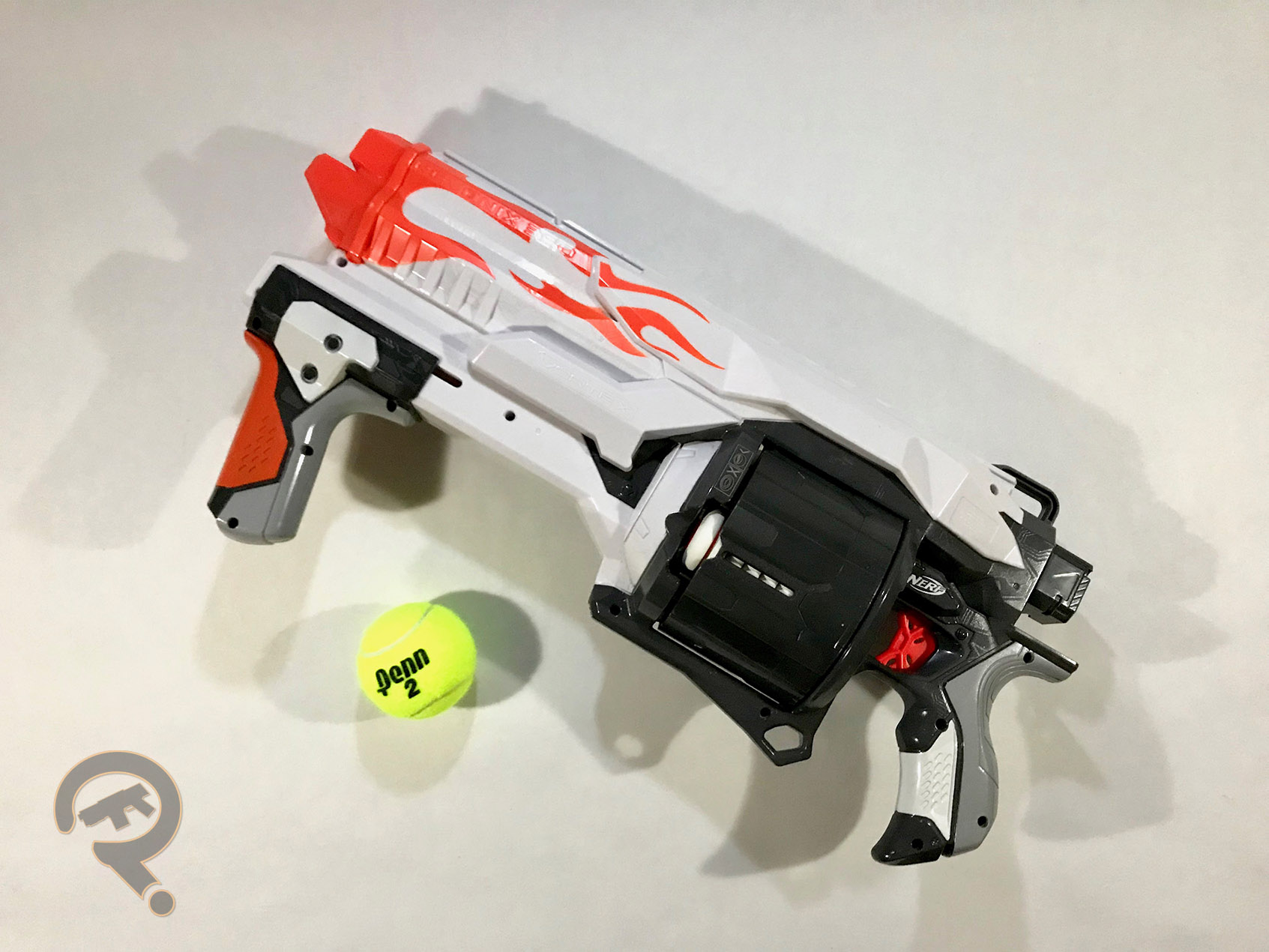
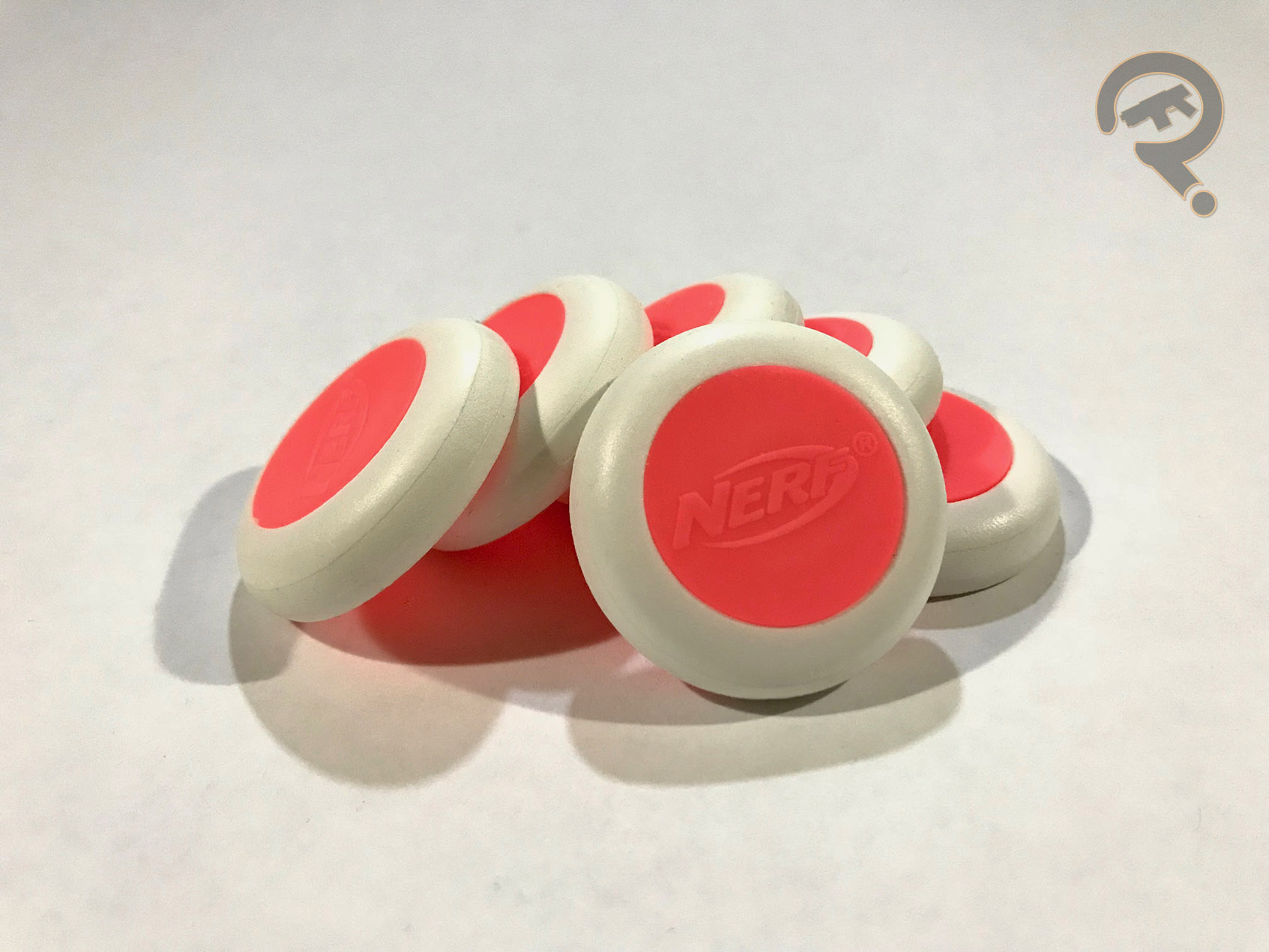
First things first, “revonix” isn’t a word.  It’s not even a mishmash of a couple real words, and that’s really rather odd for Nerf.  Even the Vigilon is arguably “vigil” and “on.”  Still doesn’t make sense, though.  Best I can tell is “revo” refers to the rotating drum aaaaaaand… that’s it.  It’s just gibberish.  The Revonix 360 was released in 2013 as part of the Vortex line of blasters.  The main selling point of the entire line was its use of proprietary Vortex discs as ammo which provided greater range and consistent flight path over standard Elite darts.  The trade-off was the speed of the projectiles themselves which could be outrun by an enthusiastic glacier.  As with almost all Vortex blasters, the Revonix launches the discs by use of a spring-loaded lever that would effectively flick the discs out of the chamber instead of a more traditional air plunger mechanism.  What makes the Revonix unique is its style of magazine which holds the discs perpendicular to their flight path until one is loaded into the chamber by pumping the fore grip.  Within the magazine, the discs are held in 5 stacks of 6 which cycle through the blaster.  The drum magazine is fully integrated with the blaster, so you have to reload the discs one at at time through either of the ports on the sides of the blaster.  The shell of the Revonix is entirely new, though it does bear a striking resemblance to its predecessor, the Pyragon.  There is a very long attachment rail on the top of the blaster and a stock attachment lug in the back. Some images of the Revonix showed it with its own stock which looked pretty cool, but it seems that wasn’t ever put into production. Sadly the Revonix was released after the decision was made to change the deco style of the Vortex blasters from a cool high-tech sci-fi look to some sort of urban/punk/graffiti kind of something. I’m not really a fan, but as such, the Revonix sports a weird out of place flame paint scheme.  Oh well.  Another trait shared among the entirety of the Vortex line is how wide the blasters are compared to standard dart blasters.  The Revonix is even more so than that because of the great big drum mag, so the whole thing feels rather hefty in hand.  Thankfully the ergonomics are good.  No hard edges or sharp corners on the grips.  Due to the mechanical complexity of the blaster, priming it is fairly loud and requires a bit of elbow grease, but once you get a feel for it, it’s hard to deny the intimidation factor of hearing it rack in a new round, especially if you’re one of those younger siblings I keep talking about.  As stated above, Vortex blasters have a tendency to shoot straight and far but hit with minimal impact and it’s true here too.  Sure, it sounds, looks, and feels like a monster, but it’s really a precision tool of sibling harassment as you can pretty easily get shots to just barely skim someone’s head if they’re not looking.  If they can see you, though, it just takes an idle side-step to avoid one of the discs, so I would greatly recommend using stealth to your advantage.  Easier said than done with a blaster like this.  The Revonix 360 comes packaged with 30 red and white Vortex discs.

THE ME HALF OF THE EQUATION

There we have it, I finally got around to reviewing something from Vortex.  I am a little sad that the line is dead, I do quite enjoy all of my Vortex blasters still.  At the same time, I’m glad Nerf had the sense to end something that was floundering so they could make room for something awesome like Rival a little further down the road.


The Blaster In Question #0031: Modulus ECS-10

MODULUS ECS-10

MODULUS

It’s come to my attention that there is a glaring hole in the scope of my reviews thus far.  As it stands, an entire line has gone without a dedicated review up till this point.  An empty space in the catalog, like the eye of a hurricane, a vortex, if you will.  But that ends here.  It’s time to stop circling around the topic like debris in a vortex.  So now I bring you this review with great fervorTex.  That’s right, it’s time to talk about Modulus.

THE BLASTER ITSELF

Ok, that was mean to lead you on like that, I’m sorry.  Now that that’s out of the way, I feel like if we’re gonna be talking about the Modulus line, you have to start with the blaster that’s also called… Modulus.  It’s the Modulus Modulus?  You mean like Mario Mario?  It’s probably just easier for everyone to call it the ECS-10.  The Modulus ECS-10 was released in 2015 as the first blaster in the Modulus line.  Mechanically, the blaster works exactly like a Stryfe, using a magazine-fed flywheel setup, requiring 4 AA batteries to run.  The exterior work is completely original and showcases the primary focus of the line: accessories.  The ECS-10 has more than its fair share of attachment points including 5 attachment rails (one on the top handle, one on top of the body, one on either side, and one beneath the barrel) plus 2 more on the top and bottom of the included barrel extension.  In addition, there is a stock attachment lug in the back and a barrel attachment lug up front, but wait, there’s more.  Typically, if a Nerf blaster has a barrel attachment, it’s a simple case of male barrel to female accessory, but with the ECS-10, the barrel extension piece has both male and female connections, allowing for even more barrel pieces to be added.  For the most part, all components of the blaster work and feel good with just a couple rather pronounced exceptions.  First and most importantly is the grip.  When designing this blaster, the people at Nerf went for a skeletonized sci-fi looking handle which is cool until you pick up the blaster itself.  The construction leaves it a little creaky if you hold onto it with any significant force.  Worse than that, though is that there is a sharp little ridge that is positioned just perfectly to dig rather painfully into the webbing of your hand right by your thumb.  Now, Nerf has been known to quietly update some of their designs to fix some of the more egregious problems, so it may have been addressed in later releases, but on mine, it’s just bad.  The second area of concern is the stock, which, immediately upon handling, reveals itself to be comically floppy, lacking any kind of structural integrity whatsoever.  I guess it can hold a spare magazine, so there’s that.  It’s also removable so I don’t see it as being quite as irksome as the uncomfortable grip.  The other attachments don’t add any functionality to the blaster but they’re at least cool pieces in their own right.  The scope has a sharp look and provides one of the better sight pictures available on a Nerf blaster, while the vertical fore grip is vertical and adds a place to grip… in the fore.  Simple enough.  Being more or less a Stryfe reshell in its core, the ECS-10 performs accordingly, flinging darts a respectable distance and with just enough oomph to make it noticeable if you get hit, but not enough to get in trouble when you bust into your sibling’s room and light them up with a volley of foam.  The Modulus Modulus Luigi Mario ECS-10 comes packaged with a stock, a scope, a vertical fore grip, a barrel extension, a 10-round curved magazine (though the darts don’t actually go down far enough for the curve to do anything but look cool), and 10 Modulus colored Elite darts.

THE ME HALF OF THE EQUATION

I remember when the image of the Modulus first leaked back in 2014, everyone was convinced it was going to be this revolutionary new system that could be configured as spring or flywheel powered just by exchanging a few parts.  Boy was that optimistic.  Don’t get me wrong, I think the Modulus  line is great for all the crazy new accessories it’s spawned, but it’s not the build-a-blaster dream so many people were convinced it was going to be.  I mean, there’s always time for Nerf to come up with something like that sometime in the future I suppose.  Just have to keep on dreaming.


The Blaster In Question #0030: Sledgefire

SLEDGEFIRE

ZOMBIE STRIKE

Boo! Haunted house!  What else could be scarier than a late review?  Muahahaha!  Ok, well, lots of things, I suppose.  Zombies, for instance. And if there are zombies, you know you’re gonna need to shoot at least a couple of them, you know, just to try it out. Sure, you could, in theory, use any of the quality blasters in the Nerf catalog, but what if one or even two darts at a time isn’t enough?  That’s when it’s time to consider the Sledgefire, and consider it we shall.

THE BLASTER ITSELF

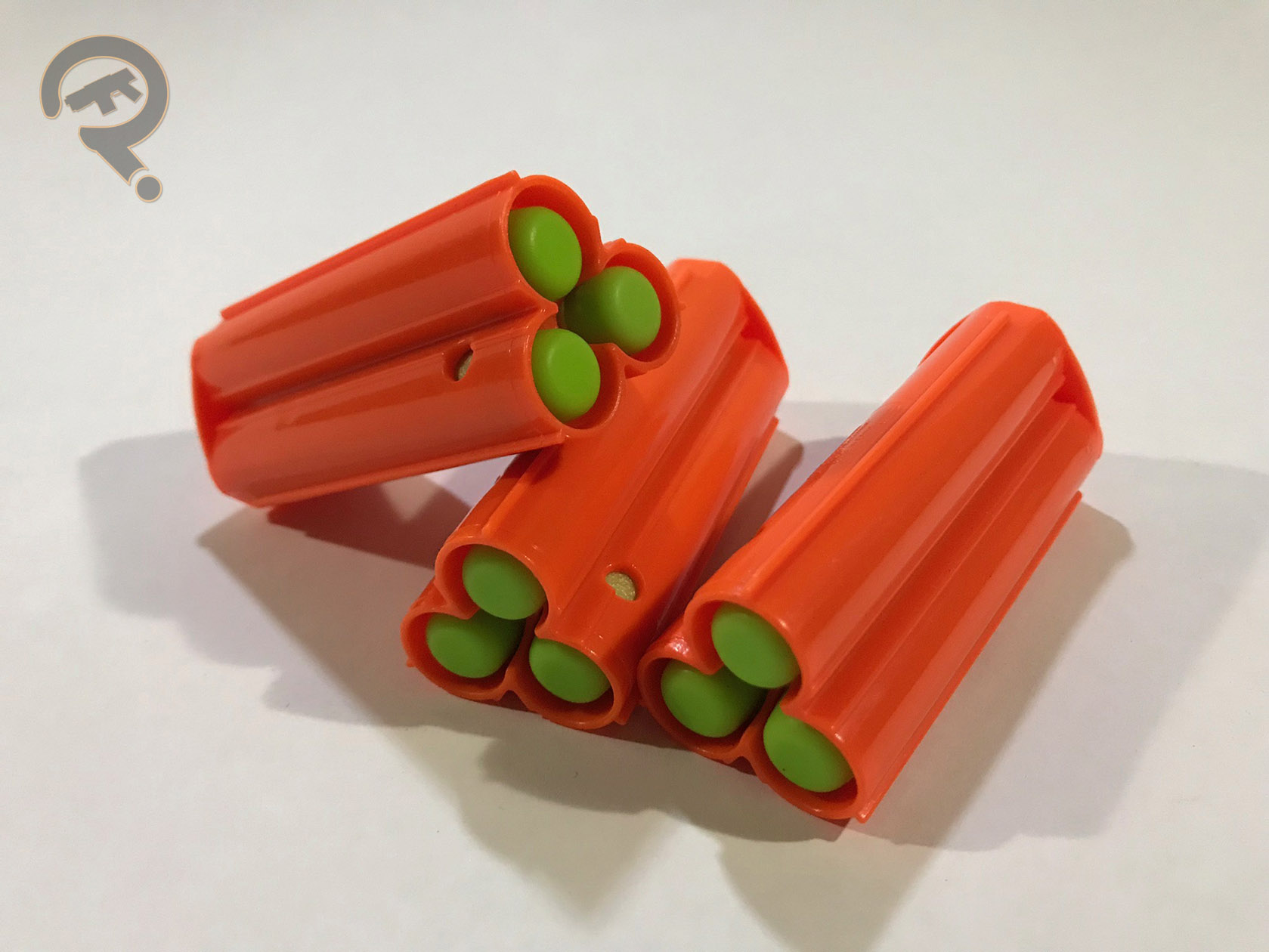
The Sledgefire was released in 2013 as part of the first wave of Zombie Strike blasters alongside the Hammershot. Like the Barrel Break from last week, it operates using a break action with darts being loaded tip first into the barrel. The big difference between the Barrel Break and the Sledgefire is that the Sledgefire uses proprietary shells for loading which hold three darts a piece. Pressing the orange tab above the grip unlocks the barrel, allowing you to simultaneously open the action of the blaster and prime the air plunger. Once fully opened, you insert a shell and close the breach back up. Pulling the trigger fires all three darts out of the shell in one blast, there isn’t a staged trigger like on the Barrel Break, so it’s effectively a one-shot blaster that has a spread pattern. The outer shell is all original, featuring a pretty aggressive looking attachment rail on top, and sports a rather appealing turquoise blue color that we are yet to see on any other Nerf blaster, which I feel is a shame. The shells are unique to the Sledgefire and serve simply to hold the darts in position for loading and firing. The stock has cutouts that allow you to store the shells with the blaster so they don’t get lost, which is a nice feature since the blaster cannot work without the shells. You can buy more shells, but only through Amazon or via the Hasbro Toy Shop website, which is nice that they’re available, but I wish they had a proper retail release.  The ergonomics of the Sledgefire are pretty nice, the grip is comfortable even at such a steep angle which seems to be Nerf shorthand for “this is meant to be a shotgun” at this point. Everything feels nice and solid especially around the breach which is important for something like this to work well. Loading the shells into the blaster is pretty fiddly and takes a bit of time to get used to, but it’s novel and has nice mechanical feedback so the fun of reloading makes up for some of the required fine motor control needed. Performance isn’t really the focus of the blaster, and as such, spreading the air pressure of a single plunger across three darts does make them fly a little shorter and softer than typical.  Additionally, I’m not sure what it is, but the Sledgefire is on of the worst blasters as far as dart crimping, where if you leave the darts loaded in the shells for any period of time more than a day or so, they get compressed and don’t fit the chamber as snugly so performance drops pretty dramatically.  It’s still quite effective against younger siblings whether you’re busting into their room or waiting in ambush to blast them. The imposing ka-chunk if snapping the breach closed only adds to the shock and awe impression its sure to leave. The Sledgefire comes packaged with 3 shells and 9 green Zombie Strike colored Elite darts.

THE ME HALF OF THE EQUATION

I figured this would be a pretty fun blaster to look at for Hallowe’en (or Samhain if that’s more your style) weekend.  It’s not really a practical blaster at all, but once again, the fun of it makes up for that in spades.  You can always count on shotguns for fun.


The Blaster In Question #0029: Barrel Break IX-2

BARREL BREAK IX-2

N-STRIKE

After last week’s rather downer review, I need something to pick me back up.  Bonus points if it restores my faith in the regular N-Strike series.  What’s this?  Oh, praise the gods, it’s the Barrel Break.  Faith is restored, and by a shotgun no less.  So what is this masterpiece of toy craftsmanship?  Does it really make up for the SharpFire?  Am I maybe over-hyping it a little?  All these questions will be answered in due time.

THE BLASTER ITSELF

Ok, it’s probably due time now, so let me address your questions in no particular order; maybe a little, not really since the SharpFire came out afterward and it’s hard to make up for something that comes later, and this is the Barrel Break IX-2.  That answer everything?  Good, moving on.  The Barrel Break IX-2 was released in 2010 as part of the N-Strike line.  Its main draw was the unique and fairly unorthodox method of loading the blaster.  By pressing the lever on either side of the blaster, you unlock the barrels which slide forward and then pivot downward like a break action shotgun.  You then load the darts into the barrels, pivot them back into alignment and push them back into the body of the blaster.  You then are able to fire either one dart at a time or both at once thanks to the 2 separate air chambers, much like the Roughcut that would come later.  Where the Roughcut would use gears to assist priming both springs at once, the Barrel Break simply uses the mechanical advantage of the barrels acting as a long lever when pushed down to prime the plungers.  The whole system may be a little complex, but back in my days of collegiate Humans Vs Zombies, this blaster was an easy choice for backup.  The ability to fire two shots in rapid succession was a big help during the day, and its tolerance for all ammo types gave a decent advantage during missions when scrounging darts off the ground was commonplace.  It should be noted that while clip system blasters obviously couldn’t use broad heads, there were more than a handful of non-clip blasters that wouldn’t reliably fire streamlines either.  The Barrel Break uses all new sculpting and mechanics and has one attachment rail along the top of the blaster.  It does show a few signs of its time such as the plastic being a little creakier than more recent blasters, but even so, the fun of the whole thing is hard to deny.  Creaking aside, in hand the blaster feels pretty good.  My only gripe in this area is that the front of the grip is a little narrow and can put just a little more pressure on my fingers than I’d like when holding it for a long time.  The grip is severely angled which helps confirm that this is meant to be a trusty double-barrel more than anything.  The angle does make aiming down sights a little awkward, but let’s be honest, this isn’t a blaster to be aimed.  The performance is another way the Barrel Break shows its age.  While it had pretty great out-of-the-box range and power when it was released, the standard has been moved up since then.  It’ll still work fine as an indoor/sibling attack blaster, but I still think most of the enjoyment I get out of it is the satisfying mechanical feeling of reloading and that hasn’t changed a bit.  The Barrel Break IX-2 comes packaged with 10 whistler darts and a clip-on dart holder that attaches to the rail.  I still have it, at least, I still have all of its parts, but I may have taken it apart slightly so I could put it on a sleeve instead.

THE ME HALF OF THE EQUATION

That felt better.  I know a lot of people will say that there are plenty of better choices out there for an HvZ blaster than the Barrel Break, and I might agree with them on some points but I stand by my choice.  Even outside HvZ, I recognize that it’s a lot of steps to fire 2 darts, but you’ll definitely have fun doing it.  In that sense, I don’t know that I can think of a better example of pure fun outweighing functionality in a Nerf blaster without getting into the Max Force line.


The Blaster In Question #0028: SharpFire

SHARPFIRE

N-STRIKE

This week, we’ll be playing the NES classic, Duckhunt using the zapper light gun.  Wait, hang on.  Nope, scratch that, this is a Nerf blaster, but let’s be fair, you can understand my confusion.  I mean, look at it.  Ok, fine, we can look at it together.  Let’s get into reviewing the N-Strike SharpFire.

THE BLASTER ITSELF

The SharpFire was released in 2015 as part of the N-Strike series which was a little odd seeing as N-Strike Elite had already been launched several years prior.  It is a single-shot, breach-loading pistol/rifle thing.  It’s a bit of a mess, quite frankly.  To my knowledge, it was the first Nerf blaster to use this breach-loading mechanism but not the last as it has also appeared in the Modulus and Accustrike lines as the IonFire and FalconFire respectively.  The core blaster can be used on its own as a small pistol or combined with the included (and proprietary) stock and barrel extension.  The barrel extension is just a tube that snaps on the front, but the stock can be reversed and used as a holster of sorts.  It even has a belt clip on one side and can hold 6 extra darts in storage as well as holding onto the barrel extension when not in use.  The shell of the blaster is completely original and has only seen reuse in the SharpFire Delta, effectively just a recolor and without the accessories.  The ergonomics of the SharpFire leave something to be desired.  The lump on the back of the pistol grip makes achieving a firm grip rather awkward, and the barrel and stock are too short.  The stock is especially uncomfortable as it has no semblance of a cheek rest of any kind, leaving your head floating awkwardly behind the blaster as you hunch way down to get any kind of sight picture.  The whole thing is quite literally a pain in the neck.  This is not helped by the fact that the barrel attachment mechanism is so poorly designed that it is both too tight where it causes stress marks in the plastic from attaching and detaching, but also too loose so the barrel never stays on straight.  As a pistol, my left hand can wrap around the fingers of my right hand in a standard grip, but as a rifle (kinda sorta), It feels like there should be something more substantial to hold on to in the front of the blaster and there isn’t.  These would be bad enough except that both of these accessories are only compatible with the SharpFire, and likewise, the SharpFire can’t accept standard attachments.  Performance isn’t exactly stellar either.  With just the core blaster, many shots seem to idly coast through the air before dropping to the floor as opposed to the speed and force seen with Elite series blasters, which again, had been out for 3 years at this point.  I just feel like I need to point that out again.  With the barrel attachment on, the loose fit would sometimes mean that darts would impact the inside of the barrel and slow down before exiting the blaster, leading to some hilariously flaccid shots.  Needless to say, you don’t want this happening when you decide to bust into your younger sibling’s room.  You’ve got an image to maintain.  The SharpFire comes packaged with its stock, barrel extension, and 10 N-Strike Elite darts.

THE ME HALF OF THE EQUATION

Hoo-boy.  That was a rough one.  When it was first shown in a leaked promo image back in 2014, I was super excited for it to come out because it didn’t look like anything that had come out before it.  I was really confused why no one else seemed interested in what could have potentially been a dedicated Nerf sniper.  Then it came out and I figured out why.  I guess it’s hard to convey scale on a low res leaked picture but this thing really is just kind of disappointing all around.