The Blaster In Question #0008: Star-Lord Quad Blaster

STAR-LORD QUAD BLASTER

MARVEL

It is a well known fact that the Guardians of the Galaxy movies are awesome.  No one disputes this, it’s just true.  As with just about every Marvel movie to come out in the last decade (yeah, Iron Man was in 2008, I had to look it up) there’s been a decent amount of merchandise out there.  Regulars to the site will likely have seen at least one of Ethan’s numerous GotG figure reviews, but what if you’re one of those people who would rather be Star-Lord rather than just have him on your shelf?  Thats where we get the subject of today’s review.

THE BLASTER ITSELF

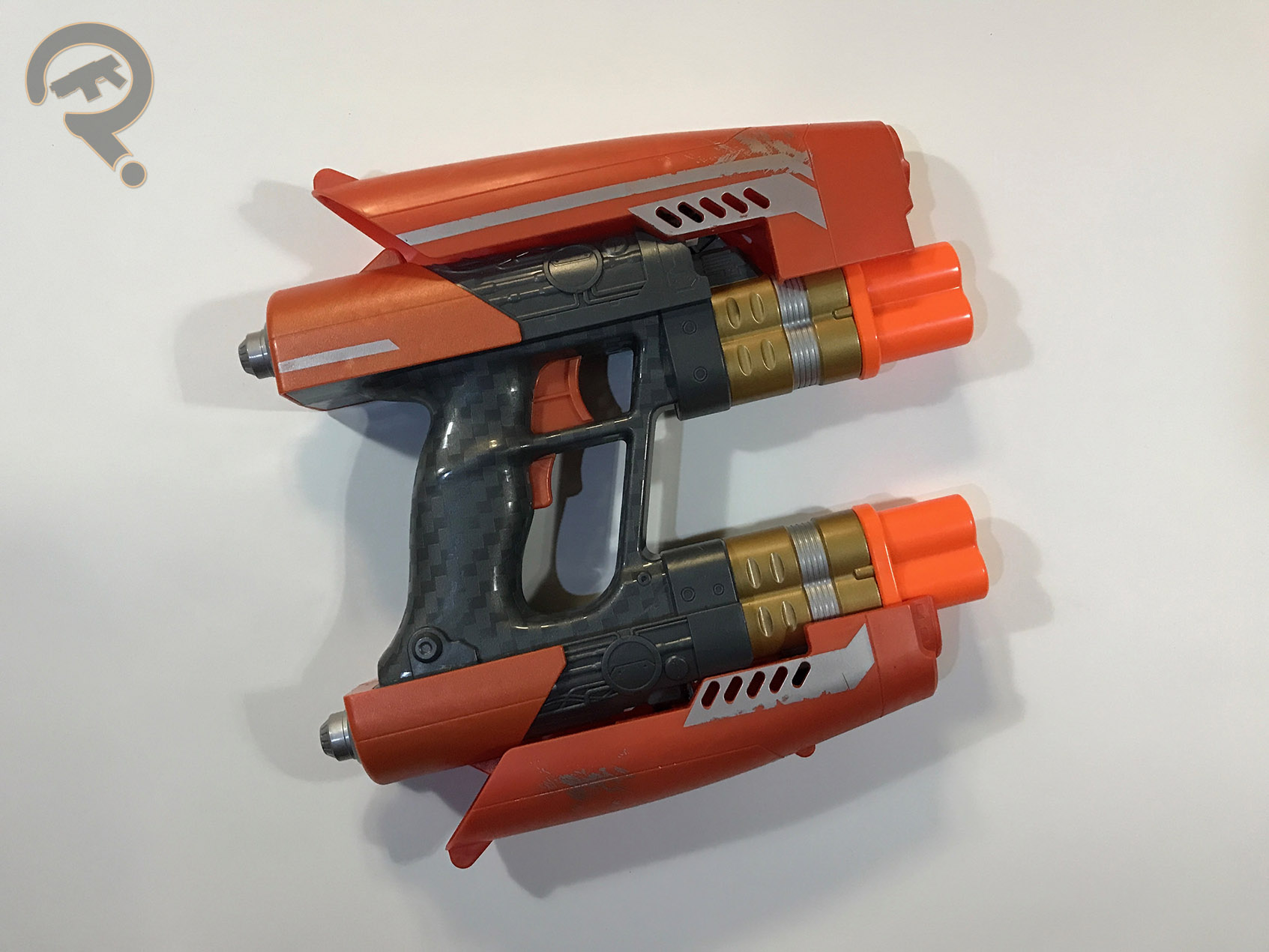
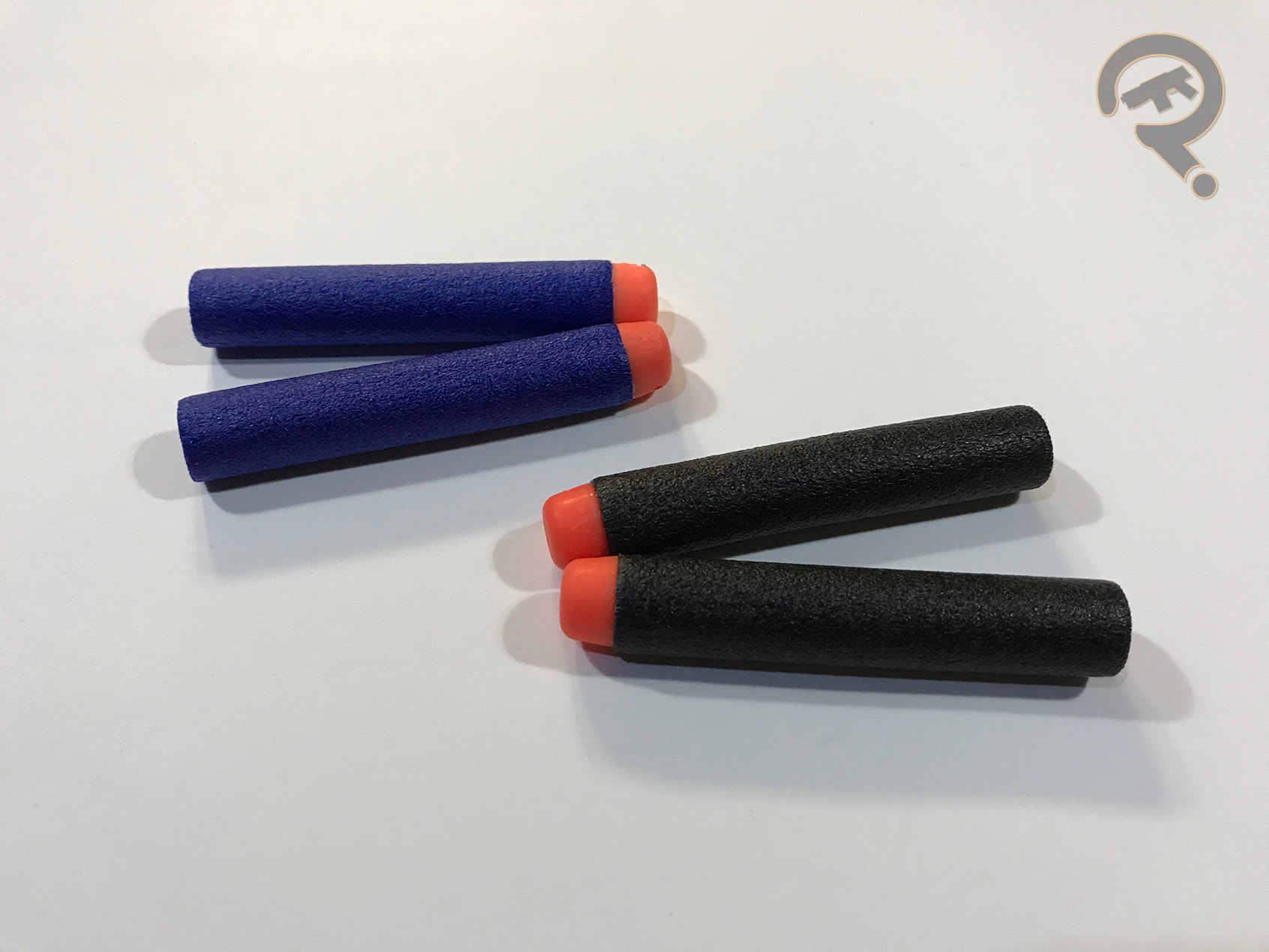
The Star-Lord Quad Blaster was released in 2014 as a Marvel tie-in product to coincide with the release of the first GotG movie.  Interestingly, there is no Nerf branding anywhere on the blaster, but just a quick mention on the box.  Aside from using a “smart air-restrictor” setup found in a plethora of other Nerf blasters, the Quad Blaster is completely original.  The blaster is operated by priming one or both of the slides on the rear and pulling the trigger.  Unlike the Roughcut and other similar blasters, the Quad Blaster does not have a staggered trigger, if both barrels are primed, both will fire simultaneously.  In addition, the smaller secondary trigger just below the firing trigger releases the latches holding the spring-loaded front ends, causing them to snap back, revealing two extra barrels.  In all honesty, this feature was 85% of the reason I got this blaster.  It’s just a ton of fun fiddling with even if you’re not actively firing the blaster, and if you flick your wrist just right, you can reset the barrel covers without touching them.  Opening the front covers is required to fire the second barrels on the top and bottom.  The blaster is very sleek and definitely has an appropriate sci-fi feel to it, almost like one of the plasma weapons from Halo.  The grip could maybe stand to be a little bigger as I could see someone with larger hands feeling cramped while holding it, but it’s forgivable when you remember the target audience.  The main body of the blaster feels on par with other Nerf blasters in terms of structural integrity, but it is worth noting that the plastic for the priming slides feels a little thin, and the front covers are a smoother, slightly more rubbery plastic than the rest of the blaster.  The priming stroke on the Quad Blaster is very short and not terribly heavy, as such, the performance is limited.  It’s still fine for running around the house, blasting your friends, but even on longer indoor distances, the darts tend to drop off a little sooner than I might like and the impacts can feel kinda flaccid.  Again, I can understand this decision given this is meant for children, and Nerf has to keep it’s own core products competitive, but it’s still a bit of a bummer.  The Star-Lord Quad Blaster comes with 4 Elite darts but with black bodies instead of the traditional blue.  Unfortunately I wasn’t able to find all 4 of mine but I got 2 and some regular Elites for comparison.
THE ME HALF OF THE EQUATION

It’s become sort of a recurring event in my life where every time Chris Pratt is in a movie or tv show (Gotg, Jurassic World, Parks and Rec) people tell me that his character reminds them of myself.  Normally I wouldn’t really take this to heart, but when my own mom is one of the most vocal people on this opinion, I figured I would just roll with it.  I mean, it’s no surprise that I would buy a Nerf blaster, but being attributed with Star-Lord (WHO?!) just moved it up my priority list.
The Blaster In Question #0005: Magnus

MAGNUS

N-STRIKE ELITE (MEGA)

That ain’t no dart, this is a dart.  Ah, yes, the Mega series, Nerf’s go at the “bigger is better” trope.  The line started back in 2013 with the equally giant Centurion.  After that, the next obvious step was something a little on the smaller side, while still using the bigger Mega darts.  Give it a year, and thats when we were given today’s blaster, the Magnus.

THE BLASTER ITSELF

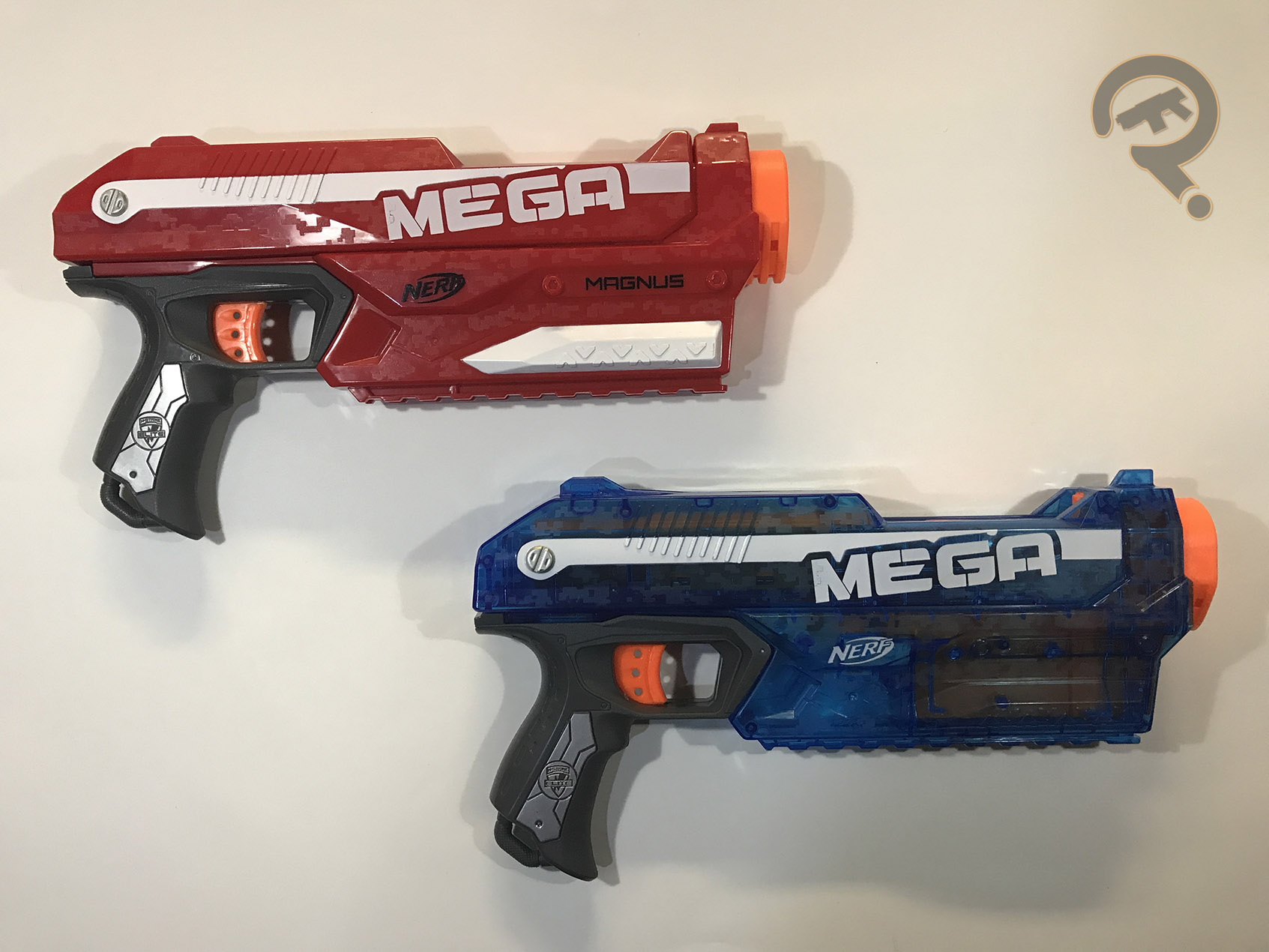
The Magnus was released in 2014 as the second blaster in the Mega series.  At the time of its release, it was entirely original.  Since then, the internal magazine and general operation have been reused in a couple of the licensed Star Wars blasters albeit chambered for the standard sized Elite darts.  This style of magazine works much in the same way as the Speedload 6 or Quick 16 from the Dart Tag line in that it is not removable and loads from the top, but does this while being in line with the center go the blaster and without all those extra dart pushing parts.  Given the size of the darts relative to the blaster, the Magnus only holds 3 rounds, which some might argue is too few to be worth the complexity of the design but I don’t have a problem with it.  You may have noticed that I have 2 of this particular blaster and that is for a couple reasons, but more one than the other.  Primarily, my first Magnus, the red one, is busted.  I’m not sure exactly the reason but 75% of shots fall limply out of the barrel rather than flying at my siblings like I intend.  This gave me reason enough to seek out a replacement, and what better than the ToysRUs exclusive “Sonic Ice” version.  The color doesn’t affect the performance assuming you’re comparing fully functional blasters.  One thing I found surprising about the Magnus was the grip.  It has a nice texture to it that does indeed add some traction, but it’s also fairly slim, especially for a Mega blaster.  It doesn’t ruin the blaster or anything, it just struck me as an odd balance of proportions.  The Magnus features some very rudimentary, although still appreciated, sights on the top of the blaster and an attachment rail on the underside.  In line with the rest of the Mega series, the Magnus packs a decent punch, hitting noticeably harder than many Elite blasters and with larger, heavier darts to boot.  As such, the Magnus is probably better suited for outdoor play.  Shooting from farther away also lets potential targets hear the darts coming at them as Mega darts whistle when fired.  The Magnus comes packaged with 3 Mega darts.

THE ME HALF OF THE EQUATION

My initial Magnus came about from a combination of odd circumstances all overlapping.  The first and foremost being that there was a current Nerf blaster that I did not yet own.  The second is my aunt knowing that I wanted it, and third, knowing exactly which blaster it was.  Put all that together and you get the only Nerf blaster I’ve received for Christmas in the last decade.  It was really a shame to find out that mine wasn’t working properly, but my recent birthday was enough to convince me to get a replacement.  And who knows, maybe with a little more tinkering, I can get the original up and running.

The Blaster In Question #0004: Speedload 6

SPEEDLOAD 6

DART TAG

For all the fun, random quirks that have appeared in Nerf blasters over the years, the one avenue that has always remained is the competitive aspect.  Nerf has gone through many iterations and just as many product lines trying to corner competitive play.  Recently they’ve made some moves that a lot of people consider game changing in the competitive arena, but this wasn’t always the case, as with the off-and-on-again Dart Tag line.  Today I’ll be looking at the mid-class Speedload 6, so let’s load up the review… quickly.  Speedily.  A speedy load- forget it, here’s the blaster.

THE BLASTER ITSELF

The Speedload 6 was released in 2011 as part of the revival of the Dart Tag line.  As you may note, mine has an orange trigger, whereas the second wave Dart Tag blasters featured blue triggers, signifying slightly improved internals.  As with just about every repeating blaster at the time, the SL6 uses a reverse plunger mechanism which should irritate you if you’re a seasoned modder, or mean absolutely nothing to you if you aren’t.  The SL6 and its bigger brother, the Quick 16, both share a fairly unique loading mechanism.  They both feature integrated magazines that can be constantly topped off while a series of cams and levers pull darts sideways into the chamber to be fired.  (The only other blaster that has anything even resembling this mechanic is the Vortex/Zombiestrike crossover Fusefire, but Vortex is a whole different story so let’s leave it at that.)  Not only this, but both of these blasters fire Dart Tag velcro-whistle darts, which is impressive in and of itself for a magazine-fed blaster.  The SL6 is deceptively large.  When I first saw images of it, in my mind, it would replace the Maverick REV-6 as the goto 6-round pistol, and it might have if the it wasn’t quite so large.  Don’t get me wrong, the size isn’t a problem, it makes operation of the blaster very easy and comfortable even for a grown adult.  The blaster is solidly built and shooting it feels nice and snappy.  At the time, Streamline darts were notoriously unreliable so having a magazine-fed blaster that used more stable “broadheads” was quite an advantage, just so long as you had plenty of time to reload the fixed magazine.  It’s also important to make sure you fully cycle the priming slide while firing.  I’ve had a number of instances of the blaster trying to chamber multiple darts due to partial priming.  Admittedly, it is user error, and I’m sure someone could get used to it if they were dedicated, but it’s just different enough from other slide-primed blasters that it can throw you off if you aren’t using it regularly.  Being targeted to competitive players, the SL6 has decent performance, although I must add a caveat.  My SL6 has been modified to boost performance, and it was done long enough ago that I can’t say I really remember it before then.  Granted, it was also long enough ago that my skill as a modder probably didn’t add too much.  Nevertheless, in its current state, my SL6 shoots just marginally weaker than stock Nerf blasters available today.  The Speedload 6 came packaged with 6 Dart Tag darts.

THE ME HALF OF THE EQUATION

I bought the Speedload 6 right around the time I was way into Humans Vs Zombies on my college campus.  At the time, it served very well as a sidearm and occasionally a compact primary, but sadly, since the introduction to the Elite series and now Accustrike, many of the advantages of using the SL6 have become irrelevant.  If there’s anything I can give it credit for today, it is the engineering behind the wacky loading mechanism and the blaster’s overall durability.  I loaned mine to a friend to use on a week long HVZ game, and for all he put it through, it still works perfectly fine.  Not bad.

The Blaster in Question #0002: Disruptor

DISRUPTOR

N-STRIKE ELITE

I don’t know what I expected when I heard the name of an upcoming Nerf blaster was the Disruptor. What I definitely did not expect was a revision of the classic 6-shot revolver, a staple in the average toy blaster arsenal, but that’s exactly what we got. It’s not uncommon for Nerf to reuse designs and make a few tweaks here and there (jolt reskins, anbody?), so if you’re a fan of the Maverick or the Strongarm, then you’ll be fine with Disruptor, I guess. So let’s take a look at it.

THE BLASTER ITSELF

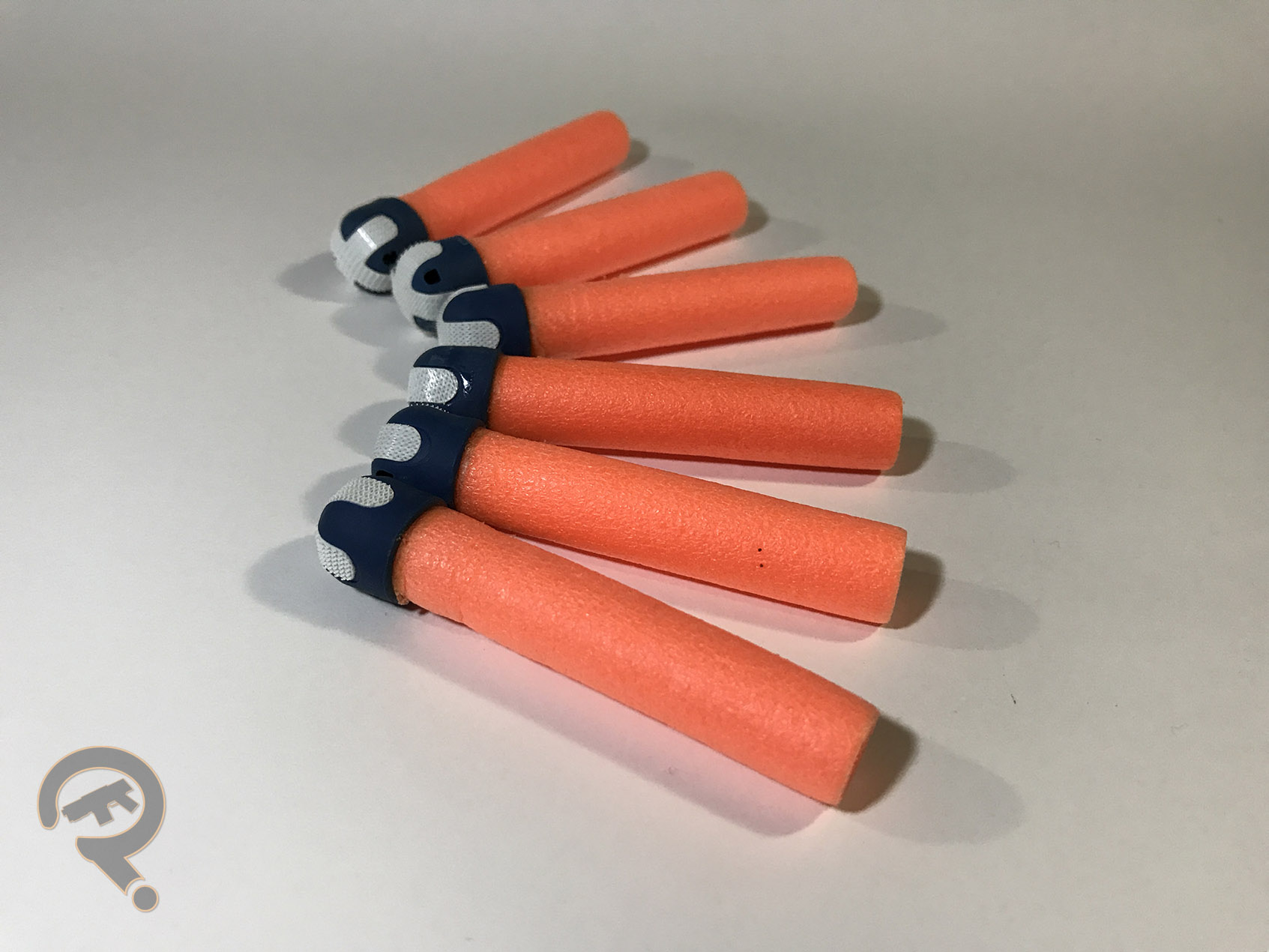
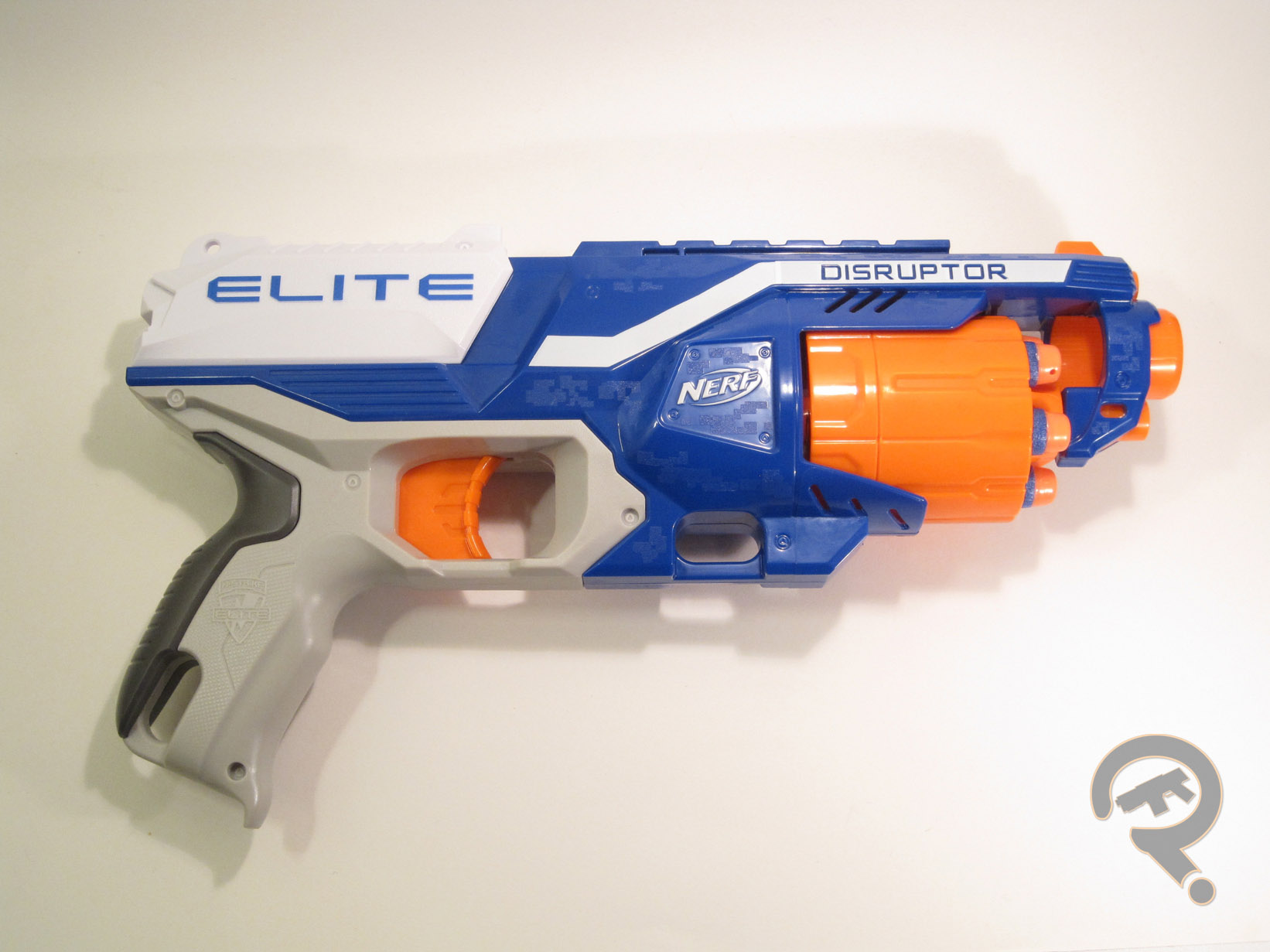
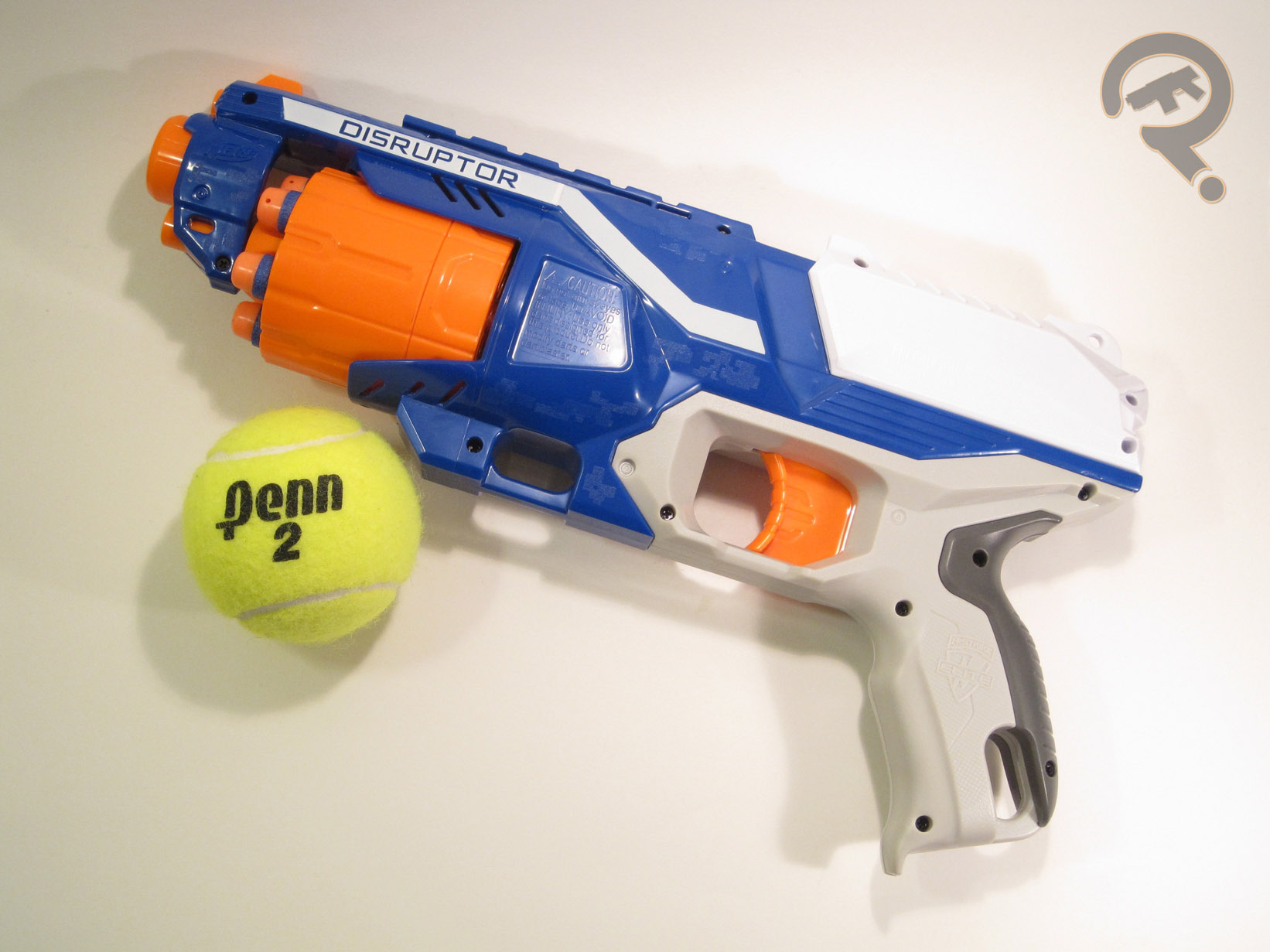
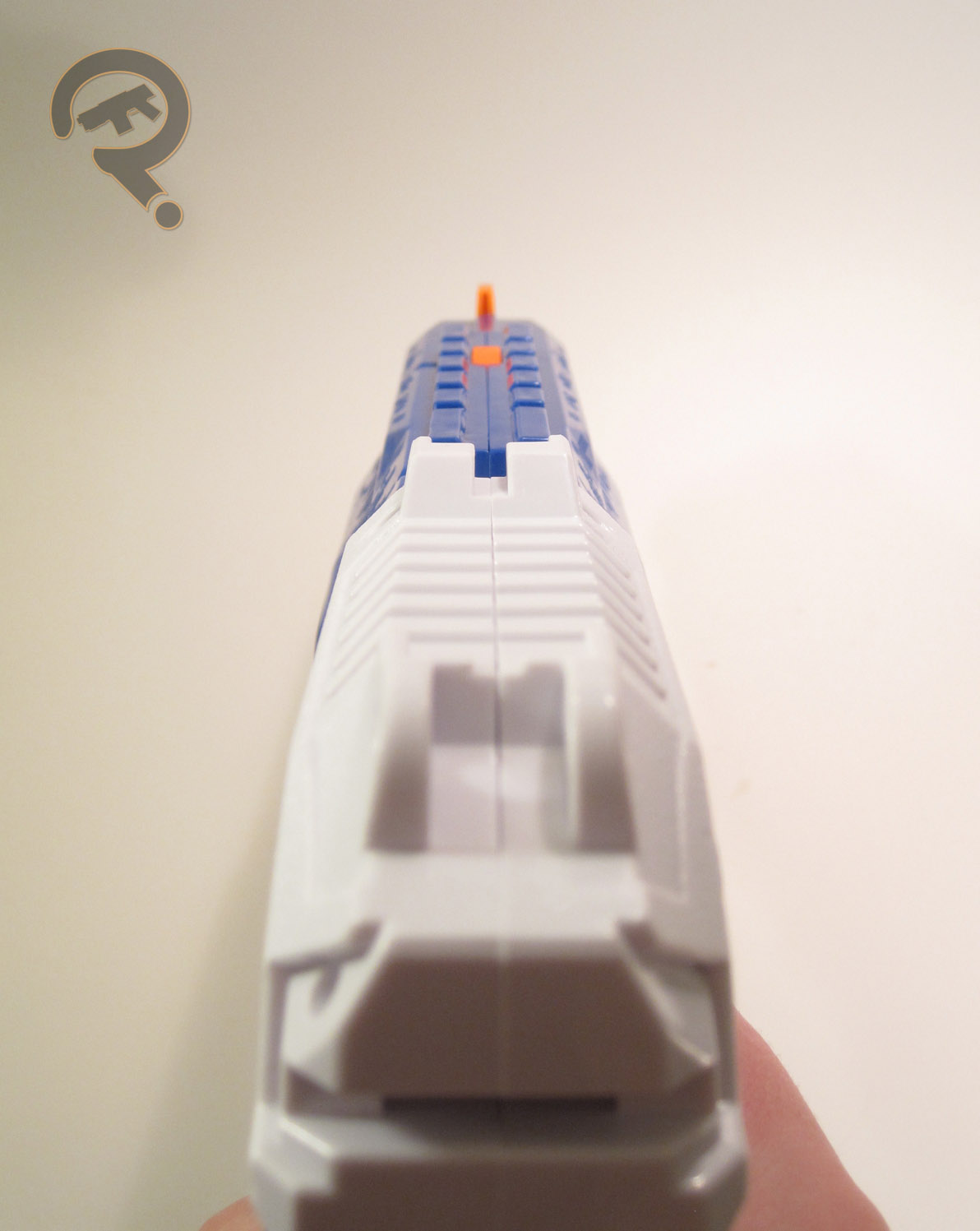
The Disruptor was released in January of 2017 as part of the core N-Strike Elite line. It measures 12 1/2 inches long, 6 inches tall, and 2 1/2 inches wide. As I mentioned earlier, the blaster works in much the same way as the Strongarm, the other elite series revolver, with one main difference. The Disrtuptor’s rotating cylinder does not pop out the side of the blaster. Instead, the front of the blaster has been redesigned to be more open, allowing easier access to the cylinder for reloading. While it does make the overall blaster smaller and somewhat more solid than the Strongarm, it does sacrifice the ability to spin the cylinder by hand, Russian roulette style. It sits comfortably in the hand, although it does feel like the upper part of the grip, near the trigger, is a little wider than at the bottom. It’s not a big deal but it might make the blaster a bit more prone to slipping out of your hand if you’re a crazy person who plays Nerf in a rainstorm or something. Along the top of the blaster are a set of sights which almost certainly don’t help with aiming but are appreciated nonetheless, and an attachment rail for accessories. If you’ve read my review of the Falconfire, you’ll know that standard Nerf Elite darts are plagued by inaccuracy and that’s true of the darts packed with the Disruptor as well. The blaster shoots pretty hard, as to be expected with the Elite series, suitable for indoor and outdoor play. As with most revolvers, reliability isn’t much of a concern as jams are rare even when using slam fire. I suspect the design of the grip and the priming slide are intended to facilitate dual weilding, similar to the Firestrike, but I can’t easily test this as I only have the one blaster for now. The Disruptor comes packaged with 6 Elite darts and instructions.

THE ME HALF OF THE EQUATION

I purchased the Disruptor from Target on the same visit to Ethan when I got the Falconfire. Initially I hadn’t planned on getting it but after spending enough time setting up the BIQ, I figured I should get more material to review while I was there. Never mind the fact that the action figure guy and the Nerf guy tend to wind up buying toys when we hang out. As far as the blaster goes, if you’re not a completionist Nerf collector and you already have the Strongarm, you can probably give this one a pass. On the other hand, if your arsenal is missing a trusty sidearm, this is a good candidate.

The Blaster in Question #0001: Falconfire


FALCONFIRE

NERF ACCUSTRIKE SERIES

What’s this? It’s not an action figure? No, today I am kicking off my series of toy blaster reviews. Given my extensive knowledge and collection of Nerf blasters in particular, this seemed like a logical addition to The Figure in Question network. Will it work? Will it be interesting? The answer is a resounding maybe. But enough intro, get into cover and yell “NOT IN THE FACE! NOT IN THE FACE!” because here comes the foam.

Birds. That’s what you think of when talking about accuracy, right? Well the fine folks at Hasbro certainly do, as evidenced by the naming convention used on the Accustrike series of blasters. So let’s kick things off with a look at the smallest blaster in the series thus far, the Falconfire. Caw caw!

THE BLASTER ITSELF

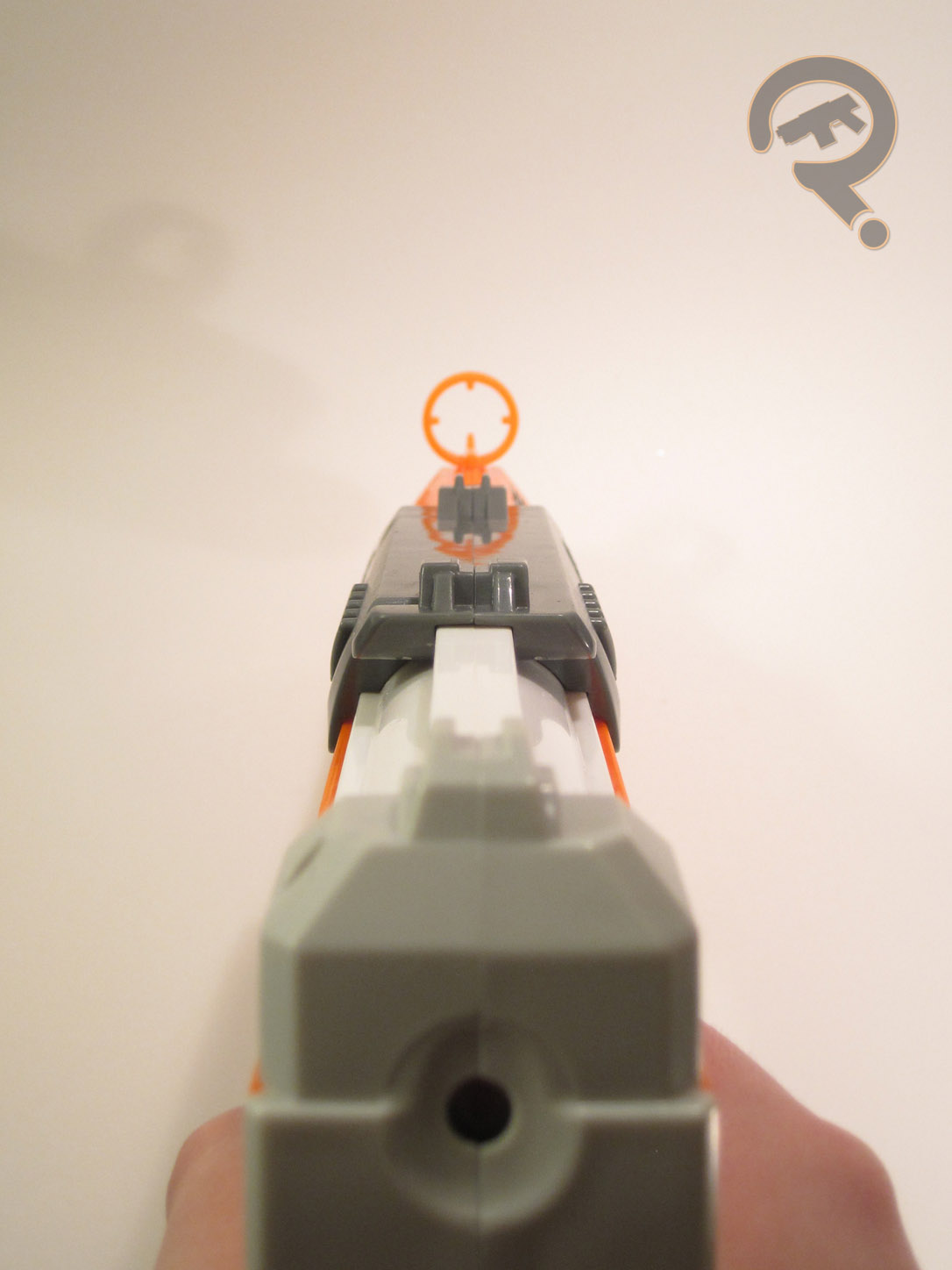
The Falconfire was released right around January 2017 along with its bigger brother, the Alphahawk (caw) as one of the first blasters in the Accustrike series. While neither of these blasters provided much new material in terms of operation, they did usher in the latest in foam dart technology i.e. the Accustrike darts. These darts, in comparison to standard Nerf Elite darts, feature a redesigned tip which is supposed to impart a sort of rifling effect upon the dart as it flies, providing a much more consistent trajectory. Long story short, they work. The inaccuracy of Elite darts beyond maybe 20 feet was a well known gripe in the Nerf community and I have to give props to Hasbro for the solution they came up with. Not only are the new darts a marked improvement over the last generation, but they’re entirely cross compatible with existing Nerf blasters. This point is clearly demonstrated upon inspection of the Falconfire blaster itself. As I mentioned earlier, functionally, the blaster is nothing new. The Falconfire is 13 inches long, 6 inches tall, and 1 1/2 inches wide and is built on the same mechanics as the Sharpfire from the N-Strike line, and the Ionfire from the Modulus line. Admittedly, it’s a little over-complicated of a mechanism for a single shot blaster. Nevertheless, it’s fun to mess with and the breech-loading does lend itself to playing sniper if you’re into that sort of imagination thing. There is also an attachment rail on the underside for accessories. The blaster feels nice and solid in hand. The handle in particular is exceptionally comfortable compared to many other Nerf blasters (I’m looking at you, Modulus). The barrel is largely useless in terms of accuracy but it does fit with the aesthetics of the blaster, and the hole is large enough that it doesn’t detract from the blaster’s performance. I am a fan of Nerf adding sights to their more recent blasters and this holds true for the Falconfire, though they may have gone just a little overboard. I mean, it works, but 3 rear sights and 2 front sights including the great big ring seems a tad much. Maybe that’s just me. Being as simple as it is, jams and malfunctions are extremely rare. Performance is decent but nothing to write home about. It does seem to shoot softer than most of the larger blasters and even some pistols, but for indoor plinking, it serves just fine. The Falconfire comes packed with 6 Accustrike darts and instructions for operation.

THE ME HALF OF THE EQUATION

I picked up the Falconfire at a Target while I was visiting my boy Ethan. Fun fact, the whole idea for The Blaster in Question has been in the pipeline for quite some time and after some pestering, Ethan convinced me to write up the first review now while I have the blaster in hand. So here we are. Overall, I quite enjoy the Falconfire, despite not being top tier in terms of performance. I especially appreciate the new darts and am excited to see what new releases Nerf will cook up for the series. If they stick with the same naming convention, I’m sure we can all look forward to the Eagleshot, Ospreyblast, Vulture Pew Pew, and BLAM Chickadee.