#0393: Psycho Pirate

PSYCHO PIRATE

CRISIS ON INFINITE EARTHS

When DC first came onto the super hero scene (then still known as National Comics), they had no idea what kind of success the concept would have. However, the superhero boom of the Golden Age was relatively short lived. It started just as the 40s did, and it was pretty much done a few years into the 50s. But, in the 60s, they wanted to bring it back. To do this, the re-imagined their characters in new ways, resulting in the Silver Age. The old versions were largely forgotten, until a story called “The Flash of Two Worlds” teamed up the Golden and Silver Age Flashes, explaining that they came from two separate universes. Earth 1 held the contemporary characters, while Earth 2 housed the heroes of old. Over the years, DC added more and more universes, resulting in the Multiverse. In the 80s, they decided this was all too confusing, so they created Crisis on Infinite Earths, which did away with all but one universe. So, what does this have to do with Psycho Pirate? Not a whole lot, to be honest. He has a decently sized role in Crisis, and it got him a toy. So there.

THE FIGURE ITSELF

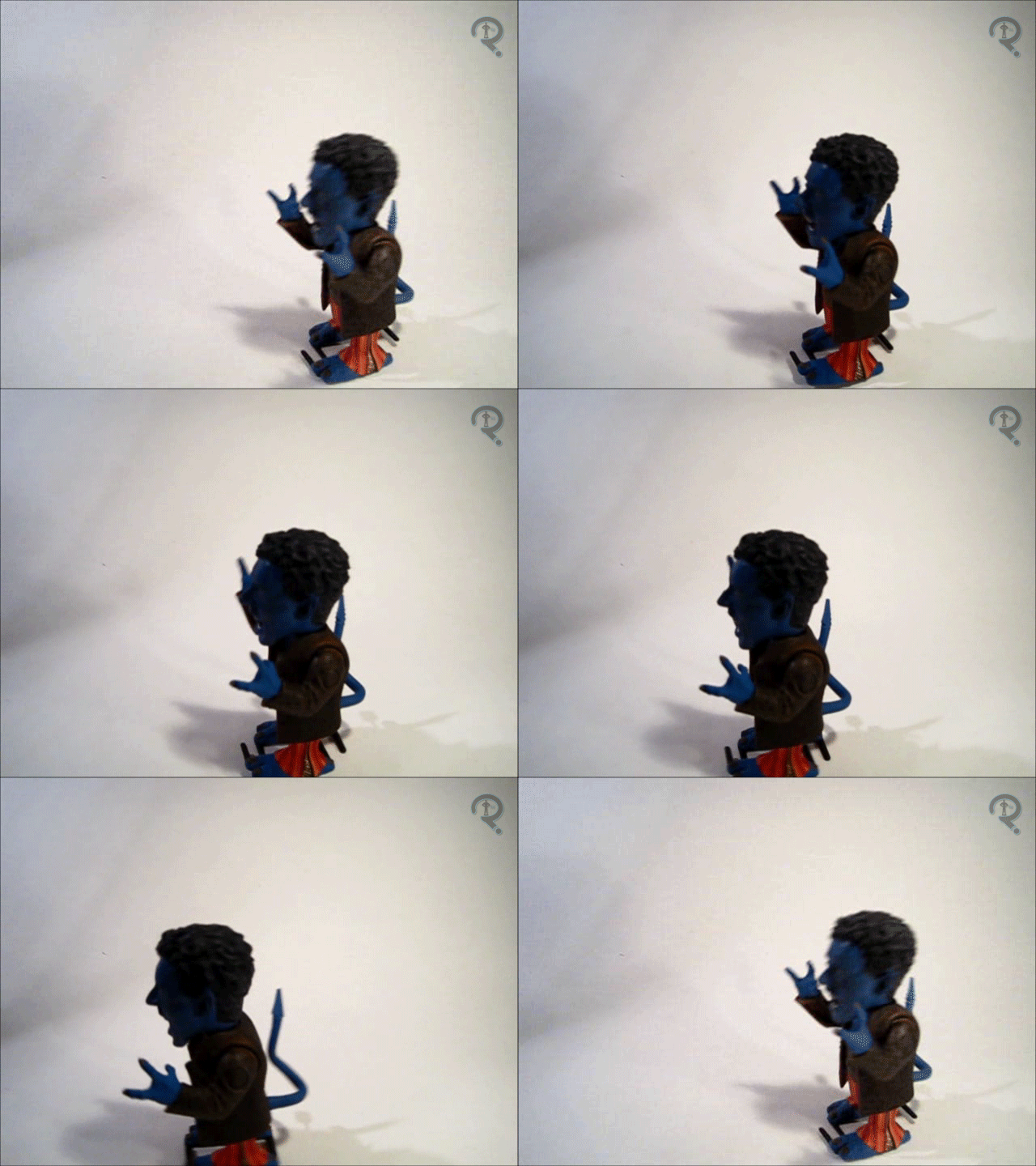
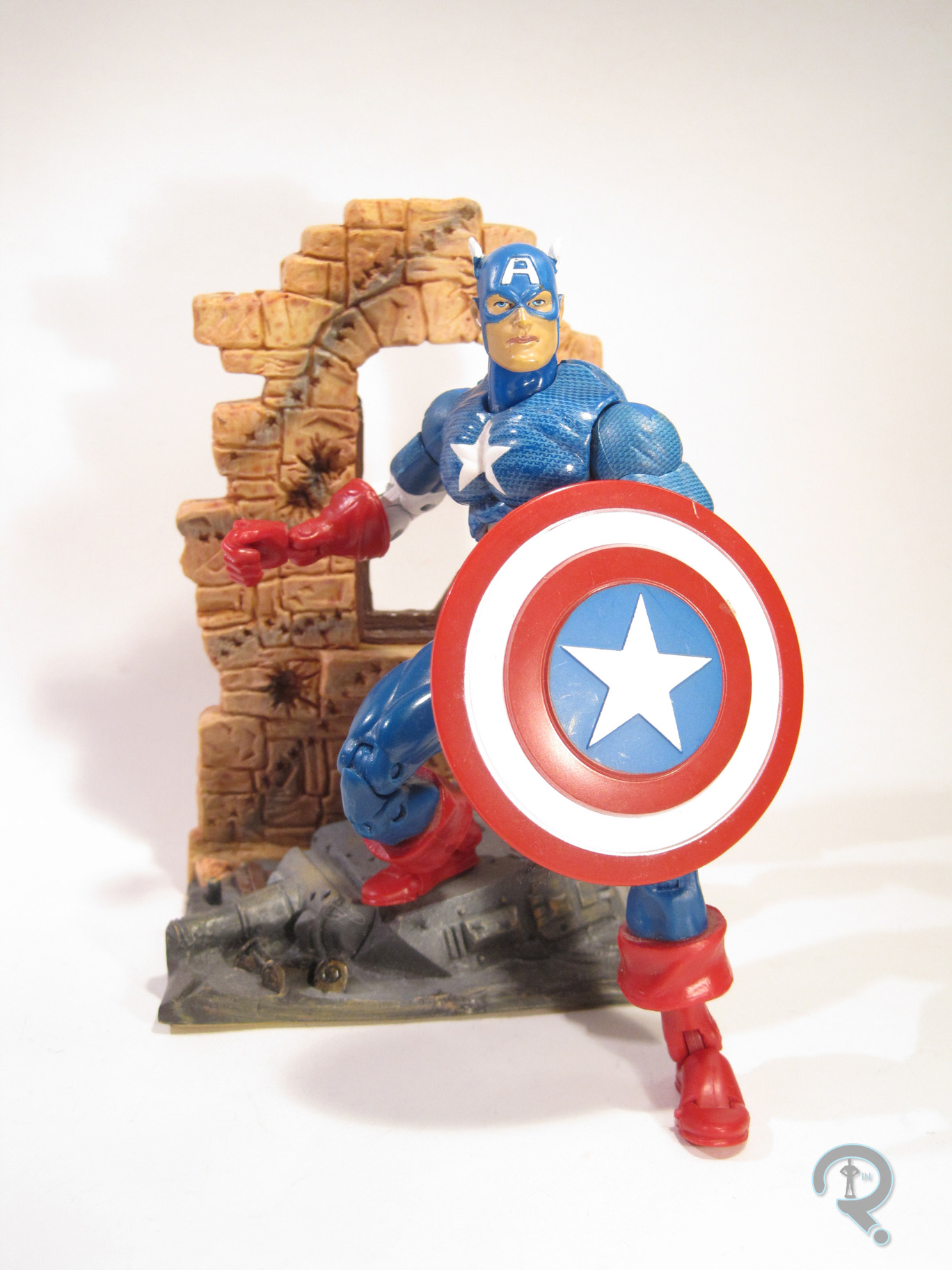
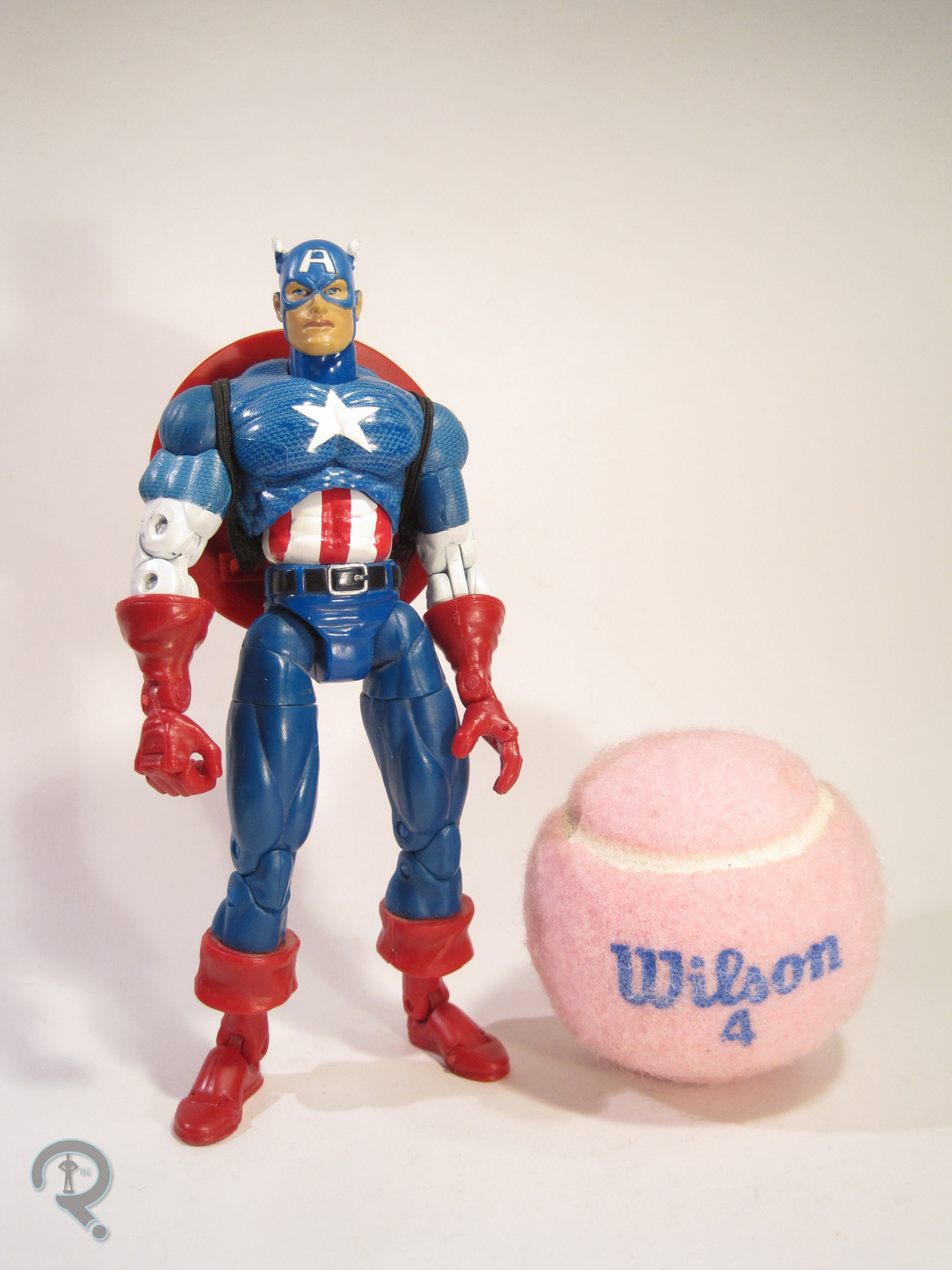
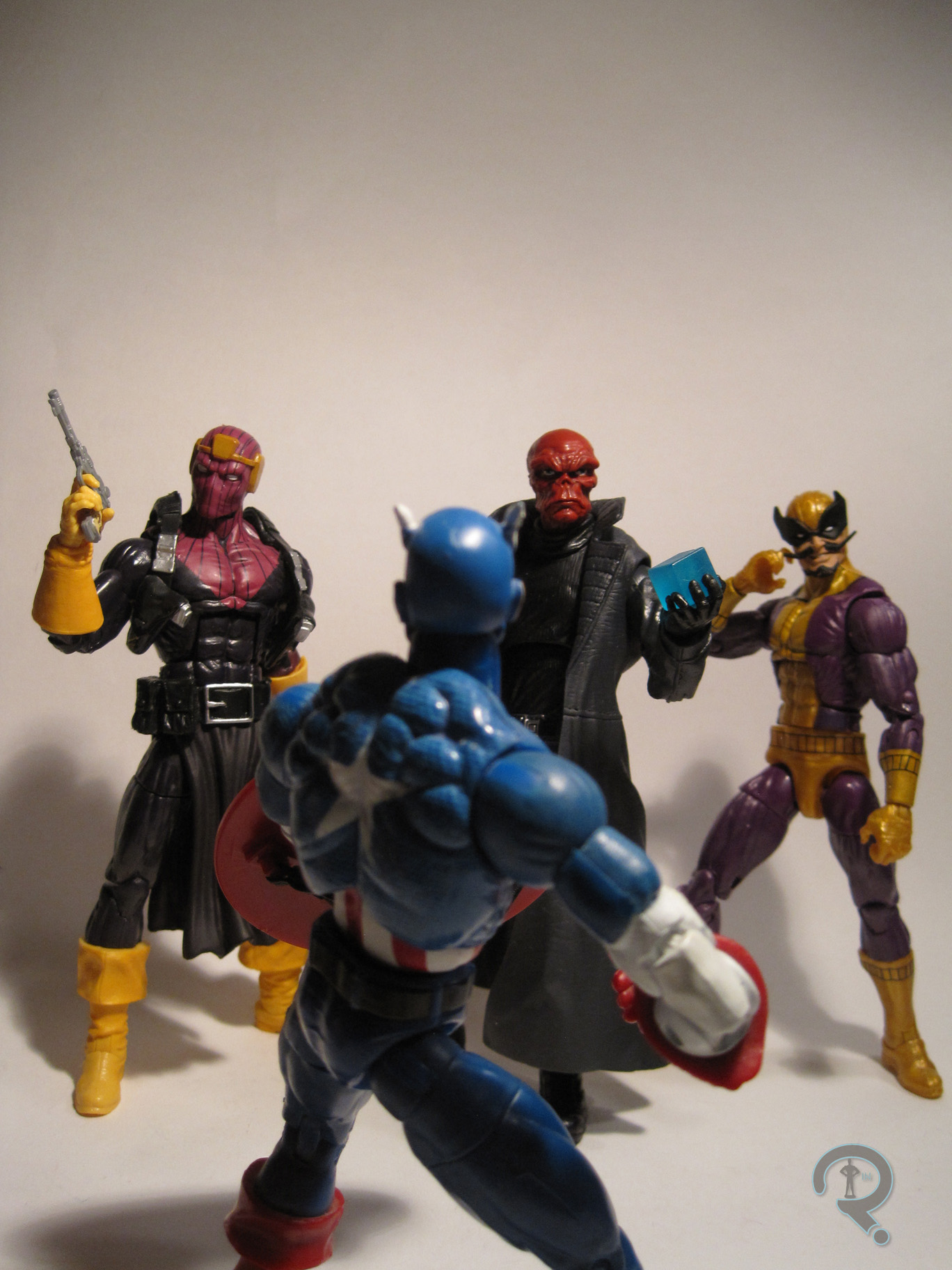
Psycho Pirate was released in the first series of DC Direct’s Crisis on Infinite Earths line. The Psycho Pirate depicted here is the second version of the character, Roger Hayden. Hayden was created in the 60s, which means he showed up during the Silver Age, but his first appearance is clearly set on Earth 2, making him a Golden Age villain, sort of kind of. Basically, his deal is that he’s got a mask that lets him control emotions. He’s based on his appearance in Crisis, as depicted by George Perez. The figure is about 6 ¼ inches tall and he features 15 points of articulation. DC Direct was pretty big on everybody getting their own sculpt at the time, so Psycho Pirate’s sculpt is 100% unique to him. It’s a pretty great sculpt, too. The proportions are all pretty decent, and the face is undoubtedly a George Perez face. I also love how expressive the hands are. Perhaps the only issue with the sculpt is how flat the upper arms are. The paint work doesn’t quite match up to the sculpt, but it’s not bad. For the most part, things are clean, but there are some issues with bleed over on the sculpted lines. The red also has a tendency to bleed through where it shouldn’t. Also, while I like the boots having a glossy sheen, I’m not quite sure why the inside of the cape has been given the same treatment. It looks fine, but it just seems odd. On the plus side, the colors are nice and bold, and the work on the face is very nice. Psycho Pirate includes his Medusa Mask, which fits very nicely on his face, and a display stand that reads “Crisis on Infinite Earths.”

THE ME HALF OF THE EQUATION

Psycho Pirate is a figure that actually got me to read the source material so that I had a reason for purchasing the figure. I had seen him in the store, and I liked the look of him, so I picked up one of the anniversary trades of Crisis from my library and gave it a read. Then, just a few weeks later, I received the figure as a birthday present from my brother Christian, who had some help from my dad. Looking back at this figure, I was happy to see it had aged as well as it did. It’s really a very nice figure.

#0388: Alan Scott & Solomon Grundy

ALAN SCOTT & SOLOMON GRUNDY

DC POCKET HEROES

Before Minimates made it onto the scene, minifigures hadn’t yet settled on being “block” figures. In 2002, DC Direct decided to do a line of smaller scale figures, which were inspired by Mego’s Pocket Super Heroes line of the 80s. Instead of dedicated character sculpts like the original figures, DC Direct opted for a basic body with add-on pieces, not unlike Minimates or LEGO Minifigures (or Kubricks, a contemporary of DC Pocket Heroes.) The line never really hit it big, but it was successful enough to get seven assortments of two-packs and four larger boxed sets. It covered characters from all over the DC Universe, but tended to focus more on “classic” characters and looks. Today, I’ll be taking a look at the line’s versions of Alan Scott, the Golden Age Green Lantern, and Solomon Grundy.

THE FIGURES THEMSELVES

Alan and Grundy were released in the third assortment of the first series of DC Pocket Heroes, released in December of 2002.

ALAN SCOTT

Alan Scott isn’t really anybody’s default Green Lantern, but he’s the original, making him very important. His figure is about 3 ½ inches tall and features 6 points of articulation. He’s based on Alan’s original appearance, back when he was THE Green Lantern. Admittedly, it’s a goofy design, and it doesn’t have the sleekness of the Silver Age design, but it’s not bad. He makes use of the standard Pocket Heroes body, with add-ons for the hair and cape/collar. Unlike Minimates, these pieces aren’t removable, making him a more traditional action figure. The hair and cape are both basic pieces for the line, but they suit the character well, so the re-use is certainly warranted. The base Pocket Heroes body is an interesting piece. It’s a lot clumsier in terms of design than other such bodies. It wasn’t as versatile as DC Direct wanted it to be. However, Alan is one of the characters that fits pretty well on it. The only real issue I see is that the sculpted boots don’t line up with Alan’s actual boots. I don’t know why they didn’t just leave the boots off the sculpt, but I guess that’s what they went with. The paint on Alan Scott is serviceable. It’s nothing amazing, and there are definitely some issues, especially on the color overlay of the boots (the green bleeds through the red, and the red bleeds through the yellow). He’s also got a gash of paint missing on his right eye. However, the paint is mostly bold and colorful, and it looks good for the character. Alan Scott included no accessories.

SOLOMON GRUNDY

Solomon Grundy. Born on a Monday. So, yeah… Grundy is technically a zombie, I guess, and he was a recurrent foe for a few of the Golden Age DC heroes. He had more than a few run-ins with Alan Scott, so this pairing is sensible. Grundy is about 3 ½ inches tall and he sports 6 points of articulation. He’s based on Grundy’s classic, more reserved design. Like Alan, he makes use of the standard Pocket Heroes body, with an add-on for his hair. The hair was new to this figure, though it would eventually see re-use on the line’s version of Bizarro. The body doesn’t work as well here as it did for Alan. The body is very clearly meant to be used for characters in tights, wearing boots. Grundy has neither of those, resulting in an odd looking figure. Obviously a generic suit body wouldn’t have really worked either, but this looks silly. The figure’s paint isn’t too bad, given that they had to work around the base body. Everything is relatively clean, and the detail lines are pretty sharp. The face is kind of gooney looking, though. An, to top it all off, my Grundy figure’s …uhh…backside… fell off right out of the package, which makes him look even sillier!

THE ME HALF OF THE EQUATION

I’ve always had a soft spot for the Golden Age Green Lantern. When I was in 2nd grade, I even dressed up as him for Halloween. So, it’s no surprise that I picked up his Pocket Heroes figure. He actually wasn’t as easy for me to get a hold of as some of the others, though. I actually ended up having to special order this set through a local comicbook store because it had sold out. All in all, Pocket Heroes are a sort of a goofy little set of figures. Some of them didn’t really work, but some of them really did. This set includes one of each.

#0366: Willow

WILLOW

BUFFY PALZ

In the early 2000s, the block figure was in a real upswing. Kubrick had been on the market for a while, and it seemed everyone wanted to get in on the action. Minimates just did okay with their original, larger scale figures, but found a real hit when they launched Marvel Minimates at a smaller size. Up and coming (and , sadly, now-defunct) toy company Palisades launched their own line of block figures, known as PALZ. They managed to get the block figure license for Buffy the Vampire Slayer, and they used it to launch the new format. Amongst the earliest releases was Buffy’s best friend Willow Rosenberg, who I’ll be taking a look at today.

THE FIGURE ITSELF

Willow was part of the first series of Buffy the Vampire Slayer PALZ. Each series of PALZ were based around a particular season of the show, and each figure was based on a specific episode of that season. Willow is based on her appearance in the episode “Nightmares,” a first season episode where the nightmares of all the students at Sunnydale High come to life. Willow is built on the female PALZ body, which means she stands about 3 inches tall and features 14 points of articulation. Since this is my first review of PALZ, I’ll review the PALZ body here. It’s not unlike the Minimate body, though it is taller than the basic one and the arms, hands, and feet are noticeably squared off compared to the smoother edges of a Minimate. PALZ are generally made of a more brittle plastic, as well, making them much more likely to break. Not a bad base body, but not without issue. Willow features additional pieces for her hair, skirt and jacket. Everything fits together quite nicely, though her jacket is difficult to get on and off without risk of breakage. The paint work on Willow is pretty good. In particular, I’m impressed by the fact that the polka-dot pattern of her dress goes all the way around. That’s some serious attention to detail! The laces on the shoes are also a nice touch, and the faces on both sides of the head bear a decent resemblance to Allyson Hannigan. What’s that? Why are there two faces? To allow you to give Willow her alternate look of course! Willow includes a spare torso, arms, skirt and hair piece to allow you to depict her in her kimono look from “Nightmares.” In addition, Willow includes a back pack, a computer monitor and keyboard, and a tombstone (just like the rest of Series One).

THE ME HALF OF THE EQUATION

Willow was part of a large set of Buffy PALZ I got not too long after getting into the line. The story behind how I got them is rather neat. I’ve mentioned my membership at the Minimate Multiverse on this site before. Overall, that site is devoted to Minimates, but there is a decent discussion of other toylines, block figures in particular getting a lot of the focus. The other really cool thing that the Multiverse has is a pretty amazing trade forum. So, when I got into Buffy PALZ, I went there to see if I’d have any luck finding any. I came across a really great guy who goes by the handle Buttheadsmate, who had listed that he had duplicates af just about every PALZ ever made, so I got in touch with him to ask about possibly getting a few of the Buffy PALZ I was most interested in. He responded that he’d need a little time to have a look around to see what he could find, but that he’d get back to me. Not too long after that, he got back to me, offering me an almost complete set of Buffy PALZ for an incredibly good price. I was a poor high school student at the time, so I told him I’d need to double check on money. To that he responded that he knew I was good to repay him, and he really just wanted to send them to me. So, with nothing given on my part, he sent me a huge collection of PALZ, pretty much completing my collection in one fell swoop. All he asked in return was that I help in procuring the occasional TRU exclusive Minimate set, as he couldn’t get them in England. I was so very impressed by his generosity, and I went on to find out that I was far from the first member he had done such a thing for.

#0347: Snake Eyes & Agent Scarlett

SNAKE EYES & AGENT SCARLETT

GI JOE VS COBRA

In 1965, Hasbro invented the action figure with the very first GI Joe. The figure offered a take on the traditional doll idea, but meant for boys. He was 12 inches tall, had a cloth outfit, and was a pretty straight forward military man, offered in a variation for each of the four branches of the US military. After the end of the Vietnam War, soldiers and war were seen in a more negative light, so Hasbro had to change things up. This led to the Adventure Team era, which prevailed for most of the 70s. At the end of the decade, they faced another issue. Thanks to Kenner’s smaller scale Star Wars line, the industry was moving to smaller, less accessorized figures. Hasbro had to move quickly to reinvigorate GI Joe for a new audience, leading to the creation of GI Joe: A Real American Hero, which reworked the scale and made the line a collection of unique characters. It also provided the Joes with their first real foe, Cobra. It has remained the definitive take on the GI Joe concept pretty much since its inception. While the line never went away, after the 80s the line dwindled, until it was once again re-worked in 2002. That’s when I came on board. The line operated mostly on new sculpts, but there were a few re-releases mixed in. Today, I’ll be looking at one such release, with Joe mainstays Snake Eyes and Scarlett.

THE FIGURES THEMSELVES

This pair was released as an exclusive two-pack through Toyfare magazine. They were meant to tie-in with the then current GI Joe VS Cobra.

SNAKE EYES

This is the 15th version of the ever silent ninja/commando/everything but the kitchen sink, Snake Eyes! Snake Eyes is 3 ¾ inches in height and he features 14 points of articulation. He’s meant to be a slightly more high quality recreation of the very first Snake Eyes figure, so he unsurprisingly used a lot of the same pieces. He’s mostly built out of the version 1.5, after Hasbro added the now standard swivels to his biceps, but instead of the original, he’s been given that of the second version of Roadblock. Not sure why that is, but I assume Hasbro had a good reason. Anyway, it’s a pretty great sculpt, even if it does show its age just a little. Obviously, it’s a tad more simplistic than most modern day sculpts, but that’s not too bad. He still has his fair share of detail, and he looks pretty great! The paint is a key point on this figure, as the original Snake Eyes didn’t actually have any. For this one, they’ve added some additional details to the various pouches and straps on the body to give him a little more variety. There is also a shade of very dark gray applied to the visor on his head, which was so subtle I almost didn’t notice it at first. Overall, the paint is pretty good, but there are a few areas where he has some bleed over. Snake Eyes included a submachine gun, a sword, some explosives, and a back pack, which a pretty impressive accessories compliment!

AGENT SCARLETT

This is the 6th version of Scarlett, or Agent Scarlett as she’s called here. She’s 3 ¾ inches in height and she has 14 points of articulation. Like Snake Eyes, she’s meant as a recreation of the original Scarlett figure from way back in the very first series of GI Joe: A Real American Hero. The figure is a complete re-use of swivel-armed version of the original figure, which is reasonable. Admittedly, the Scarlett sculpt is not as nice as Snake Eyes. Her arms sit a little bit far out at the shoulders, and the face is rather on the mannish side. It’s not terrible, but it’s not the greatest. The paint on Scarlett is a bit more intensive than that on Snake Eyes. All in all, it’s pretty good. There’s no real slop or bleed over, so that’s good. They’ve also made her a bit more colorful than her original incarnation, which is probably for the best. Scarlett comes armed with a crossbow and two swords, as well as a backpack.

THE ME HALF OF THE EQUATION

GI Joe was mostly in a lull when I came into the world of action figure collecting. As such, my first real introduction to the property was GI Joe VS Cobra. Once I had gotten the newer figures, I began looking into the older figures, particularly those of Snake Eyes. Thanks to an article run in Toyfare magazine, I learned of the second version of the character, which I really wanted. It didn’t prove easy to find, so I had to go without it until recently.

In the meantime, I purchased this set from Toyfare to hold me over. I remember being extremely excited when I first saw the order form in the issue in which they were offered! My always supportive Mom was feeling particularly awesome, so she ordered the set for me. Since then, it’s easily remained one of my favorite pieces of my GI Joe collection. It’s a great set and I really love it!

#0335: Pit Droids

PIT DROIDS

STAR WARS 30th ANNIVERSARY COLLECTION

PitDroids1

So, umm… run down on the Star Wars stuff I mentioned before. Prequels bad. Originals good. Toys for both. There, up to speed?

Amazingly enough, I actually don’t hate The Phantom Menace as much as the other two. It’s still not great, but I can find things to enjoy about it. The lack of a certain Hayden Christiansen really helps. Anyway, the wonders of CGI meant that we got to see some pretty decent designs that wouldn’t have otherwise been brought to life. One such design was that of the Pit Droids, the little droids that worked in Watto’s shop and on the Pod Race track (incidentally, two of my least favorite places/sequences in the movie, but not at the fault of the Pit Droids). Today, I’ll be looking at a pair of those droids.

THE FIGURES THEMSELVES

PitDriodsWilsonThe Pit Droids were released in the Fan’s Choice assortment of the 2007 series of the Star Wars 30th Anniversary Collection. The figures are about 2 ½ inches in height and the each feature 5 points of articulation. Both Pit Droids in the set make use of the same sculpt, so I’ll just be examining it once. They are a total re-use of the Bonus Pit Droids that were released in place of the comm-tech cards included with Phantom Menace figures in countries that weren’t carrying the comm-tech reader. The figures never saw a domestic release, so it was nice for Hasbro to get them out to those that missed out. It’s a pretty decent sculpt, and seems to accurately translate the Droid design to the toy form. They seem to be a little on the large side based on the scale in the movie, but it isn’t too far off. The Pit Droids were available in three different color schemes. I got the orange/white scheme, which is the one I preferred and coincidentally the one I found. The paintwork is pretty decent. It’s cleanly applied and there aren’t any noticeable instances of bleed over or slop. Like the different color schemes, there were also different accessories offered with the figures. This particular set included a silver power converter, as well as metal coin with a Phantom Menace related design on it, denoting these figures as Fan’s Choice.

THE ME HALF OF THE EQUATION

I like the Pit Droids, but given their absence from The Phantom Menace toyline, by the time they were actually released I was mostly out of collecting prequel figures. My ability to resist figures severely lowers when the figures are on sale, so when my local comicbook store, Cosmic Comix, marked all of their Star Wars figures down to $3.99, I was kinda roped in. It’s a nice little set, and if you like the Pit Droids, you’ll like these.

PitDroids2

#0334: Kashyyyk Trooper

KASHYYYK TROOPER

STAR WARS 30th ANNIVERSARY

KashyykTrooper1

The Star Wars prequels are kinda bad. They make me sad, and that’s just not right. Every time I watch them, I like them even less than before. They are the perfect antithesis of the original trilogy in that respect. Still, there were a few interesting ideas, and above all, there were some genuinely good designs. Yesterday, I took a look at Clone Commander Gree, one of my favorite designs from the prequels. Today, I’ll be taking a look at the Kashyyyk Trooper, one of the clones under his command.

THE FIGURE ITSELF

KashyykTrooperWilsonLike Gree, the Kashyyyk Trooper was realesed in the 2008 series of the Star Wars 30th Anniversary Collection. The figure is 3 ¾ inches in height and features 23 points of articulation. The Kashyyyk Trooper is based on one of the handful of trooper designs seen amongst the Kashyyyk forces in Revenge of the Sith. The design takes a lot of its cues from the Scout Trooper design, but the figure actually features a mostly new sculpt. The only re-used piece is the figure’s head, which previously was used on a Scout Trooper, but even that has a new faceplate. The rest of the sculpt is new, and it’s all pretty well done. The proportions are pretty good, though the hands do seem a little oversized. There are minor differences between the Scout Trooper and the Kashyyyk Trooper, and it’s really nice to see Hasbro go the extra mile to include these differences instead of just resorting to a basic repaint. The flip up face plate is pretty cool looking. It flips down easily, and stays in place the right way and it doesn’t look to bulky. The underlying face is fairly generic, but that’s alright for a clone, I suppose. The paint work on the Trooper is pretty good. Not as impressive as Gree’s, but pretty decently detailed. There’s no real issues with slop or bleed over, so that’s good. The figure includes a large blaster rifle and a display stand with the figure’s name and the title of the movie on it.

KashyykTrooper2 KashyykTrooper3

THE ME HALF OF THE EQUATION

This is a figure that I didn’t really jump on when it was first released. At the time, I was kind of getting out of Star Wars figures, and I certainly wasn’t going to be getting prequel figures. However, when my local comicbook store, Cosmic Comix, marked all of their Star Wars figures down to $3.99, the price was right. It’s a pretty cool figure, with a pretty cool design. I love the Scout Trooper, so you can’t really go wrong with throwing some green in there.

#0333: Commander Gree

COMMANDER GREE

STAR WARS 30th ANNIVERSARY COLLECTIONCommanderGree1

Generally speaking, I don’t like the Star Wars prequels. I remember enjoying them overall when they were released, but as time has gone on, I like them less and less. That being said, there are a few things I did like from those movies. One of the biggest things was the Clone Troopers, who were just all kinds of cool. In Revenge of the Sith, we were introduced to several named clones who served as commanders of certain forces, and featured their own unique looks. My personal favorite was always Commander Gree, the clone in charge of the forces on Kashyyyk.

THE FIGURE ITSELF

CommanderGreeWilsonGree was released in the 2008 series of the Star Wars 30th Anniversary Collection. The figure stands 3 ¾ inches tall and features 26 points of articulation. Gree is based on the character’s appearance in Revenge of the Sith. He makes use of the pieces from several of the previous Clone Troopers, with the addition of a new torso featuring Gree’s “suspenders.” All of the pieces are pretty accurate to the movie, which is pretty cool. The figure features a removable helmet, which is quite nicely scaled. Surprisingly enough, the underlying head isn’t undersized to ensure this, and it even has more than a passing resemblance to actor Temuera Morrison, which is much better than the last two clones I reviewed. The paintwork is the most important part of any Commander Gree figure, and the paint here is spectacularly done. There’s a tone of texture and detail on pretty much every piece of the figure and he features no noticeable slop or bleed over. Gree includes a short blaster rifle, a pair of binoculars, a backpack with an antenna, and a display stand featuring his name and the movie he appeared in.

CommanderGree2 CommanderGree3

THE ME HALF OF THE EQUATION

Gree is a figure I passed on a few times when he was released. I already had the earlier version from the Revenge of the Sith line, and I figured that was probably good enough. Recently, my local comicbook store, Cosmic Comix, had a sale and marked all their Star Wars figures down to $3.99. For that price, I was willing to go for it. I’m glad I did because this version of Gree is a definite step up from the previous one.

#0332: Data – First Contact

DATA

STAR TREK: THE NEXT GENERATION

DataFC1

Star Trek movies have a tendency to be rather hit and miss. The shows all have their loyal fanbases (even Voyager and DS9, much to my own amazement), but the movies tend to be very polarizing. There’s the common adage about the odd movies being the bad ones, which sort of works (well…if you overlook Star Trek VI and Insurrection). Two movies that support this theory are Star Trek II: The Wrath of Khan and Star Trek: First Contact. In the case of the latter, I think the movie is even better than the show that spawned it, and it remains one of my favorite movies to this day. Around the time of Nemesis and Enterprise, Art Asylum picked up the license for Star Trek and began doing figures of the current stuff. When Art Asylum merged with Diamond Select Toys, DST took over the line and changed up the release method a bit, doing just 2-3 characters at a time, with multiple character looks released different places. Today, I’ll be looking at Data, based on his look from First Contact.

THE FIGURE ITSELF

DataFCWilsonData was part of series three of Diamond’s Star Trek: The Next Generation line. This particular variant of Data was released as a Previews Exclusive, meaning he could only be gotten by placing an order for series three through Diamond Distributers. The figures stands about 7 ½ inches tall and features 16 points of articulation. The figure is based on the character’s appearance in First Contact, specifically the final 10-15 minutes of the film, after the human implants given to him by the Borg are destroyed. The figure’s sculpt is a mix of unique and shared pieces. The arms below the shoulder, and everything below the waist are shared with the regular series 3 versions of both Data an Lt. Barclay. The figure gets a new torso and shoulders to represent his movie uniform, as well as an all new head sculpt to represent his “exposed” look. The body is pretty good, though not perfect. The legs are skinny, and the slightly odd positioning of the feet, coupled with the lack of any sort of swivel joints on the legs, makes the figure difficult to stand correctly. The hands also seem a bit on the large side, but they aren’t terrible. The head sculpt bears a passing resemblance to Brent Spiner, but it’s not as close as some previous sculpts. The mechanical part of the head is superb, very accurately recreating all the exposed circuitry seen in the movie. It’s the highlight of the figure, which is good because it’s also the selling point. The paint on Data is clean and well applied. The skin seems just a bit thick, but it’s not too bad on a robotic character like Data. Data includes an alternate head, an alternate arm, a hair piece for the extra head, and a transfer tube of some sort to be plugged into the head. The extra head is mostly unscathed Data, with a removable piece of hair exposing some more of his circuitry, and the extra arm features a rolled up sleeve, exposing even more circuitry. The head is pretty nice, and swaps pretty easily. I can’t tell whether the likeness is improved or made worse by seeing more of his face. The arm is nice, but for the life of me, I have no idea how you’re supposed to swap it out. The regular arm he comes packaged wearing is very definitely not coming off.

DataFC2 DataFC4 DataFC3

THE ME HALF OF THE EQUATION

One of the earliest movie-going experiences I remember is going to see Star Trek: First Contact with my parents. I was four at the time. I think I had seen an episode or two of the series, and I’m pretty sure I had seen Generations. I definitely knew Data was my favorite character. In preparation for the movie, my Dad bought me the Data action figure from the Playmates First Contact line. I clutched that figure tightly through the whole movie. One thing I always lamented was the figure’s lack of extra head for the look from the end, which was long one of my favorite looks. For years, I would make use of silver silly putty or duct tape to customize my own. I was thrilled when Diamond announced their own version of the look, but I never really got a hold of the figure. At local con Shoreleave this summer, one of the dealers had a large table of DST Trek figures, all marked $15. I saw Data under a few other figures, and after some encouraging words from Super Awesome Girlfriend (have I mentioned that she’s really supportive?) I decided to finally get one. It’s not the greatest figure ever, but I really like the look, and it’s a pretty great representation of it!


#0318: The Thing – 1st Appearance

THE THING – 1ST APPEARANCE

MARVEL LEGENDS

Thing1st1

Following Toybiz’s venture into the 6-inch scale with Spider-Man Classics, they quickly launched a more general series of figures based on the larger Marvel universe, dubbed Marvel Legends. The Thing initially appeared in the second series of the line, but that figure suffered from slightly odd proportions, and was before Toybiz had quite figured out how to articulate larger characters. Once they got into the swing of things, they saw fit to give the Thing a second shot! Let’s see how that turned out!

THE FIGURE ITSELF

Thing1stWilsonThe Thing was released as part of the Legendary Riders series of Toybiz’s Marvel Legends, which was the 11th series of the line. He’s just over 6 inches in height and features 36 points of articulation. The Thing has been dubbed 1st Appearance, though he’s better described as “early appearance.” He’s based on Jack Kirby’s early renditions of Ben, prior to the character taking on his more widely known rocky appearance. Interesting tidbit about the figure: while he’s based on Jack Kirby’s work, he was actually designed by prominent artist Art Adams, who did a fair bit of Toybiz around the time. The Thing features a completely unique sculpt. It’s one of Toybiz’s better sculpts from this line, and it’s actually aged pretty well, which is more than can be said for the majority of Marvel Legends. Ben has a truly unique build that sets him apart from the rest of the line, and the figure is really nicely detailed. It’s not all perfect, though. The feet are a little on the flat side, looking not unlike flippers, and the scale pattern on the upper torso is just a little too regular, which makes it look just a bit off. The Thing features pretty top-quality paintwork. He’s been molded in orange, with several different accents added to bring out the sculpt. It’s pretty great and really makes the figure’s sculpt pop. The theme of the “Legendary Riders” series was each figure included a vehicle of some sort. A lot of these vehicles were rather forced, but Ben’s wasn’t too bad. He comes with his hover cycle, which he was known to ride around on from time to time. The cycle come packaged in six pieces, and is pretty easily put together. In addition, Thing includes a reprint on Fantastic Four #1 and a Thing card from the VS System card game.

THE ME HALF OF THE EQUATION

The Thing is a figure I passed on at the time of initial release. I’m not sure why, if I’m honest.  I’ve always liked Ben, and this is a pretty great figure of him. Regardless, I ended up picking him up from my local comicbook store, Cosmic Comix, a few weeks ago when they purchased someone’s Marvel Legends collection. He was only $10, which is a great price for a figure in this scale nowadays. I’m glad I finally got the figure, and he may well be my favorite version of the character in this scale.

Thing1st2

#0310: Daredevil – Yellow

DAREDEVIL – YELLOW

SPIDER-MAN CLASSICS

YellowDareDevil1

In the 90s, Toybiz was king of the toy aisles with their expansive selection of action figures based on characters from the Marvel Universe. Eventually, opinions and expectations of toys began to change. Toybiz wanted to stay at the top, so they changed with the times. In an effort to tie into the hype of the character’s first foray onto the big screen, Toybiz launched Spider-Man Classics, a line that upped the scale, the detail, and the articulation. The second series of the line introduced not only an outreach to other corners of the Marvel universe with the character Daredevil, but also the very first instance of something that would become a staple of future Toybiz lines: the Variant. A slight change to one of the figures in the series, packed at one to a case. The figure immediately caught collector, and scalper, attention and its price sky-rocketed on the aftermarket. What was this figure everyone had to have? Yellow Daredevil!

THE FIGURE ITSELF

YellowDaredevilWilsonDaredevil was released in the second series of Spider-Man Classics. This figure is the variant of the regular Daredevil, dubbed “Yellow Daredevil” because it’s based on Daredevil’s first appearance costume, which was predominantly yellow. The figure is 6 inches tall and sports 30 points of articulation, a point that is proudly boasted on the figure’s packaging. Daredevil’s sculpt makes use of the basic body sculpt of Black Spider-Man from the first series, with a new head, hands, feet, as well as an add-on for his billy-club holster. The sculpt hasn’t aged all that well. The body is long and lanky, and the hands and feet are a bit on the large side. For the time, it was pretty impressive, though. The head sculpt is one piece that still manages to look pretty good. It’s a bit exaggerated, but it works. I will admit I also really like the sculpted tread around the bottom of his feet. It does a lot to make the figure stand out from the Black Spider-Man it was based on. Daredevil’s paint is a bit of a mixed bag. There’s some great detail work, and they’ve done some cool things to make the design pop. I do like the slight occurrences of red on the black areas, which is a nice way of paying tribute to the red highlights he was often seen with. However, the figure shows quite a bit of slop, uneven paint application, and a few very fuzzy lines. These aren’t immediately apparent, but do crop up with a tiny bit of examination. It becomes a bit more forgivable when you remember these figures had a retail of $7. Daredevil includes his billy-club, a wall mountable display stand that looks like a stained glass window, and a copy of Daredevil #241.

YellowDareDevil2 YellowDaredevil3

THE ME HALF OF THE EQUATION

The Yellow Daredevil figure has for quite some time been one of my personal grails. For whatever reason, I’ve always been fascinated with the design. When word of this figure first broke out, I was eager to get one. In fact, my Dad made it his mission to try and find me one. Sadly, we were never able to find one on the shelves. As the original “variant figure” the figure maintained a hefty value on the aftermarket. More than once I picked one up at a convention, only to be told the price (usually well over $100), which would lead to do the “back away slowly” move. Years passed and I pretty much gave up. Instead, I resigned to just get every other figure of Yellow Daredevil (which incidentally led to my getting into Minimates, but that’s a story for another time). A few weeks ago, my local comicbook store Cosmic Comix posted on their site that they had gotten in a pretty large collection of figures, and they would be selling them for a set price. I got there to pick up my comics and looked over the table of figures. I found one or two, but nothing really jumped out at me. I walked up to the counter and the owner, who knows I’m a big action figure collector, asked if I’d like to look at the more expensive figures before they were officially priced. This is a scary idea for me, but I figured it wouldn’t hurt to look. I moved one figure from the top of the stack, and there was Yellow Daredevil. As it turns out, he’s actually gone down a bit in price in the last few years. On top of that, the owner agreed to cut me a pretty great deal. So, I got the figure I’ve been trying to find for 13 years, and I got him for a pretty reasonable price. Is he the perfect figure? No. There’s some definite flaws. But, to me, he’s more than just a figure, he’s an accomplishment.  After all that time, I’m just glad to finally have this figure.

And yes, I took him out of the box. Deal.