#1335: Rex “The Doctor” Lewis

REX “THE DOCTOR” LEWIS

GI JOE: RISE OF COBRA

“Rex is the chief experimental doctor for M.A.R.S. Industries and developer of advanced nanotechnology. Disfigured in an explosion, he relies on life support equipment as he launches a diabolical plan to satisfy his thirst for power and revenge. ”

G.I. Joe: Rise of Cobra isn’t a particularly well-regarded movie.  It definitely took some…different approaches to the source material.  I myself kind of enjoyed the movie, but with the caveat that I liked it as it’s own, separate thing.  It’s a good spy-flick, but the Joe label is a bit misplaced.  Misplacing of labels seems to have gone around a lot in this movie.  I absolutely loved Joseph Gordon Levitt’s turn as Doctor Mindbender.  The only problem is that as it turns out, the mysteriously named “The Doctor,” despite checking off every mark for Mindbender (including the character’s signature monocle), is actually Cobra Commander.  Odd choice.  But hey, cool action figures, though!

THE FIGURE ITSELF

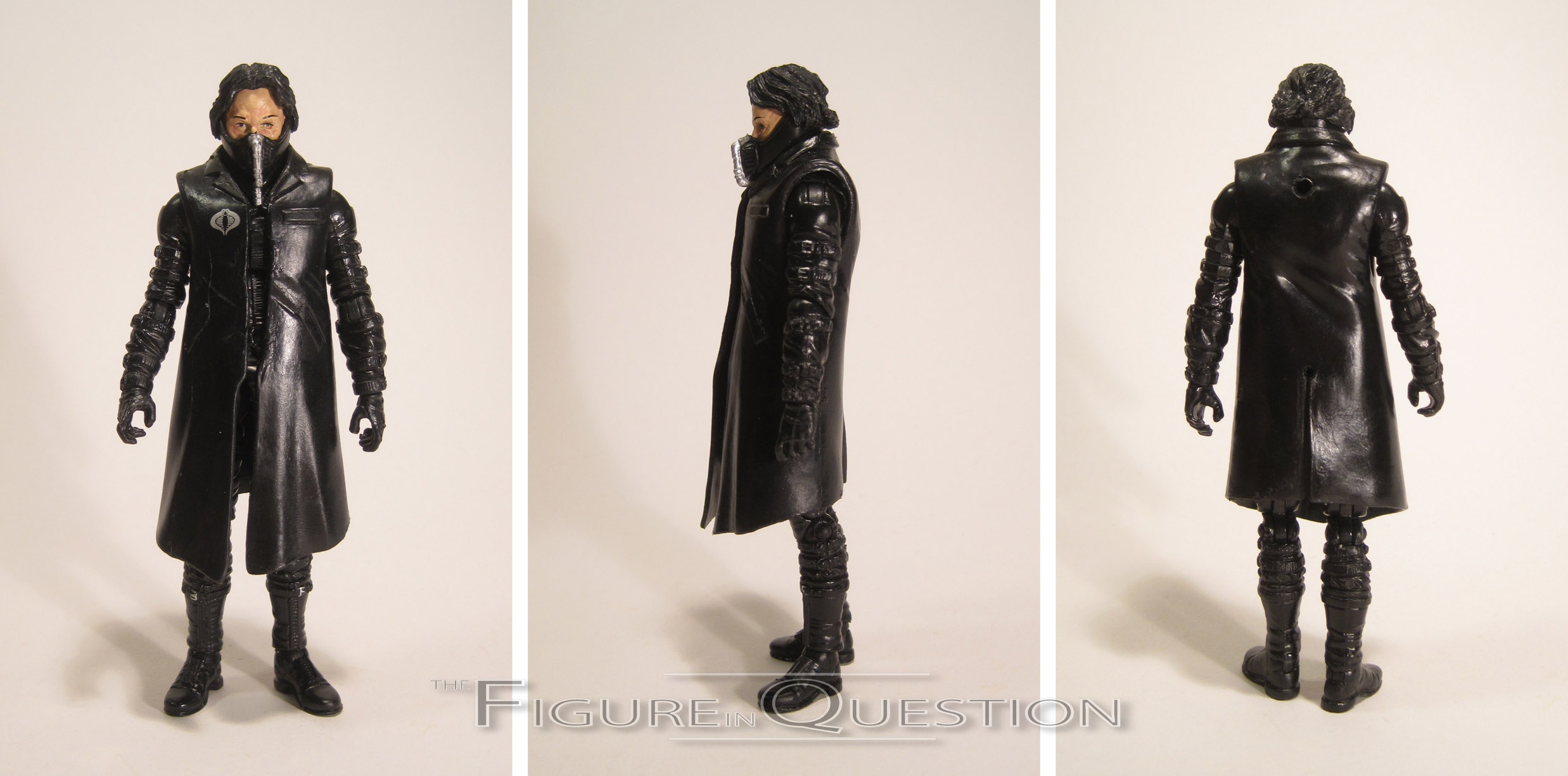
Rex “The Doctor” Lewis was released in the third series of Hasbro’s G.I. Joe: Rise of Cobra tie-in line, which hit a little while after the film’s release.  Presumably, he was in a later assortment so that the reveal that he was Baroness’s not-quite-dead brother Rex could be kept secret.  The figure stands about 4 inches tall and he has 22 points of articulation.  The sculpt for the Doctor was all-new to him, and as far as I know, it’s not been re-used (well, apart from the labcoat, which has shown up on a few figures).  The sculpt is certainly different.  Hasbro opted to not be 100% faithful to the film’s version of Rex, who dressed more like an actual scientist (well, apart from the headgear).  This figure has some sort of  Edward Scissorhands get-up.  Which, with the addition of the jacket, ends up looking about the same as the movie design anyway, so I guess it didn’t really matter.  The head stays pretty faithful, apart from the loss of the monocle thing.  The hair and breathing apparatus are both removable, allowing you to view the fully unmasked Rex, who actually looks a fair bit like Levitt in the scar make-up from the film.  Despite being removable, the hair and rebreather fit pretty tightly to the head, and look pretty decent overall, and they also both stay in place really well, which is a definite plus.  The paint on the Doctor is largely confined to the head (everything else is mostly black plastic).  The detail work is actually pretty great, and they convey the scarred nature of his skin quite nicely.  The Doctor is packed with a pair of claw gloves, a giant nanite-injector claw-thing, a pistol, a rifle, a briefcase with three containers of nanites, and a display stand with “THE DOCTOR” printed on it.  Not a bad assortment of extras!  The case with the nanites and the claw gloves are definitely my favorites, but they’re all pretty fun extras.
THE ME HALF OF THE EQUATION

The Doctor was one of my favorite parts of Rise of Cobra, so I was a little dismayed that he wasn’t out when the film hit.  I patiently waited for his release, and ended up finding him at the local Walmart while grabbing some Christmas decorations with my Dad.  He’s one of the better entries in the Rise of Cobra line, and one of my favorite modern-era Joes in general.  Not bad for a figure from a movie nobody likes!
The Blaster In Question #0011: Crossbolt

CROSSBOLT

N-STRIKE ELITE

I’ve mentioned before that the vast majority of the bow and crossbow type Nerf blasters fall under the Rebelle series.  Every so often, however, one of the other lines will get a bow of some sort, and that is the case for this week’s blaster, the Crossbolt.  This blaster in particular also fits into the category of blasters that I greatly enjoy but is fairly widely disliked by other Nerfers.  I can maybe understand some of the more common complaints, but not enough for it to ruin the blaster for me.  I’ll get to that in a little bit.  Let’s take a look at the blaster.

THE BLASTER ITSELF

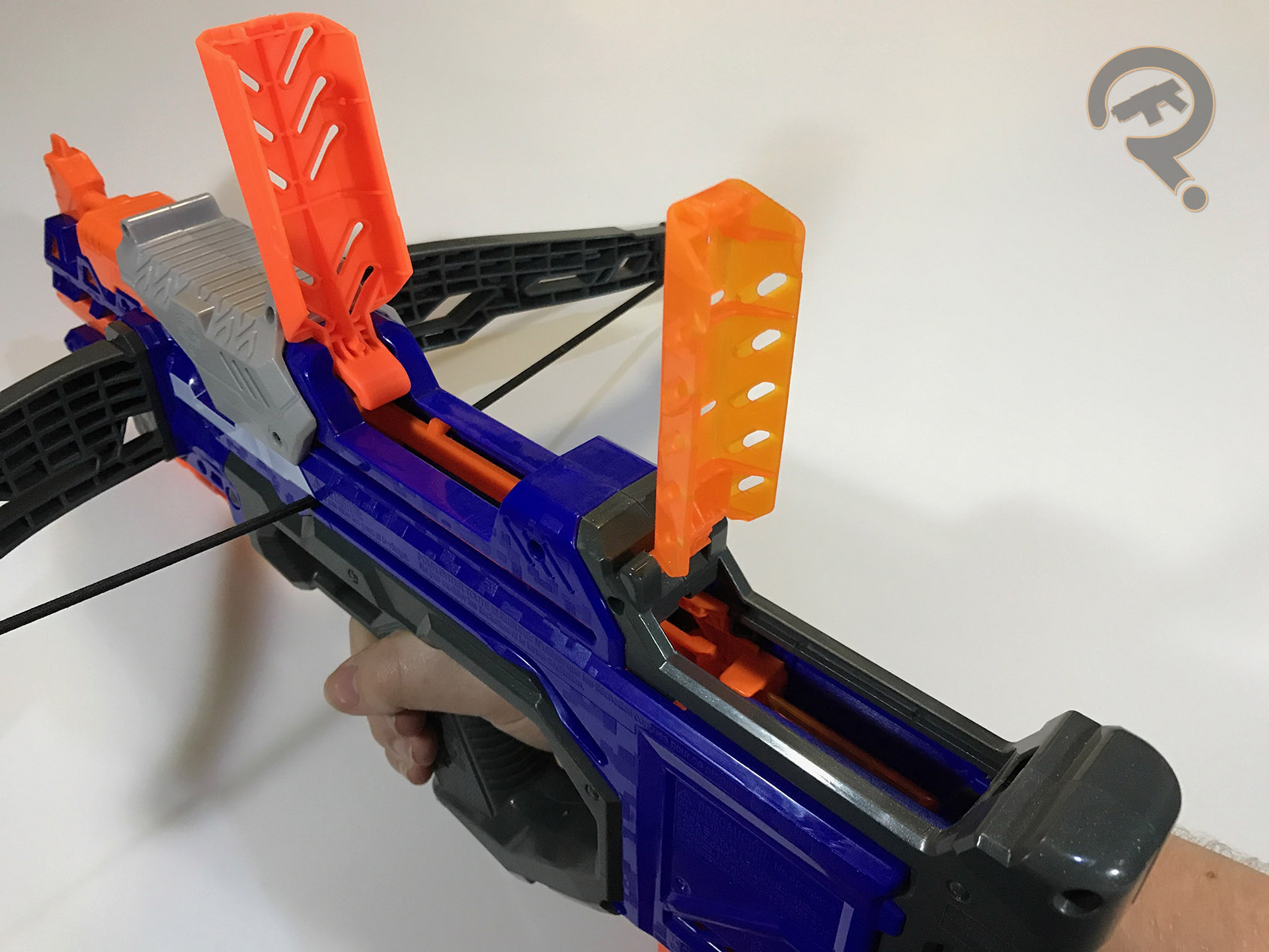
The Crossbolt was released in 2015 as part of the N-Strike Elite series.  It is a magazine-fed, elastic powered crossbow type blaster, which makes it very unique among Elite blasters as there are no other crossbows or “stringer” blasters in the line.  Additionally, it is one of the only two blasters to feature a bullpup configuration (firing mechanism behind the trigger) along with the Rayven.  Aside from this, the blaster is entirely original.  The main 3 of the aforementioned complaints about the Crossbolt focus around the ergonomics of the blaster.  The first issue concerns the bow arms protruding into the path one’s hand might take traveling from a forward grip to the priming slide at the top of the blaster.  While this is admittedly a hurdle few other blasters have, a simple twist of the firing-hand wrist solves the problem quite nicely.  This is also achieved without any of the straight up goofy flailing and fumbling I’ve seen some people do while trying to illustrate that plastic is solid and hands can’t go through it.  The second issue it the magazine release.  This, I can understand a little more because it is true that the placement and style of the magazine release make it fairly easy to accidentally bump the mag so that it falls out of the blaster.  I’ve even found that the release button doesn’t necessarily need to be pressed to cause the magazine to come loose.  The conclusion I came to was that the back of the blaster is not, in fact, a stock and that the blaster is not intended to be shouldered, a theory i felt was supported by how hard it is to line up the sights if it’s shouldered.  Could Nerf have designed it better to avoid this problem?  Yes, but it’s really the kind of problem you learn to avoid pretty quickly, so it’s still not a deal breaker.  Lastly, a lot of grown-up Nerfers like myself (but not including myself in this instance) complained that the dimensions of the thumb-hole grip were cramped and left parts of the blaster digging into their hands and/or wrists.  This, I absolutely don’t get.  Maybe I have weirdly perfect Crossbolt hands.  Either way, I’ve had zero problems with the grip and actually find it quite comfortable for such a compact blaster.  As I said, the Crossbolt features some fairly basic sights along the top as well as not one, but two jam access doors due to the slightly more complex internal structure of the blaster.  There is also an attachment rail on the underside of the barrel for accessories.  As with other stringer blasters, firing the Crossbolt is very quiet compared to an air plunger blaster, although priming each shot does make a good bit of noise as there are plenty of catches and latches along the stroke.  The string in the Crossbolt seems to have a noticeable amount more tension than with other stringer blasters and this definitely shows in performance as darts fly far and fast, hitting with good, solid impact, making this more of an outdoor blaster.  The Crossbolt comes packaged with a 12-round magazine and 12 Elite darts.

THE ME HALF OF THE EQUATION

I felt it was important to highlight the fact that this is a really fun, unique blaster because I remember, after it came out, seeing reviews with goofballs smacking their hands into the bow arms intentionally in an attempt to make their point like a cheesy infomercial.  I wouldn’t say it’s my favorite blaster, but it is entertaining in its own right, and entirely undeserving of the bad wrap it’s gotten over the years.

#1330: Arc Trooper

ARC TROOPER

STAR WARS: CLONE WARS (HASBRO)

“Through the creative vision of Lucasfilm Ltd. and the Cartoon Network, the Clone Wars are brought to life in an exciting new series of short animated chapters. A unique animation style captures the drama of this epic period in galactic history along with its outstanding heroes and adversaries. Noble Jedi warriors lead Clone Troopers into battle against the evil Separatist forces and their droid armies. Anakin, Obi-Wan, Yoda and their comrades struggle against the rising power of the dark side and confront personal challenges against a backdrop of war-torn planets”

Easily the best thing to come out of the Star Wars prequels is Genndy Tartakovsky’s Star Wars: Clone Wars micro series, released in the period between Attack of the Clones and Revenge of the Sith.  It was the most fun that Star Wars had been since the original trilogy.  There were a couple of cool new ideas introduced by the series, including the Advanced Recon Commando Troopers, or ARC Troopers, an advanced group of clones personally trained by Jango Fett before his demise.  I’ll be taking a look at one of them today!

THE FIGURE ITSELF

The ARC Trooper was released in the 2005 assortment of Hasbro’s animated-style Star Wars: Clone Wars line.  Though the figure is simply named “ARC Trooper,” he appears to be specifically based on Captain Fordo, the lead ARC Trooper from the series.  The figure stands about 3 1/2 inches tall (he’d be closer to 4 if he were standing upright) and he has 4 points of articulation.  This line was specifically based on Tartakovsky’s line-art from the series.  He’s style is very fluid, which means the figures are rather limited on the articulation front.  A number of figures opted for a more static pose, but the ARC Trooper was actually sculpted in a rather pre-posed manner.  He’s mid-stride, with his right outstretched in a commanding motion and his left down by his side holding a blaster.  While I’m generally not a huge fan of pre-posing on action figures, this is definitely one time where it really works, because it aids in capturing that fluid style I was talking about.  The sculpt does an overall pretty solid job of capturing the distinctive design of the clones from the cartoon.  The only slightly off part is the helmet; on the show, the helmets bowed inward at the bottom, but here it flares out.  It doesn’t result in a super different look or anything, but it’s ever so slightly off.  Still, it’s quite a nice sculpt.  The paintwork on this guy is pretty straightforward.  It’s just flat colors, as it should be.  The application is mostly pretty clean, though there’s a bit of slop on the edges of the kama.  Fordo included a pair of blasters, which can either be held or stowed in his fully-functioning holsters.  He also included the same black display stand included with all of the Clone Wars figures, though, surprisingly, he doesn’t really need it.

THE ME HALF OF THE EQUATION

Captain Fordo was my first Clone Wars figure.  I was always interested in the line, but all the figures I wanted were in hot demand at the time, so I could never find them in stores.  I ended up getting this guy while on a day trip with my dad and my brother.  We had gone to a small comic show, which had been a bust in terms of action figures, so my dad took us to a Target on the way back and let us each pick something out.  Christian got an Anakin and I got this guy.  He’s not a super complex figure or anything, but I still really like him, and he reminds me that I should really track down more of this line.

The Blaster In Question #0010: Stryfe

STRYFE

N-STRIKE ELITE

If you’re a regular Nerf-er, you probably looked at the title of this weeks review and thought “what could this chuckle-head possibly have to say about the Stryfe that hasn’t already been said?”  The answer is this: the Stryfe is vanilla ice cream.  Feel free to quote me on that. Lost?  That’s ok.  Stick around and I’ll explain it to you.

THE BLASTER ITSELF

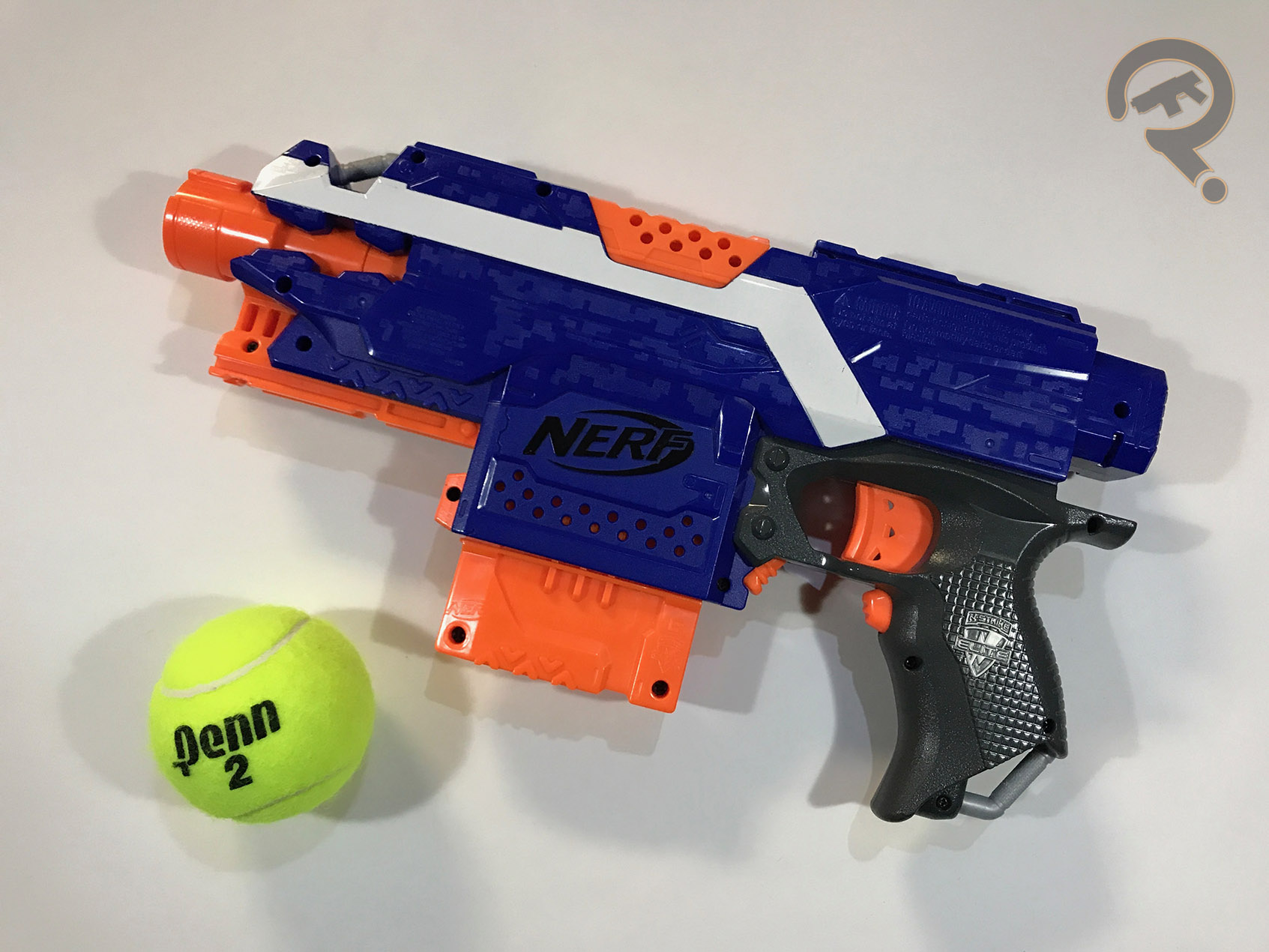
The Stryfe was released in 2013 as part of the N-Strike Elite series, which is Nerf’s core product line.  It is an electronic, semi-automatic, magazine-fed, flywheel blaster, much like the Rayven before it.  Really the only functional difference between the Stryfe and the Rayven is the position of the magazine.  Now, allow me to explain the vanilla ice cream.  The Stryfe is really nothing new (especially at time of writing this).  It doesn’t offer any huge breakthroughs in dart blaster tech.  Out of the box, it’s not a game-changer by any stretch of the imagination.  In this sense, it’s kind of plain, vanilla, if you will.  Now, this is not to say it’s bad either.  Vanilla is still a tasty flavor, and as such, the Stryfe is a perfectly fine blaster.  The grip is comfortable in-hand, magazines can be changed out quickly and easily and it only takes a couple seconds to rev up before firing.  Once revved up, darts fly pretty well and hit with some considerable force, just so long as it has fresh batteries.  Simple and mostly functional, but it doesn’t stand out in any real way, in fact, without some light modification, there’s a mechanical lock that prevents the trigger from being pulled if there isn’t a dart loaded and this lock doesn’t always work correctly.  The result can be a fully loaded blaster that refuses to fire, but this starts to get into where the Stryfe really shines.  I would say, tasty as it is, relatively few people eat vanilla ice cream entirely on its own.  This applies to the Stryfe as well.  While the blaster is serviceable out-of-the-box, the potential for modification is monumental and allows just about anyone to get in on it.  The Stryfe features one attachment rail on the top of the blaster and one on the underside of the barrel.  Additionally, the muzzle sports a barrel attachment lug, and there’s a connector to attach a stock as well.  When it was released, there were a handful or so attachments that could be fitted to the Stryfe and that number has increased many fold thanks, in no small part, to the launch of the Modulus line.  Throw some sprinkles on that ice cream.  Of course, these are all external modifications only and don’t really add to the basic performance of the Stryfe, but what if you’re looking for a more serious upgrade?  If you fancy yourself handy with a soldering iron, there’s no shortage of tutorials out there on how to rewire a Stryfe to increase voltage, swap out switches, use rechargeable LiPo batteries and so on.  Now you’re looking at a decent little sundae with hot fudge or whipped cream or whatever, but there’s even more than that.  Thanks to companies like Worker and a slew of others, there is a growing market for 3rd party modification kits, many of which are geared specifically for the Stryfe and they can get pretty in depth.  If you’re looking to dress a Stryfe up like real-steel firearm or replace the flywheels to rifle the darts as you fire them, there are kits for just about anything.  Now you’ve gone and stuck a brownie in with the ice cream.  A regular, unmodified Stryfe requires 4 AA batteries and comes packaged with a 6-round magazine and 6 Elite darts.

THE ME HALF OF THE EQUATION

After all that talking-up of the potential modification options for the Stryfe, it may be a little surprising to know that I’ve only ever modified them to the point of removing that irritating lock.  Maybe if I had more free time and money to spend on kits, I might have gotten more involved, but given the assortment of stuff available, I think it is more a question of when I get into more serious mods rather that if.  And for the record, I totally eat vanilla by itself.


#1323: Talia

TALIA

BATMAN: THE ANIMATED SERIES (HASBRO)

“Talia is the ‘Daughter of the Demon,’ trained by her father Ra’s Al Ghul to reach the height of her mental and physical capabilities.  Quick witted and lethally skilled, she is a faithful soldier in her father’s mission to save the Earth from environmental destruction–even at the cost of all human life!”

A few years after Kenner’s Batman: The Animated Series line had run its course, Hasbro (who had acquired Kenner in the early ’90s, and officially abandoned the Kenner name in 2000) decided to fill in a few of the line’s holes, offering up an all-new line of boxed sets.  These sets offered up a few repaints of old figures, alongside one or two original figures, generally of characters that would have been hard sells on their own.  Today’s subject, Talia, is one of those figures.

THE FIGURE ITSELF

Talia was actually available two different ways.  She was first offered in the “Shadows of Gotham City” set, alongside her father and variants of Batman and Robin.  She was released again not long after as part of the “Girls of Gotham City” set, alongside Batgirl, Poison Ivy, and Catwoman.  My figure comes from the second set, but the two are essentially identical.  The figure stands about 4 1/2 inches tall and she has 4 points of articulation. Her articulation scheme is kind of odd; she has no movement in her legs, which makes getting her to stand a real pain.  Her sculpt was unique to her, and based on her earlier The Animated Series appearance.  It’s not a bad sculpt.  There are a few inaccuracies; the hair shouldn’t really have the curl at the front of her hair, and the boots should have flat soles, not heels.  That being said, those are pretty minor issues, and about on par with the earlier Kenner figures.  In fact, she fits in with those figures pretty seamlessly, which is the most important thing.  As far as paint goes, she’s got some issues.  The basic application is fine, but most of the colors are just flat out wrong.  The biggest one is the jumpsuit; in the show it’s a very, very dark purple.  Here it’s some sort of lavender shade, which removes some of the menace of her design.  It’s also not particularly striking.  There are some additional inaccuracies, such as the black boots instead of the proper grey, and the really pale color that’s been used for the skin tone.  It all adds up to a figure that doesn’t have much in the way of “pop.”  Talia originally included a pair of pistols, which I lost long ago.

THE ME HALF OF THE EQUATION

These sets were mostly given to me as Christmas and birthday presents.  I didn’t get the “Shadows” set for either of those events the year it was released, meaning I missed out on Talia the first time around.  Due to that, the “Girls” set was at the top of my list the next year.  As much as I wanted the Talia figure, I can’t really say she was ever one of my favorites.  The sculpt’s alright, but the articulation is lackluster and the paint is as bland as plain white toast.

The Blaster In Question #0009: Fair Fortune Crossbow

FAIR FORTUNE CROSSBOW

REBELLE (CHARMED)

If there’s one thing the Rebelle line can’t get enough of, it’s bows.  Early on in the series, these were mostly just regular air-chamber blasters dressed up to look and operate more like a conventional bow.  It took a couple releases before Nerf finally released an assortment of “stringer” elastic powered blasters that took another step toward proper bow mechanics.  Of course, with all these bows, you have to be able to distinguish them from each other otherwise the market gets flooded.  Today, we’ll be looking at one of the more visually unique bow (well, crossbow, but you understand) blasters from Rebelle, the Fair Fortune Crossbow.

THE BLASTER ITSELF

The Fair Fortune Crossbow was released in 2014 as part of the Charmed subset of Rebelle blasters.  It uses the same elastic chord system that first appeared on the Rebelle Diamodista, except instead of being a single shot blaster, the FFC features a 6 round rotating cylinder.  Given the unique aesthetics of the blaster, it shouldn’t be a surprise that all the hardware is original.  The ornateness of the faux filigree paired with the unusual upholstered patterning on the grip and slide gives the blaster a feel very reminiscent of something from the Bayonetta video game series, something I am rather fond of.  This point is further driven home when you attach the included charm bracelet (hence the Charmed moniker) to the blaster, adding a little bit of sparkle accompanied by a satisfying jingling sound.  The bracelets in particular surprised me.  When I initially heard about the upcoming release of this line, I thought it sounded gimmicky and pointless, and I guess I was kinda right.  However, the bracelets themselves are metal and so have a decent heft to them.  Additionally, the charms on each of the bracelets (which are all unique to their specific blaster) are well designed and eye-catching.  The one problem with the bracelets is their size.  I have two much younger sisters, and even they struggled getting the bracelets around their wrists.  Alright, enough about that, back to the blaster.  The grip on the FFC is a little odd.  First of all, it’s severely inclined, almost parallel with the body of the blaster.  Second, it has a loop for your middle finger just below the trigger, so only very specific ways of holding it are comfortable.  Once you’ve worked out how to hold the darn thing, it feels pretty good in the hand.  The aforementioned upholstery-like texture provide a decent amount of traction.  The plastic that surrounds the cylinder is a little on the thin side, but it’s not vital to the structure of the blaster so it’s fine.  The FFC has no sights of any kind, and I normally wouldn’t bother talking about what the blaster doesn’t  have, but the priming slide sticks up enough on the top of the blaster that it actually obscures your view, so it’s worth noting.  Because it uses the elastic to fire darts as opposed to an air plunger, the blaster is very quiet when firing.  It hits a little on the soft side of Nerf blasters and, in my experience, it seems like standard Rebelle and Elite darts are more prone to swerving than when fired from a more traditional blaster.  Taking these things into account, the FFC is definitely an indoor blaster, especially if you’re particularly attached to the collectible Rebelle darts that come packaged.

THE ME HALF OF THE EQUATION

I think this blaster is a good example of one that, while it doesn’t necessarily perform terribly well in comparison to others, is a lot of fun despite it’s shortcomings.  Personally, what attracts me to a blaster is often how easily I can fit it in with a particular pretend-play and the FFC has a lot of potential in this regard.  Whenever I pick it up, I can very easily form a story around it, and admittedly, this has occasionally included playing “Fly Me to the Moon (Climax Remix)” while making a number of stylish poses.

#1315: Audie Murphy

AUDIE MURPHY — MEDAL OF HONOR RECIPIENT

G.I. JOE: CLASSIC COLLECTION (HASBRO)

“Born in Texas on June 20, 1924, Audie Murphy joined the United States Army in 1942 and went on to become the most decorated U.S. combat soldier of World War II.  It was on January 26, 1945 that Second Lieutenant Murphy, 15th Infantry, performed one of the most extraordinary acts of selfless heroism ever recorded.”

Generally speaking, when it comes to G.I. Joe, I tend to stick with the ‘80s A Real American Hero incarnation of the line (though I’m also partial to the ‘70s Adventure Team incarnation as well).  That being said, I was introduced to the brand via my dad and uncle’s old vintage Joes from the ‘60s.  Anti-war sentiment following Vietnam led to the end of the original Joe concept, but opinions gradually calmed over the years, allowing for that original concept to make a gradual return in the ‘90s.  In addition to the generic soldiers that originally populated the line, Hasbro also peppered in some prominent historic members of the U.S. military.  Today’s focus is one of those figures, Audie Murphy, who might be as close as WW2 got to having an actual Captain America.  He was prominent not just as a soldier, but also as movie star in the ‘50s and ‘60s.  And he got a G.I. Joe, so that’s pretty cool, right?

THE FIGURE ITSELF

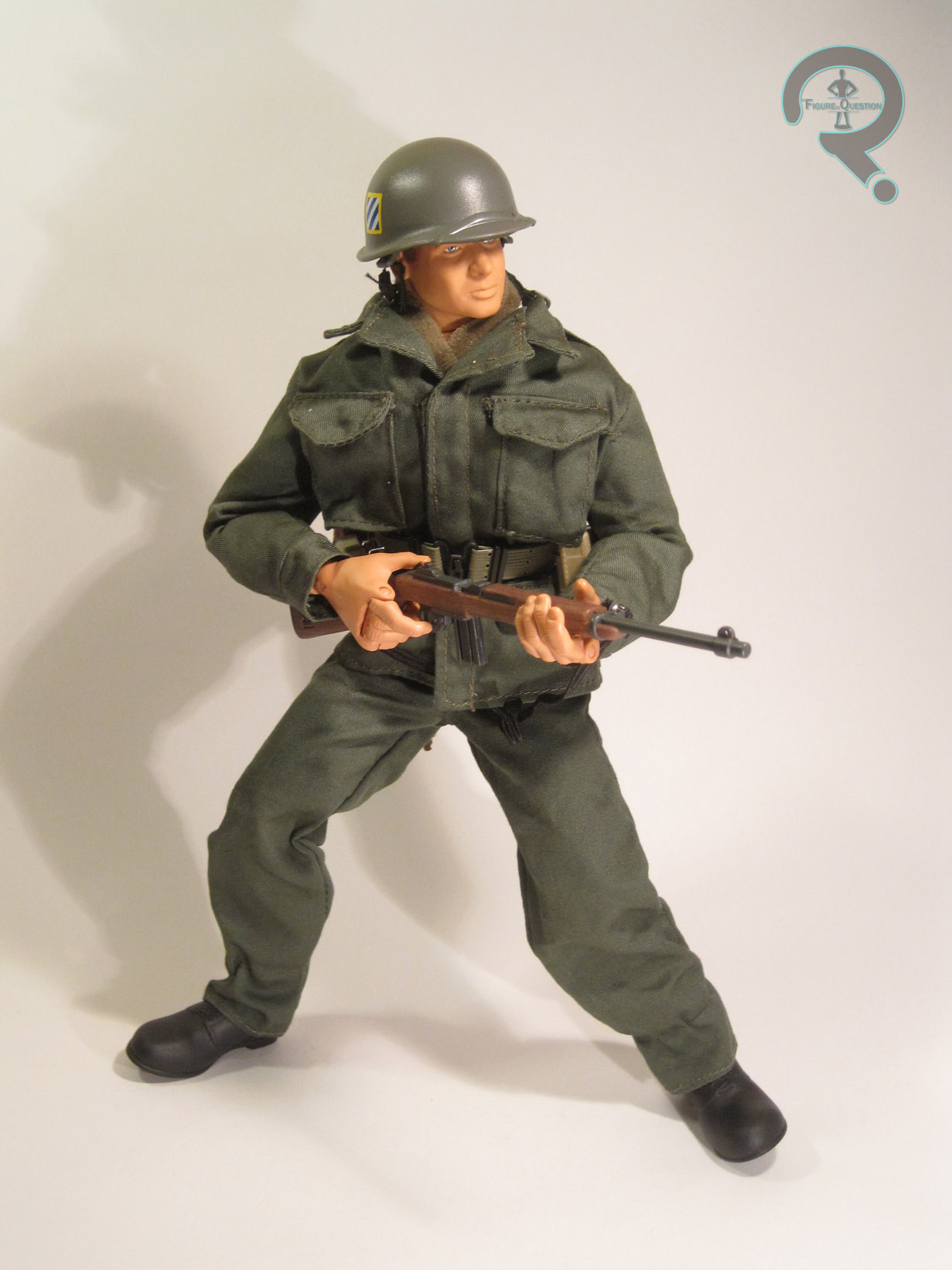
Audie Murphy was released in 2001’s Echo Series of Hasbro’s G.I. Joe: Classic Collection.  He was an entry in the then-ongoing “Medal of Honor Recipient” sub-series of the line.  The figure stands about 12 inches tall and has 42 points of articulation.  The figure is obviously meant to evoke Murphy during the events of January 26, 1945.  It’s worth noting that he seems to actually be more pattered on Murphy’s appearance in the 1955 film To Hell and Back, which retells that battles events, and stars Murphy as himself.  Obviously, there’s a lot more reference available from the movie, and it’s how most people are gonna think of Murphy, so it’s hardly the worst choice. 

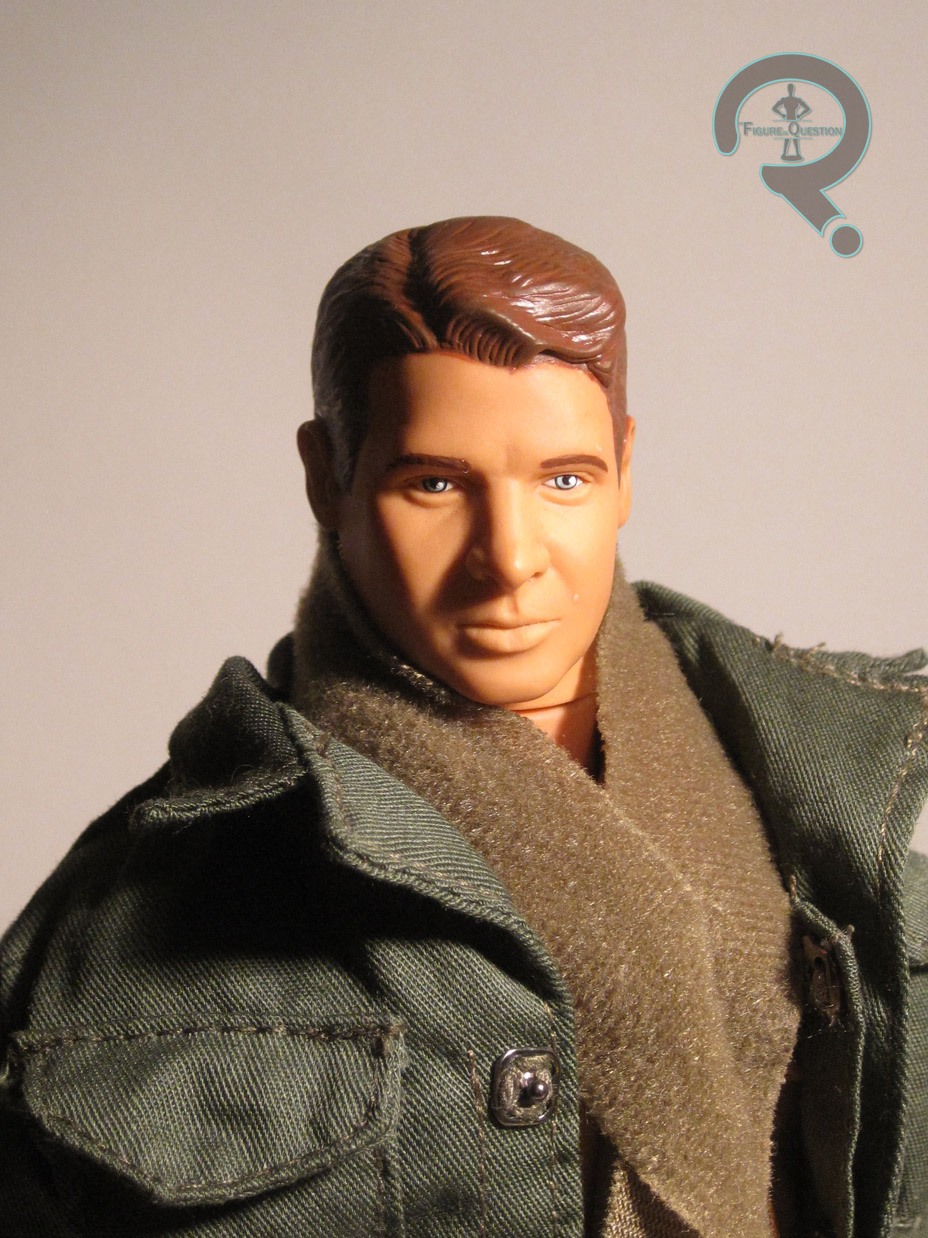
The head sculpt is a respectable recreation of Murphy’s likeness.  Obviously, it’s not Hot Toys quality or anything, but that’s hardly expected, given the time period and price point of this figure’s release.  Nevertheless, it’s still a pretty solid sculpt, with some pretty impressive detailing.  It’s perhaps a little on the small side in comparison to the body, but Hasbro was at the time still trying to shake off the really large, chunky heads of the early ‘90s, and I think this looks a little less silly than the alternative.  The paint work is pretty clean, and there’s even a little bit of accent work on the hair.  You’re not going to mistake him for a real person, but you can see who it’s supposed to be.

Murphy is based on the at the time standard body for the line.  It’s a body that definitely shows its age; the arms in particular are a touch on the long side, though this is really to aid with posing.  As far as playability, it’s actually pretty great.  It’s super posable, and can hold a lot of intense poses.  He sports the “Gung Ho Grip,” meaning he had the individually articulated fingers, which are a lot of fun when it comes to posing.

His uniform is made up of a field jacket, shirt, pants, two belts, a scarf, a helmet, and a pair of rubber boots.  Like the head sculpt, they’re not comparable to anything from the higher end, but they fit well with the style of the line at the time.  The tailoring is a little loose, mostly to help preserve his articulation.  Due to the thickness of the fabric, when he’s wearing everything, he can look a little puffy, but that’s really the style of the time, and he won’t look super out of place.  The helmet, second belt, and boots are all quite nicely sculpted; the helmet sits securely on his head, which is always a plus.

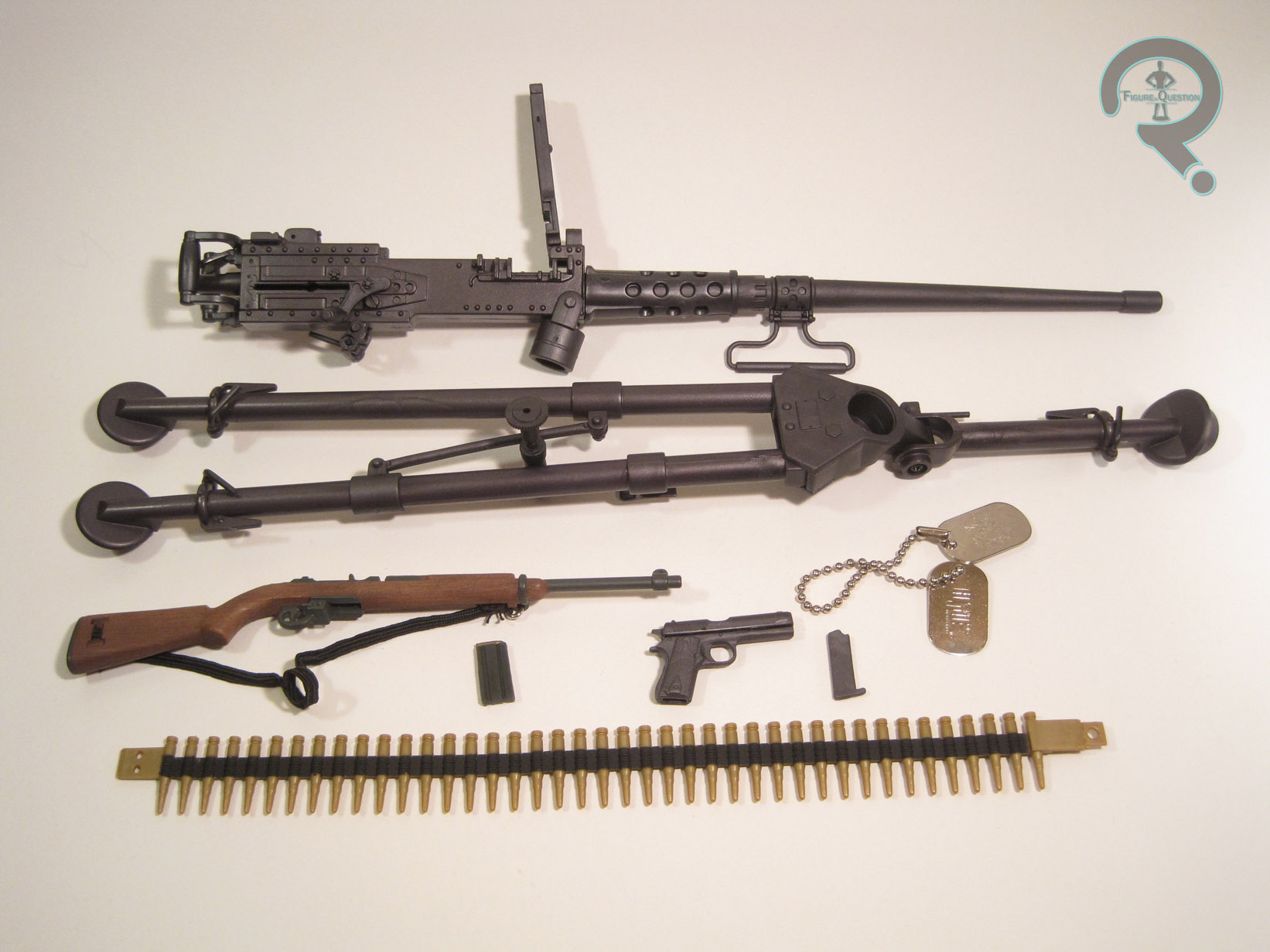
The figure included a pretty impressive selection of accessories:

  • M-1 Carbine
  • Canteen
  • .45 caliber pistol
  • .45 ammo pouches
  • Holster
  • Browning .50 caliber machine gun (w/ ammo belt)
  • Dog tags

He’s armed with an M-1 Carbine, a .45, and a Browning machine gun.   All three are quite nicely sculpted pieces.  The Carbine’s my favorite of the three, and I think he looks the best holding it.  Its got a removable magazine and a strap, which is cool.  The .45 is also a pretty nice piece, though it looks a touch small in his hands.  There’s a working slide and a removable clip, which are both pretty awesome touches.  The Browning is supposed to replicate the one Murphy used during his standoff against the German forces.  The main gun is pretty accurate, but the real thing was mounted to a tank, which obviously wasn’t feasible here.  He’s been given a little tripod to stand it on, which is a little awkward to use.  Nevertheless, it’s a cool piece.  The ammo pouches, canteen, and holster are all designed to be attached to his second belt.  It can be a little tricky to get them placed, but they stay on pretty tight once they’re on there. Lastly, there’s the dog tags, which predate G.I. Joe’s move to slightly more realistically scaled ones, and as such look super, super goofy on the figure.  One thing that might have been nice to get is some sort of display stand, but they weren’t really common at this point.

THE ME HALF OF THE  EQUATION

This Audie Murphy figure belonged to my Granddad.  My family and I gave him to Granddad as a birthday present back in 2001, when the figure was still brand new.  Remember how I mentioned that my Granddad moved at his own pace?  Yeah, well he took this figure, unopened,  and set it under a table in their dining room for several years.  Then he finally removed it from under that table….to use it to prop up the TV antenna to get better reception.  It would be hyperbolic to say this caused me actual, physical pain, but it did come quite close.  In the last few weeks since Granddad’s passing, we’ve been doing a lot of work around the house, and I found this guy, still in his now horribly sun-stained packaging.  With my Grandmother’s permission, I finally opened him, 16 years after he made his way into the house.  It was a nice, somewhat cathartic moment.  The figure shows his age, but I found myself genuinely enjoying taking him out and playing with him.  He makes me nostalgic for my days of when I was super into this style of G.I. Joe, and I’m really just happy he’s finally been opened!

The Blaster In Question #0008: Star-Lord Quad Blaster

STAR-LORD QUAD BLASTER

MARVEL

It is a well known fact that the Guardians of the Galaxy movies are awesome.  No one disputes this, it’s just true.  As with just about every Marvel movie to come out in the last decade (yeah, Iron Man was in 2008, I had to look it up) there’s been a decent amount of merchandise out there.  Regulars to the site will likely have seen at least one of Ethan’s numerous GotG figure reviews, but what if you’re one of those people who would rather be Star-Lord rather than just have him on your shelf?  Thats where we get the subject of today’s review.

THE BLASTER ITSELF

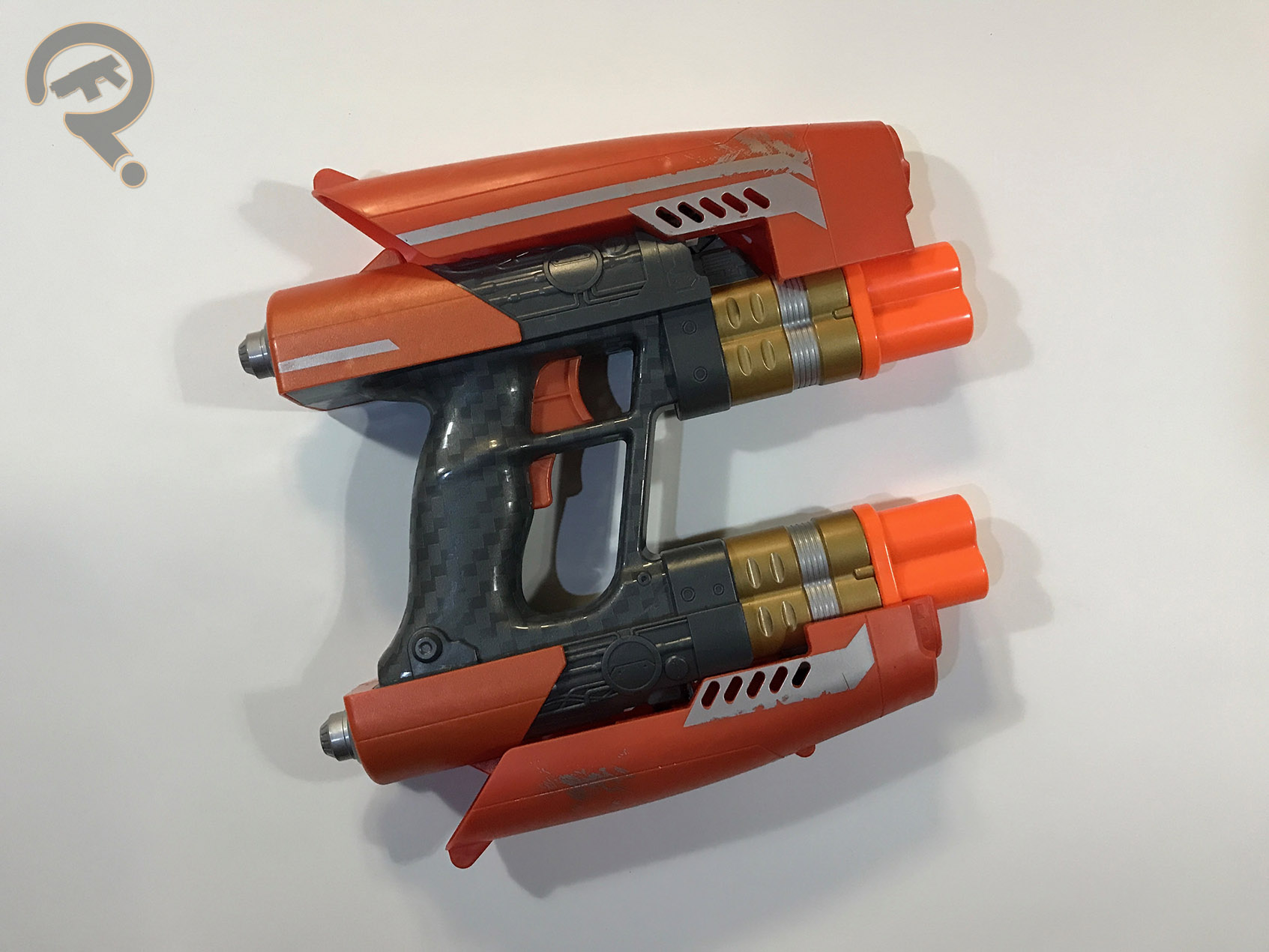
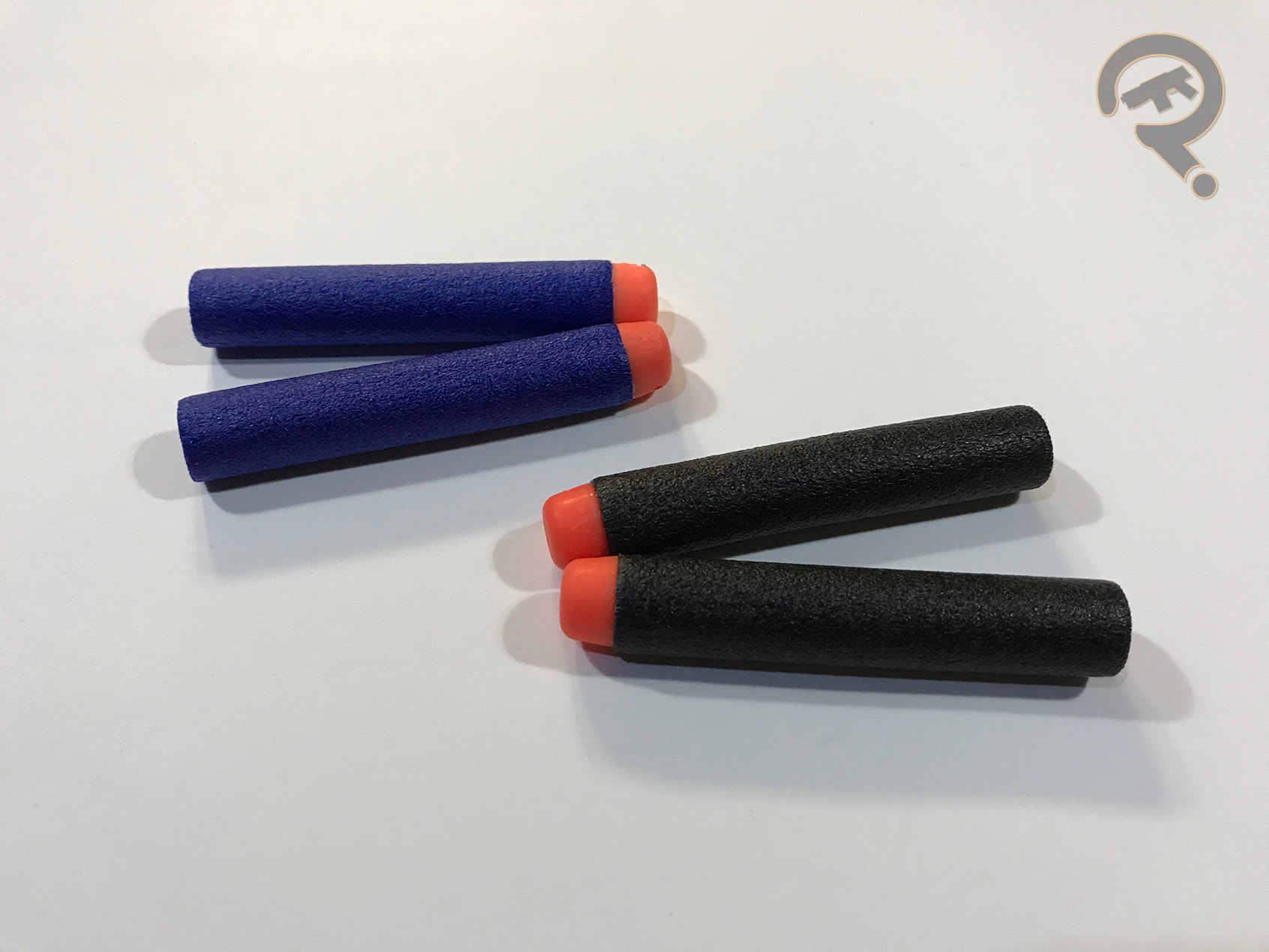
The Star-Lord Quad Blaster was released in 2014 as a Marvel tie-in product to coincide with the release of the first GotG movie.  Interestingly, there is no Nerf branding anywhere on the blaster, but just a quick mention on the box.  Aside from using a “smart air-restrictor” setup found in a plethora of other Nerf blasters, the Quad Blaster is completely original.  The blaster is operated by priming one or both of the slides on the rear and pulling the trigger.  Unlike the Roughcut and other similar blasters, the Quad Blaster does not have a staggered trigger, if both barrels are primed, both will fire simultaneously.  In addition, the smaller secondary trigger just below the firing trigger releases the latches holding the spring-loaded front ends, causing them to snap back, revealing two extra barrels.  In all honesty, this feature was 85% of the reason I got this blaster.  It’s just a ton of fun fiddling with even if you’re not actively firing the blaster, and if you flick your wrist just right, you can reset the barrel covers without touching them.  Opening the front covers is required to fire the second barrels on the top and bottom.  The blaster is very sleek and definitely has an appropriate sci-fi feel to it, almost like one of the plasma weapons from Halo.  The grip could maybe stand to be a little bigger as I could see someone with larger hands feeling cramped while holding it, but it’s forgivable when you remember the target audience.  The main body of the blaster feels on par with other Nerf blasters in terms of structural integrity, but it is worth noting that the plastic for the priming slides feels a little thin, and the front covers are a smoother, slightly more rubbery plastic than the rest of the blaster.  The priming stroke on the Quad Blaster is very short and not terribly heavy, as such, the performance is limited.  It’s still fine for running around the house, blasting your friends, but even on longer indoor distances, the darts tend to drop off a little sooner than I might like and the impacts can feel kinda flaccid.  Again, I can understand this decision given this is meant for children, and Nerf has to keep it’s own core products competitive, but it’s still a bit of a bummer.  The Star-Lord Quad Blaster comes with 4 Elite darts but with black bodies instead of the traditional blue.  Unfortunately I wasn’t able to find all 4 of mine but I got 2 and some regular Elites for comparison.

THE ME HALF OF THE EQUATION

It’s become sort of a recurring event in my life where every time Chris Pratt is in a movie or tv show (Gotg, Jurassic World, Parks and Rec) people tell me that his character reminds them of myself.  Normally I wouldn’t really take this to heart, but when my own mom is one of the most vocal people on this opinion, I figured I would just roll with it.  I mean, it’s no surprise that I would buy a Nerf blaster, but being attributed with Star-Lord (WHO?!) just moved it up my priority list.

The Blaster In Question #0007: Roughcut 2×4

ROUGHCUT 2X4

N-STRIKE ELITE

Shotguns are kind of a weird area for Nerf.  There are plenty of blasters available that do a decent job replicating the look and feel of a shotgun, but it’s a rarer thing to find one that actually functions like one i.e. actually firing a spread of darts.  One of the more successful implementations of this feature came to us in the form of the Roughcut 2×4.  While the name evokes a plank of wood, the actual blaster is a lot more interesting, unless you’re one of those lumber fanatics, in which case, no judgement, more power to you.

THE BLASTER ITSELF

The Roughcut 2×4 was released in 2013 as one of the first original blasters in the N-Strike Elite line.  It was also one of 2 blasters in the very short-lived Multi-Shot Madness collection alongside the Diatron from the disk-based Vortex series.  Mechanically, the blaster borrows heavily from the Barrel Break IX-2, featuring 2 separate plunger systems side by side.  If your trigger finger is very precise, this setup allows the user to fire either one barrel at a time or both at once.  Even the grips of both blasters are severely inclined, almost parallel with the barrels.  The main difference is that the Roughcut opted for a more straightforward front loading design with 8 barrels arranged in 2 columns of 4 (hence the name) as opposed to the Barrel Break’s weird breach-loading action and only 2 barrels.  Additionally, the Roughcut is pump-operated, so successive shots can be fired off much faster.  Aside from the aforementioned grip, the blaster is pretty run-of-the-mill in terms of how it feels.  Everything that’s supposed to move moves well, and everything that isn’t feels sturdy.  The Roughcut features some sights, although they do strike me as a little more of an after-the-fact addition than on a lot of other blasters.  There’s also a rail along the top of the blaster for attachments.  Being part of the core N-Strike Elite series, performance is strong.  Darts fly a good distance and land with a solid impact.  Decent range paired with a fairly compact form-factor and the ability to shotgun darts makes the Roughcut great for either ranged outdoor battles or just to keep handy for close encounters.  Just try not to hit anything fragile like your mom’s china or someone’s face.  The Roughcut 2×4 comes packaged with 8 Elite darts.

THE ME HALF OF THE EQUATION

Man, do I love shotguns.  Practically every shotgun-type blaster that Nerf has released in the last 15 years has been a favorite of mine.  The Hornet AS-6 was great apart from its cumbersome cocking and pumping mechanism.  The Barrel Break IX-2 was great apart from its awkward slide and break breach mechanism.  The Sledgefire was great apart from its finicky— you see the pattern.  To be fair, when working with Nerf darts, making an actual shotgun that works well in all aspects is difficult and things can get complicated very quickly.  Just goes to show that, in the case of the Roughcut, simplicity pays off

#1305: Captain America – Addendum

CAPTAIN AMERICA

MARVEL LEGENDS (HASBRO)

-ADDENDUM-

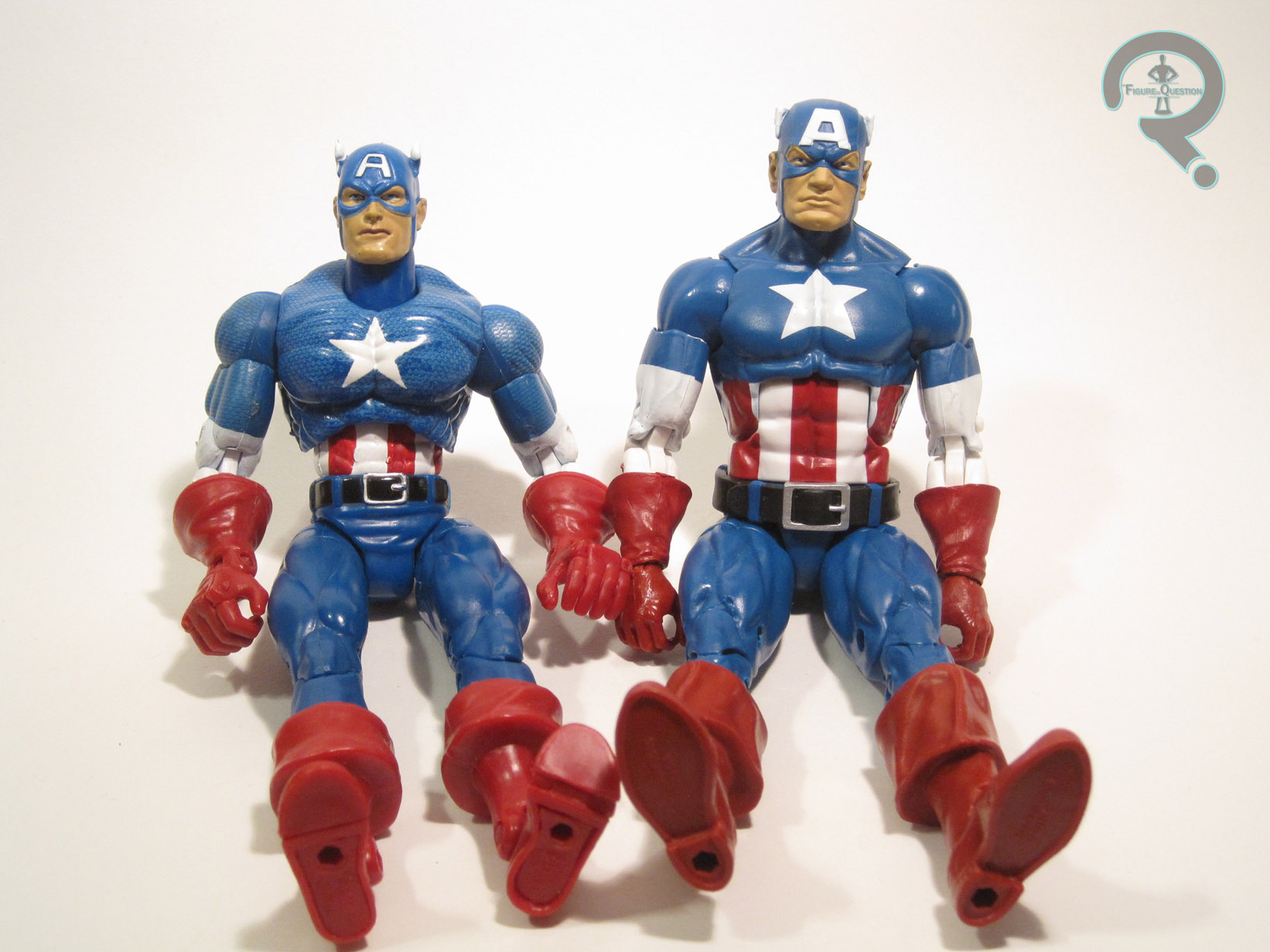
Since Hasbro relaunched Marvel Legends, I’ve been consistently displeased with the heads on their Steve Rogers figures.  When the line was relaunched, all of the unmasked males suffered from what I call “Hasbro-Face”: they would have a deep scowl and incredibly squared-off features, and just generally look more like the titular character from The Goon than the superhero characters they were supposed to be replicating.  As the line has progressed, the Hasbro-Face has slowly died out, with the exception of Steve Rogers.  I guess Hasbro wants to keep all of the versions of him consistent, but it means I haven’t truly been happy with a Legends Captain America since Toy Biz.

In today’s review of Captain America, I noted that a major contributing factor to my finally acquiring him was seeing an image online of a mod for the figure.  This mod replaced the stock figure’s atrocious head with that of the very first ML Cap figure, which, in my opinion, is still the best Cap head ever.  The biggest hoop in performing this mod is getting the first TB Cap.  I have my old one, but I really didn’t want to put that one under the knife (or drill, as the case may be).  Fortunately, I was able to find a loose one sans accessories for $5, which is really the main thing that sparked this whole project (ironically, I actually paid a dollar more for my “junk” Cap than I did my original).

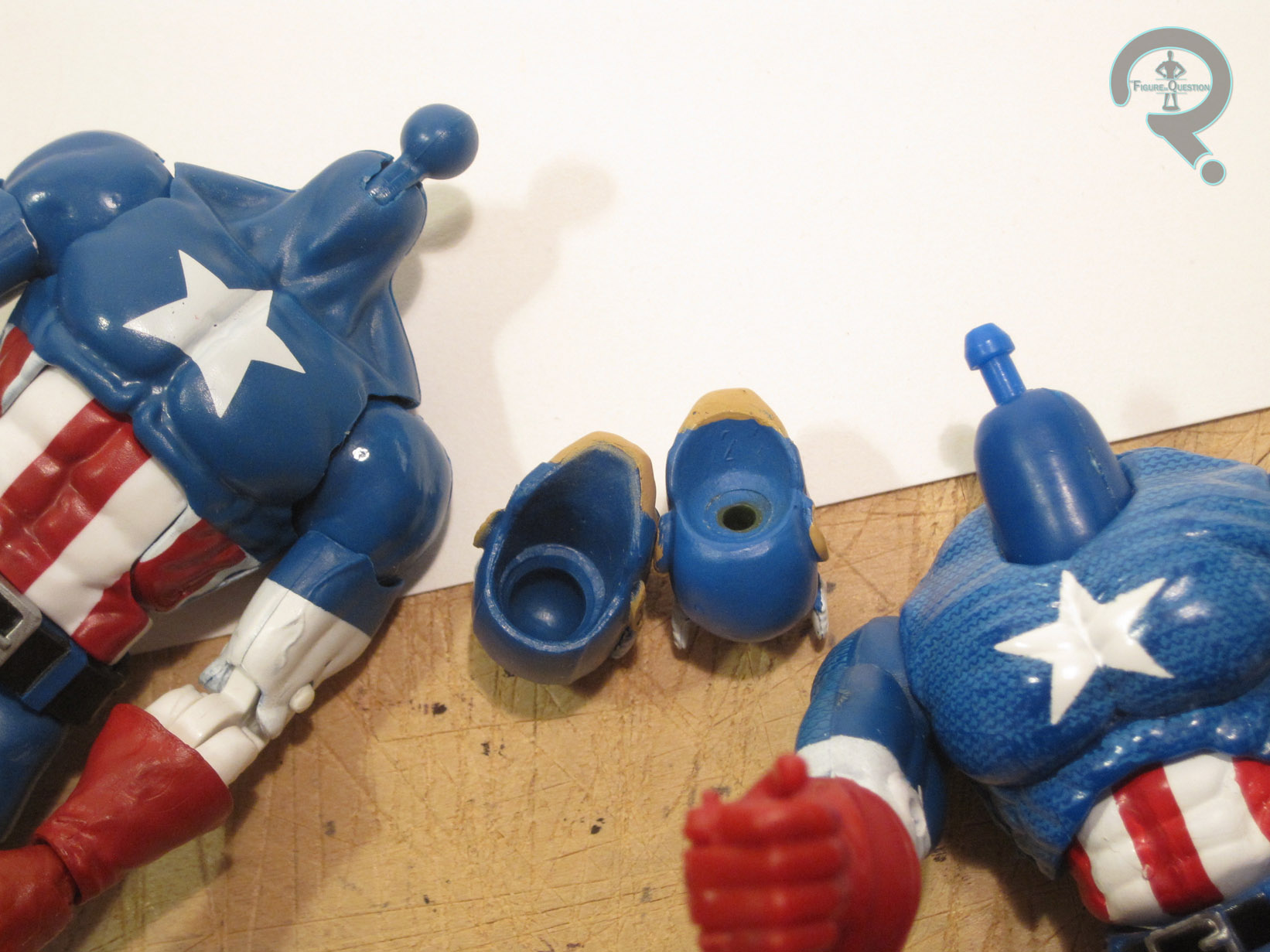
Perhaps the most difficult part of this whole project was just getting the TB Cap’s head off the body.  Toy Biz heads weren’t really designed for easy removal like their Hasbro brethren, so you’re pretty much going to have to use the boil-and-pop method, and even then, it took me a few rounds to finally get it popped off the joint.

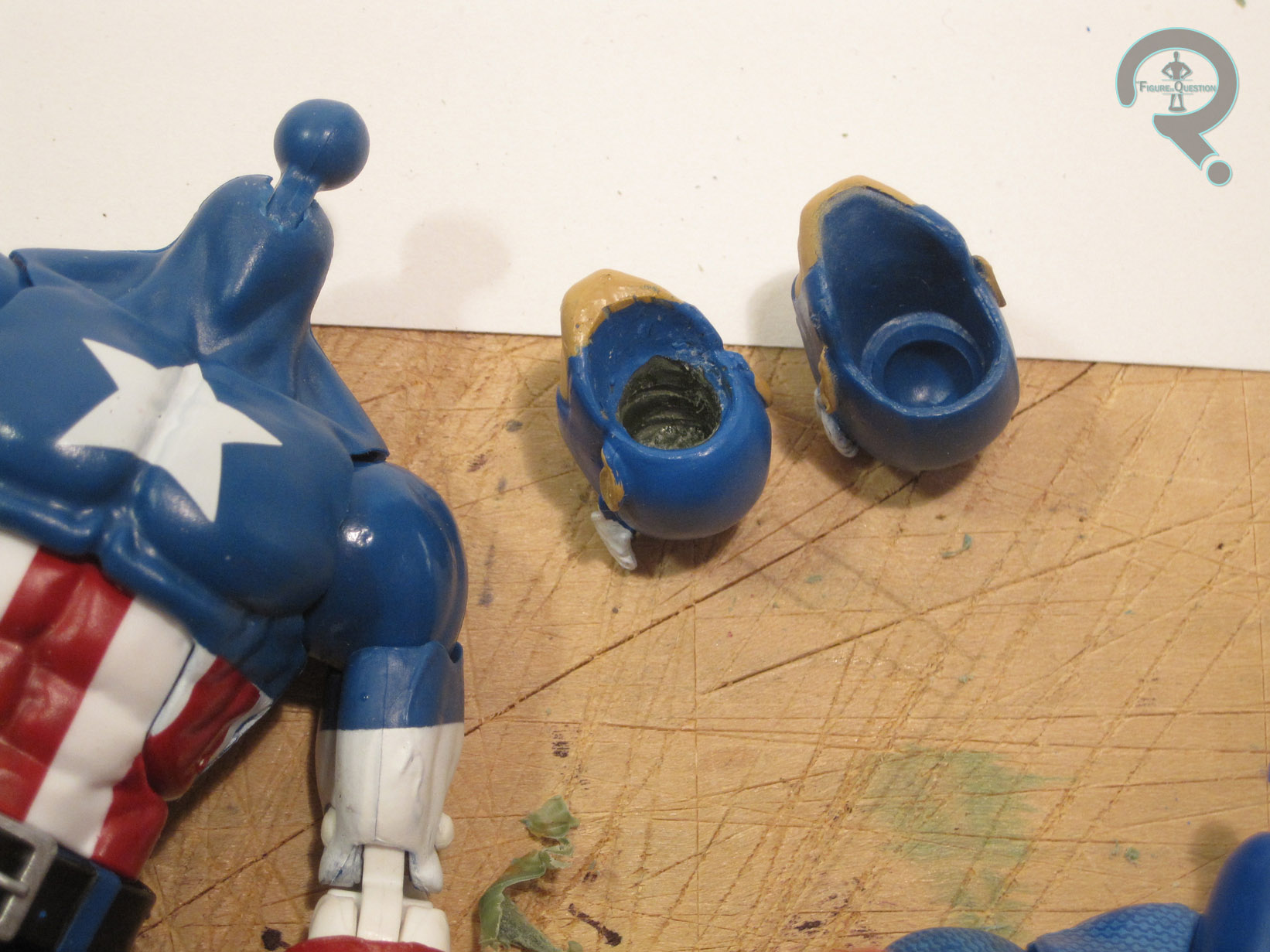
As you can clearly see from the photo, the socket on the TB Cap’s head is maybe an eighth the size of the åHasbro figure’s ball-joint.  In order to get it to fit, it needed some significant plastic removal.  The best tool for such a project is really a dremel; I didn’t have one handy, so I just made do with a basic power drill, starting with a drill bit just a little larger than the socket and slowly working my way to larger bits, until it was a good fit.  I actually went the slightest bit too large on the socket, but that’s an easy fix.  All you need is to put little bit of super glue in the socket, do a few turns while on the joint, and then take the head off and let it dry for a few minutes.  This gives the socket a little more texture, which helps the head stay put on the joint.

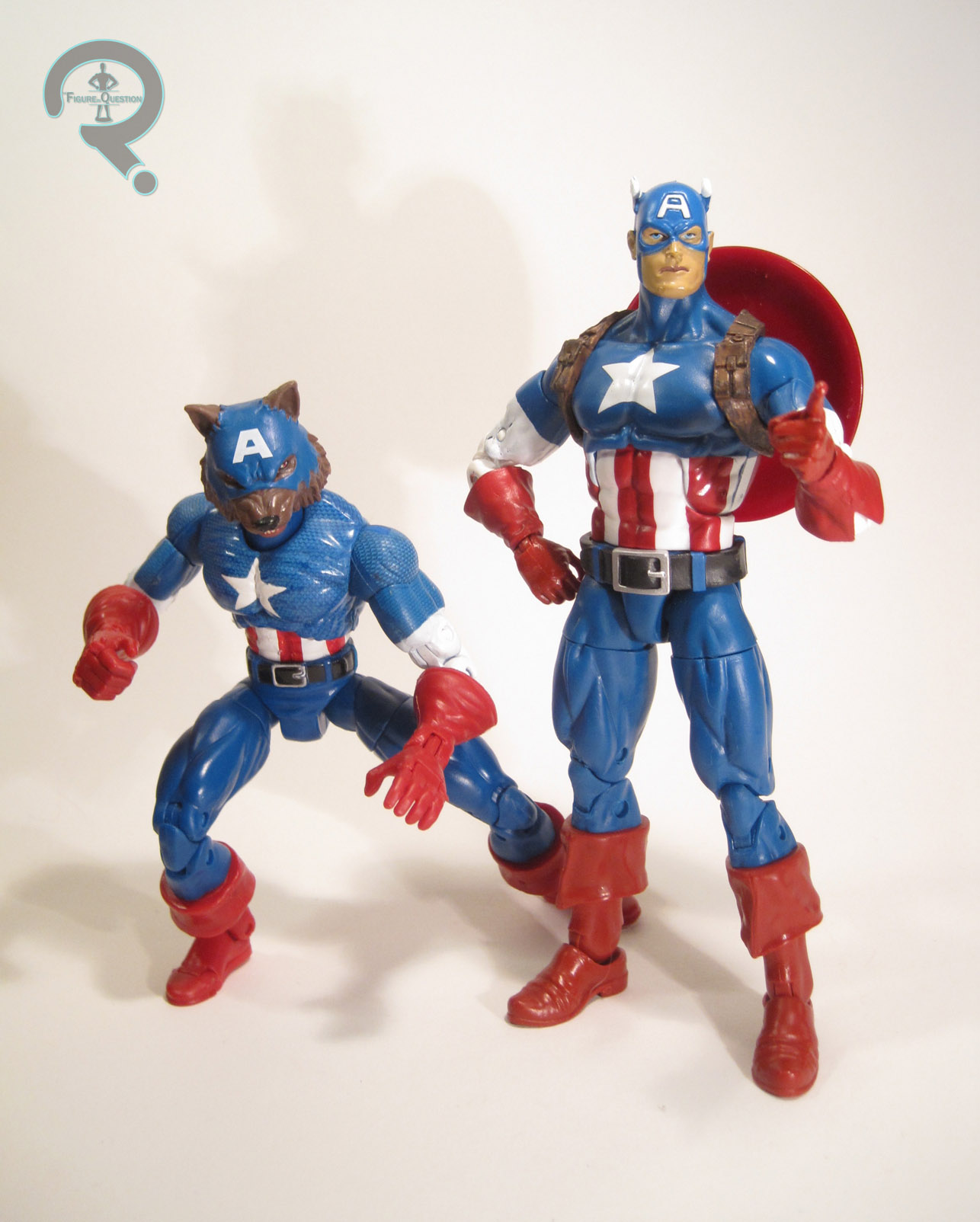
Throw in the shoulder harness from the Target 3-pack Cap to replace the wonky straps from the original figure, and I’m pretty happy with this figure.  The head/body paint matches up surprisingly well (any differences are virtually invisible to the naked eye).  The smaller head is scaled much better with the body, and it even makes the body look a little less chunky (I think the chunkiness I was seeing was actually an optical illusion).  And, best of all, he cost me less than the retail of your average Legends release to put together.  Now I have a Legends Captain America I can be proud of! Added bonus: with the left over parts I can put together a pretty sweet Cap Wolf!