The Blaster In Question #0018: Glowshot & Bowstrike

GLOWSHOT & BOWSTRIKE

N-STRIKE

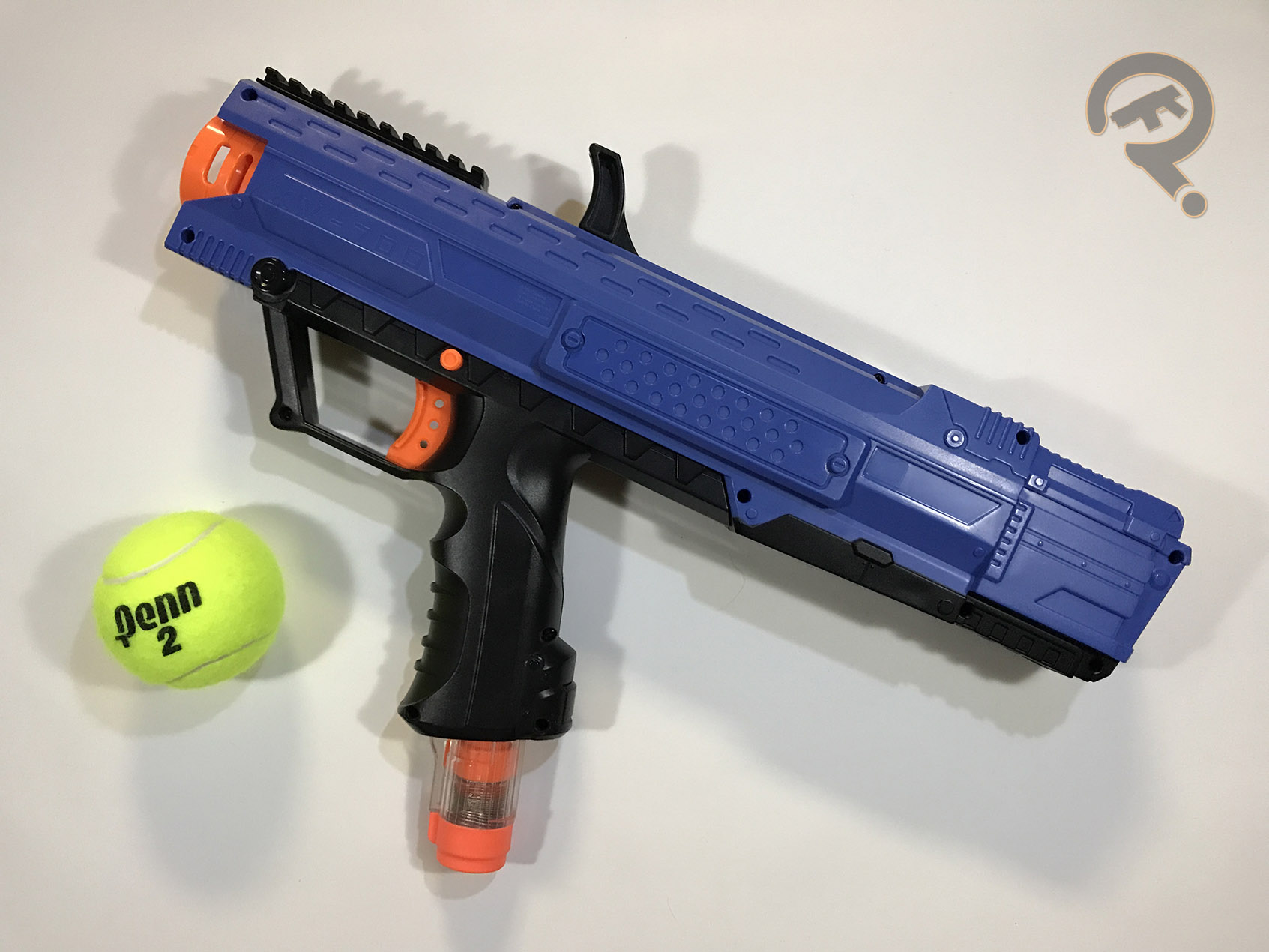
With a line of products as vast as Nerf’s, you know every little thing can’t be AAA gold tier amazing. So how do you make the low tier blasters stand out to potential buyers? Often a lower price point to make them more accessible, but you can also add in gimmicks. Given the functional and punctual similarities, I will be reviewing two such blasters today, so let’s take a look at the Glowshot and the Bowstrike.

THE BLASTERS THEMSELVES

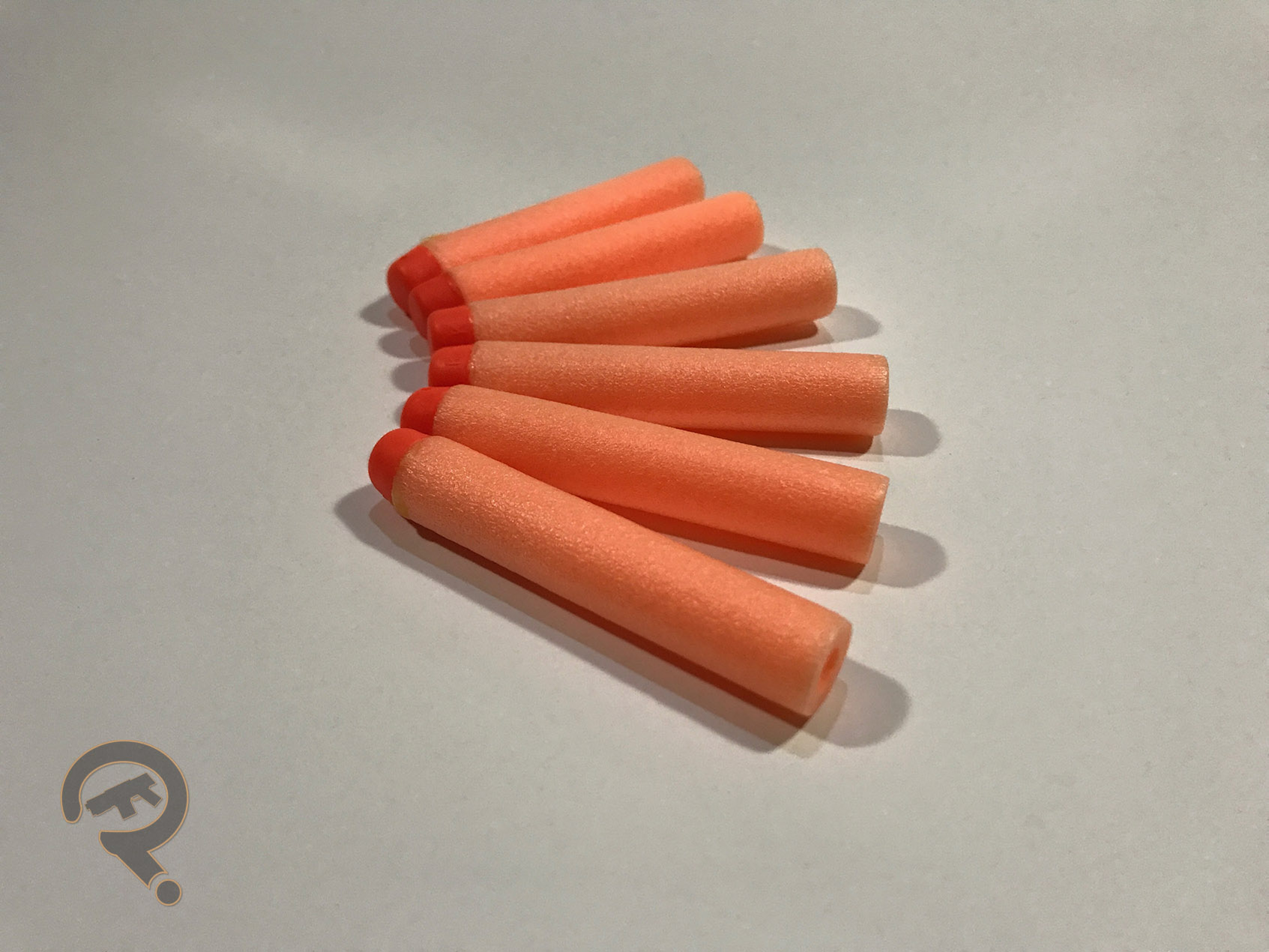
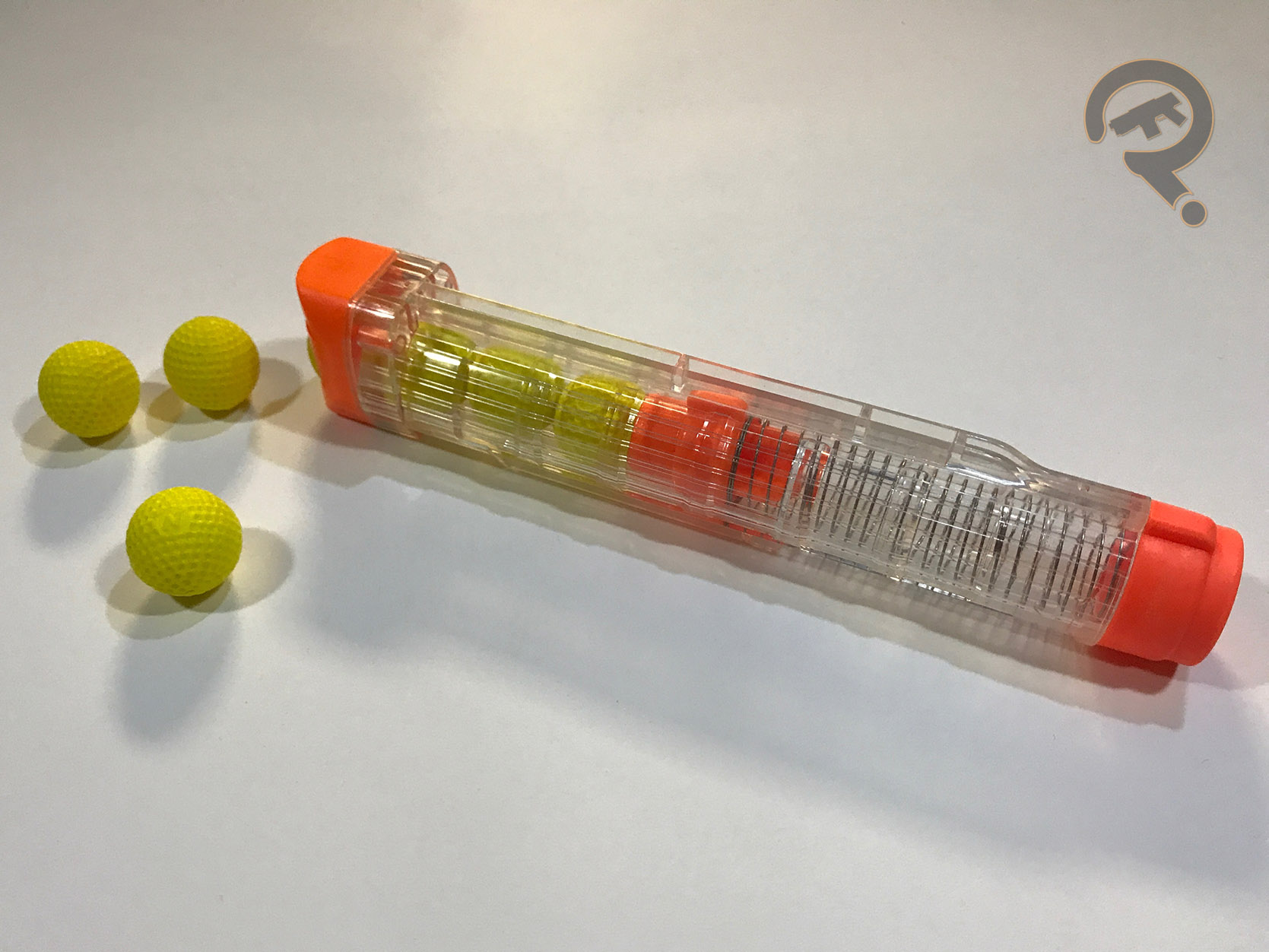
The Glowshot and Bowstrike were both released in 2016 as part of the N-Strike line. Both blasters work in essentially the exact same way, omitting their respective gimmicks which I’ll get to later. They are both single-shot barrel-loading blasters which fall into the “in-line jolt” variation of the oft-copied jolt reskins. Not really a whole lot to say about it. It works, it’s simple, that’s about it. Neither blaster is really a great performer, as these were branded for the regular N-Strike line even after the Elite series had been around for a few years. They’re both definitely better suited for indoor use and/or taking pot-shots at your younger siblings. Both blasters come packaged with 3 Elite darts. Now what makes these blasters unique?

GLOWSHOT

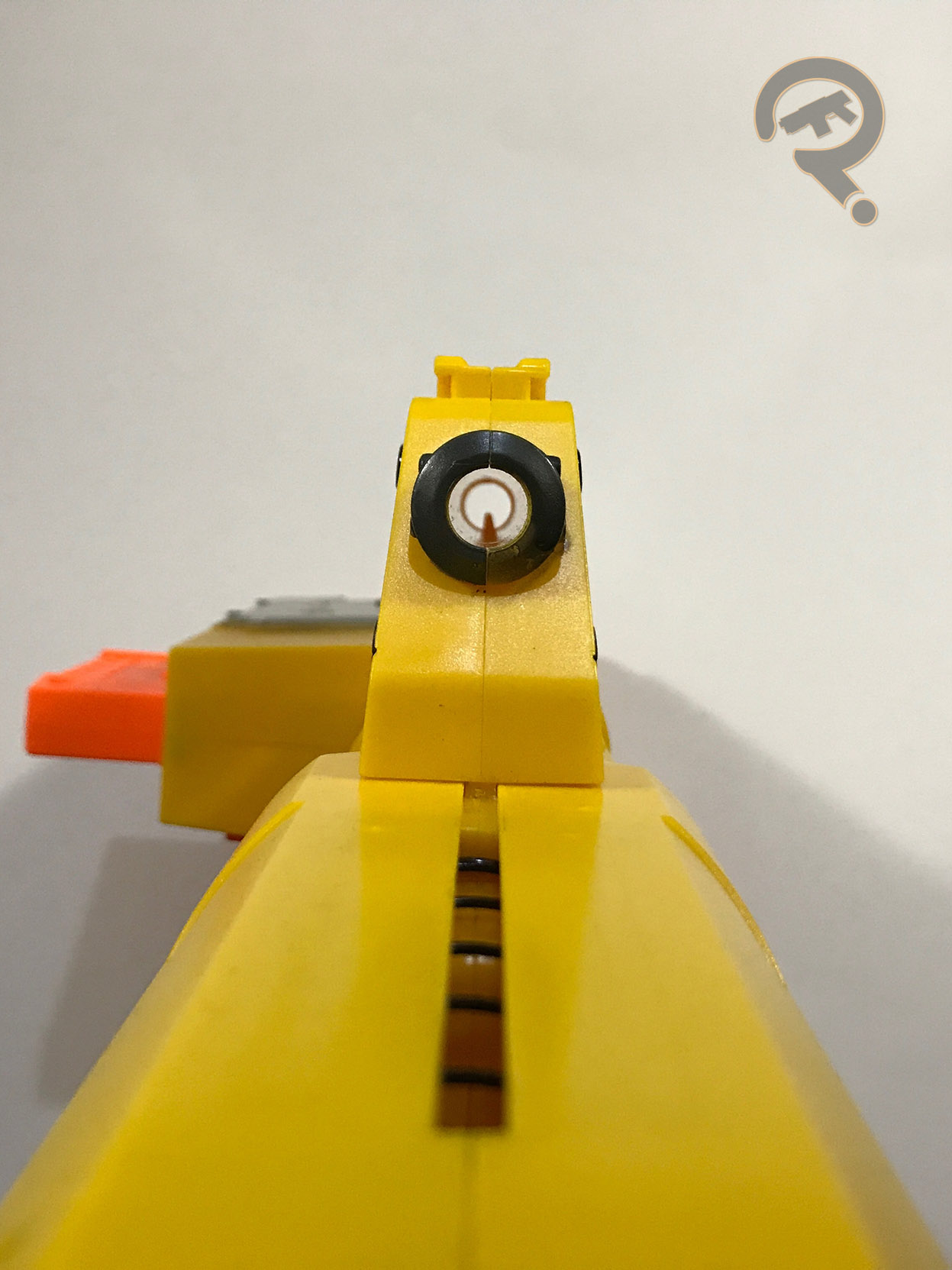
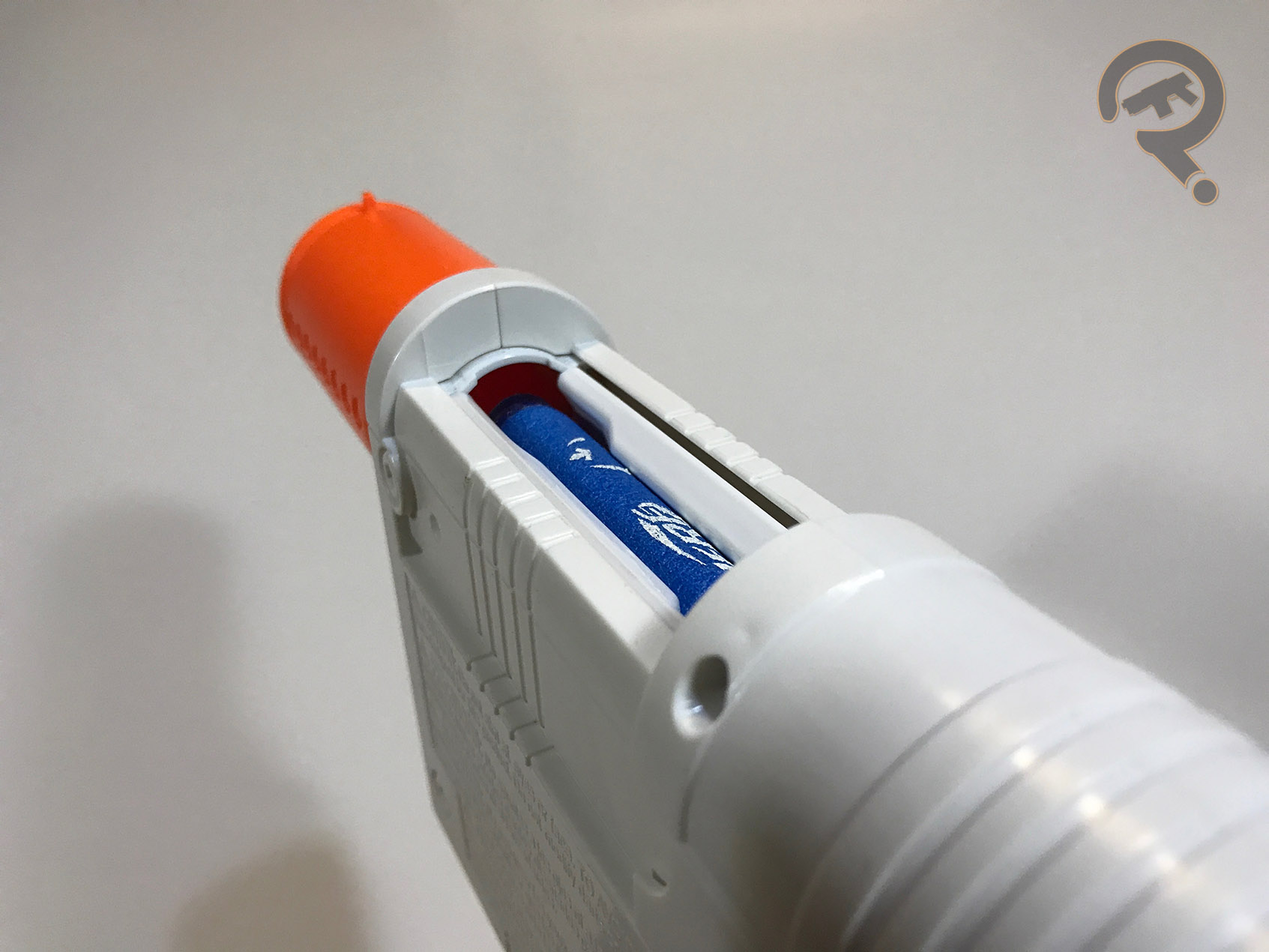
Initially, looking at the GS, you may notice that its outer shell is a semi-transparent material (mine is white though a green variant also exists). This is critical for its gimmick which allows the blaster to light up with a few green LEDs inside the shell when the switch on the back of the grip is pressed. Thecolor of the outer shell does not affect the color of the lights, nor is the light-up feature needed to make the blaster shoot. It’s purely aesthetic and requires 2 AA batteries to make it work. The grip on the GS is a little small and my pinky just barely fits onto the handle. The light switch can dig into the webbing of your hand a little but neither of these are surprising nor are they deal-breakers given the price point.

BOWSTRIKE
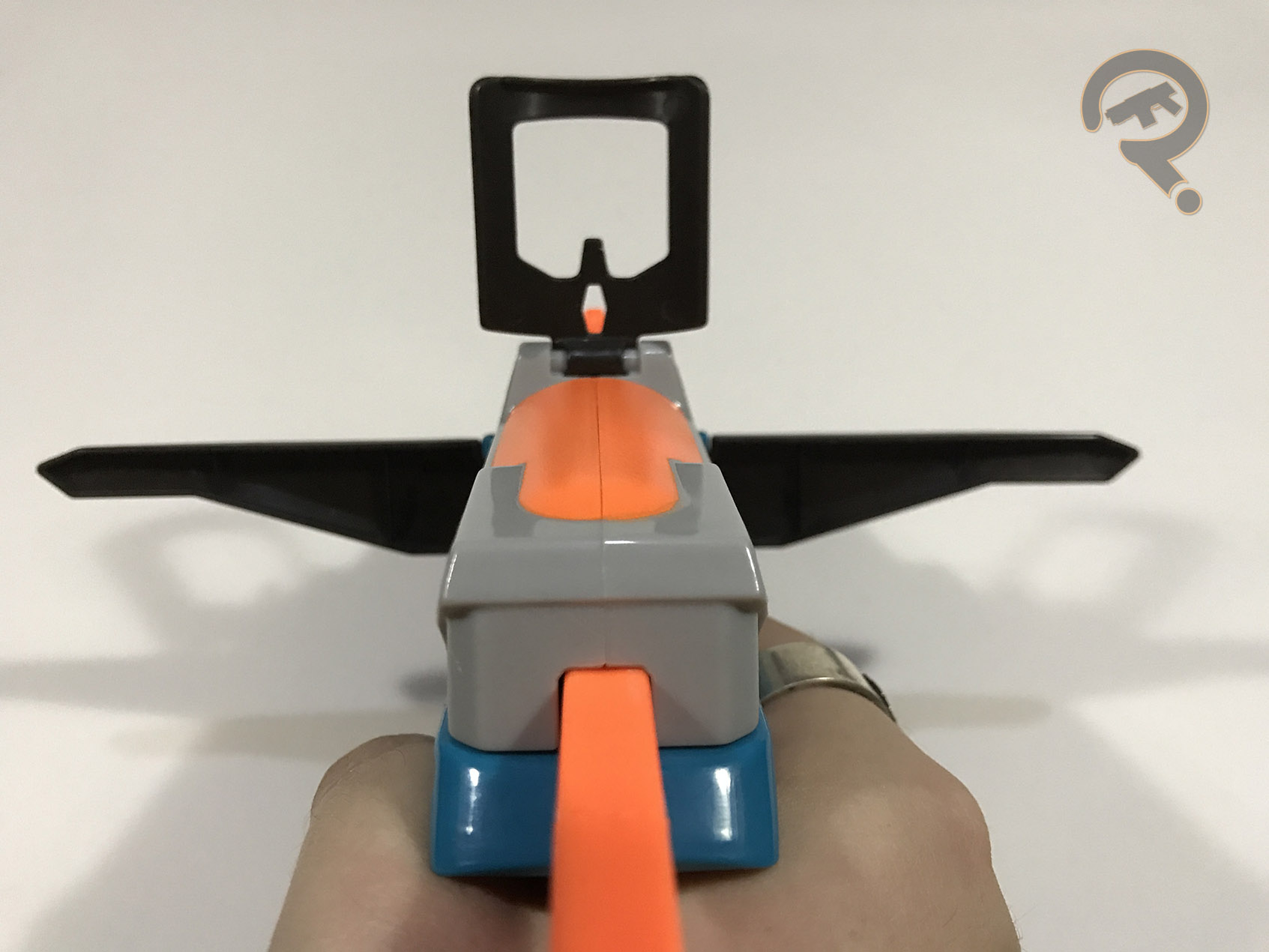
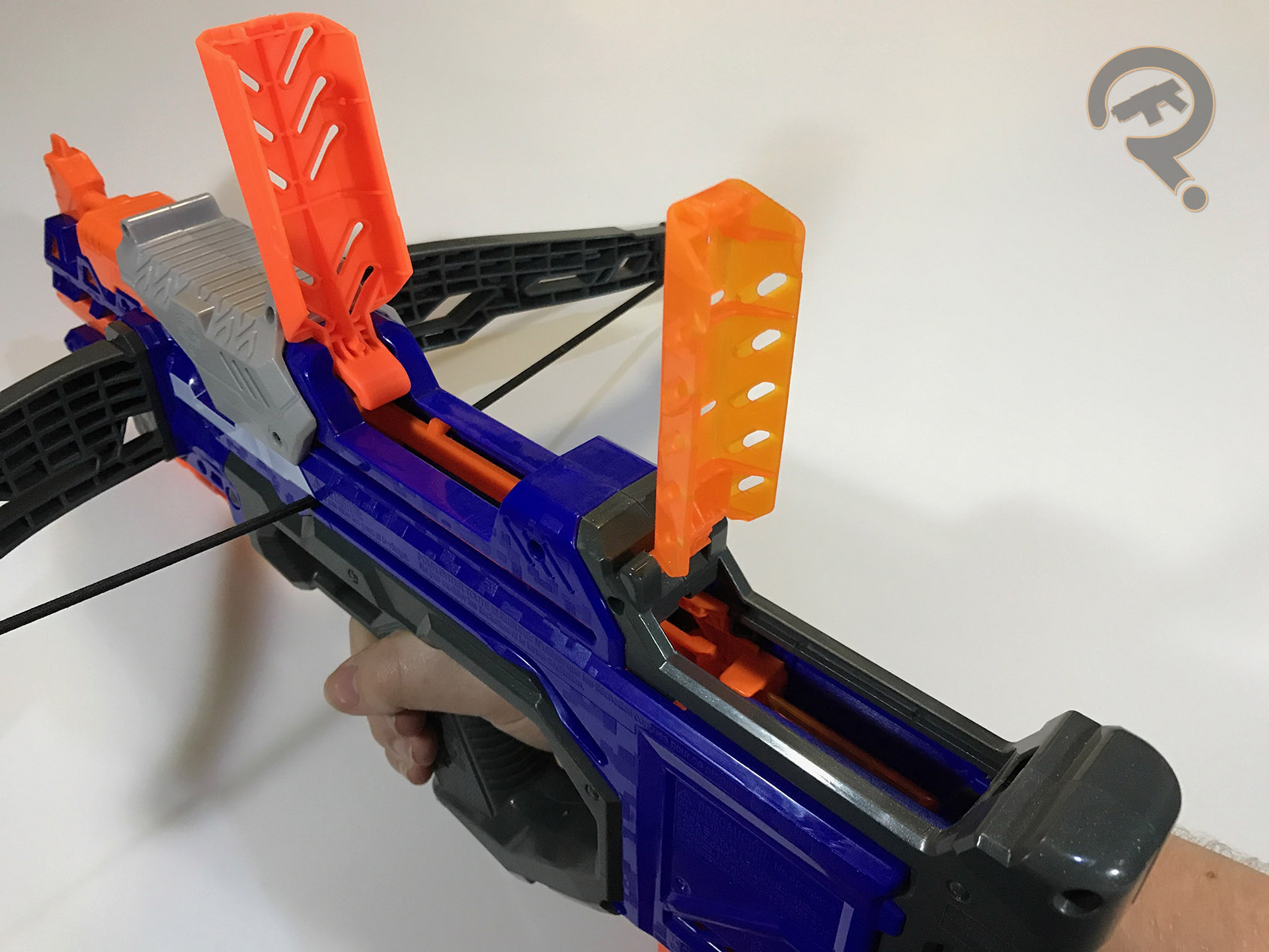
The BS takes a slightly different approach to its gimmick, which does not require any batteries at all as it is purely mechanical. Like the GS, it’s completely for looks only but is activated upon priming the blaster. When the priming handle is pulled back, the grey “bow” arms and sight pop up. They then lay flat again once the blaster has been fired. The BS also features a much smaller than usual grip with all the same issues as the GS as well as needed a bit more sculpting to accommodate the thumb. As it stands, there’s something of an edge that can become irritating if the blaster is held for any considerable amount of time.

THE ME HALF OF THE EQUATION

As with most of my reviews, I like to drive home the point that these toys are still a lot of fun even with their problems. You really have to take the whole picture into account. These aren’t meant to be competition-grade laser guns. They’re goofy little plinkers, and in that regard, I think they do a great job. Plus, I’m always for making Nerf more accessible.
The Blaster In Question #0017: Motofury Rapid Rally Set

MOTOFURY RAPID RALLY

NITRO

One of the most prominent trends in Nerf marketing is the considerable groundswell surrounding the release of a new type of ammunition.  It happened with Vortex, it happened with Elite darts, it happened with Accustrike.  This makes the substantial lack of hype for the new Nitro series curious.  Ok, maybe not that curious once you realize that Nitro is doing something completely different from the Nerf dart blaster lines.  That something is cars.  I’ll be honest, I wasn’t really grabbed by the premise of Nitro, but the launchers themselves were similar enough to the dart blasters that I was willing to give it a try, so today I’m looking at the Motofury Rapid Rally set.

THE BLASTER ITSELF

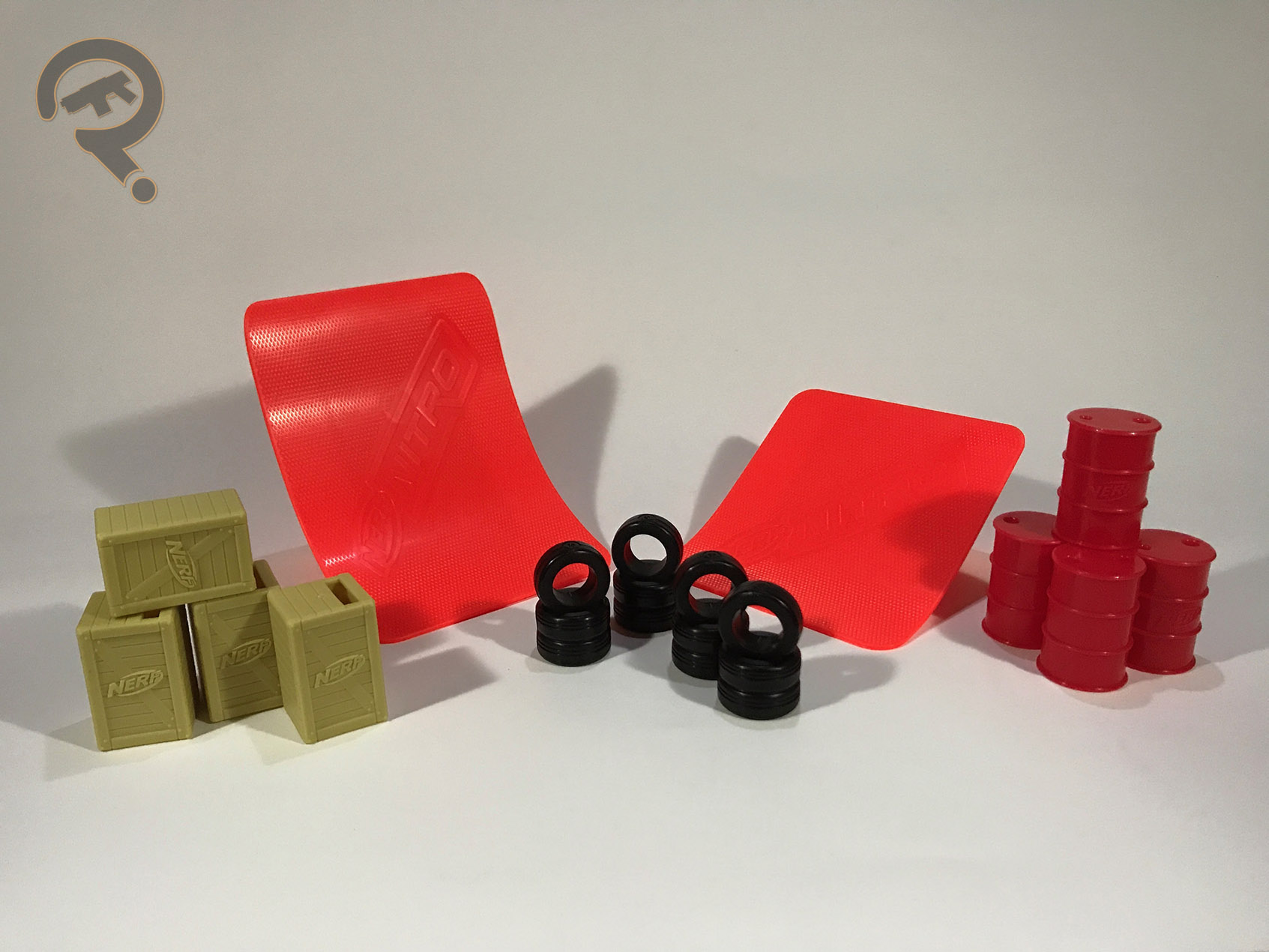
The Motofury Rapid Rally set was released in 2017 as the flagship of the Nerf Nitro line of car launchers.  It uses a flywheel system to fire the foam cars, much like any of the numerous flywheel Nerf blasters, however, it only uses a single wheel as opposed to the pair of wheels seen in blasters.  I guess in a sense, you could say this is the Stryfe of the Nitro line, but the comparisons really stop after the use of flywheel propulsion.  As with all of the Nitro launchers, the underside of the launcher is flat and designed in such a way that prevents a car from being fired if its not on a flat surface.  At least, that’s the idea.  It’s not difficult at all to press in the rev switch on the bottom of the grip with one hand while holding the launcher with the other, although I’m not really sure why you would want to.  It should be pretty obvious that cars handle rolling along the ground much better than being unceremoniously chucked through the air.  Keeping its intended position in mind, the Motofury feels solid in the hand, or rather, on the floor.  This is the only of the Nitro launchers to use a detachable magazine to feed cars into the firing mechanism as well as the only electronic launcher.  It does feel a little weird getting prone on the floor in order to shoulder and aim the launcher as instructed, but there’s nothing stopping you from launching cars from a regular seated position.  Speaking of aiming, the Motofury features a flip up sight for maybe aiming, I guess.  It’s just a single sight with nothing else to align it with so it’s effectively useless, but you do feel a little like a sniper lining up a shot if you bother with the sight at all.  For the most part, launched cars travel pretty straight and at high enough velocity to be fun, but not enough that you’ll hurt anybody or damage anything.  One complaint I have with firing the cars is that there is a considerable delay between when the trigger is pulled and when the car actually exits the launcher.  For someone used to the quick, snappy response of Nerf blasters, this delay can seem like a misfire and pulling the trigger again before the first car has been launched can result in a jam fairly easily.  The MotoFury requires 4 AA batteries to work and comes with 9 cars in 3 styles, and a 9-car magazine.  Now that would be fine and dandy if it were just the launcher, but what makes this a set is the extras that come with it.  Included in the box are 4 red barrels, 4 crates, 4 tire stacks, a high jump ramp, and a long jump ramp.  The random obstacles are pretty plain.  You can set them up and crash cars into them and that’s about it.  The ramps, however, are quite fun as they dramatically affect the trajectory of cars that reach them.  As you can imagine, the long jump ramp makes the cars fly pretty far through the air and the high jump ramp gives them considerable height.

THE ME HALF OF THE EQUATION

This was an impulse buy for me.  I was at a local TRU with my boy Ethan looking for any of the newest wave of Nerf blasters.  I didn’t find any of them, but there was a sale specifically for Nitro products.  I was curious about the line and the extra 20% off was enough to get me to pick up the Motofury and I’m glad I did.  It’s not a Nerf blaster, but it’s a lot of fun.  I don’t see myself getting any more Nitro after this, so I don’t mind splurging just a little to get the top of the line.

The Blaster In Question #0016: Deploy CS-6

DEPLOY CS-6

N-STRIKE

This may come as a bit of a surprise to you but I love Nerf blasters.  Shocking, I know.  As such, I like to keep up with the Nerf community of fans, while perhaps not in person, but at least for news and updates.  If I have one problem with the Nerf community (sweeping generalization) it’s the seemingly arbitrary hatred most members have for certain blasters.  If you read my review of the Crossbolt, you probably picked up on some of that.  This week, I’ll be looking at another widely hated blaster, the Deploy CS-6.

THE BLASTER ITSELF

The Deploy CS-6 was released in 2010 in the N-Strike line, not Elite, just regular.  As with most clip-system blasters of that era, the internals are largely identical from one to the next.  The Deploy’s selling point was its unique collapsible design that allowed it to be stored or carried in its more compact “flashlight mode,” a design choice that I suspect was made in response to the growing hype surrounding the real world firearm, the FMG9 from Magpul.  In flashlight mode, there are only 2 controls.  The first is the on/off switch for the single tiny red LED which comprises the flashlight portion of the blaster.  The second control is the deploy button on the top side of the carry handle.  This is where it gets interesting.  Pressing the button causes the flashlight/magazine well portion of the blaster to swing down to the left, and the stock portion to shoot backward, exposing the grip and trigger.  This was very exciting for me the first time I saw it because, at the time, I was deeply invested in the game Mass Effect which features, among many other things, folding/collapsible guns.  Also, things that fold up are just cool.  That’s a fact.  It’s clear that the design of the Deploy was intended to be compact so some dimensions like the length of the stock feel a little small, but still perfectly usable.  The sideways-facing magazine is a little finicky and not quite as smooth to operate as the Raider CS-35 but it just takes a little practice.  The blaster can also still be used with the magazine well facing up although this does block the sights.  I only have 2 real complaints about the function of the blaster, the first being that said magazine well does not lock into the downward position, so running around with a big old drum magazine sticking out the side means it’s going to bounce quite a bit.  Second is just a problem inherent with the material, it creaks an awful lot, but with that many external moving parts, it’s not really surprising and is certainly not the deal breaker I’ve heard it described as.  For its time, the Deploy’s performance was respectable.  Nowadays, particularly since the launch of the Elite series, it doesn’t quite hold up.  Darts hit moderately hard at close range but quickly lose momentum and end up diving into the ground.  This probably isn’t helped by the ammo as clip-system blasters were still using Streamline darts.  Take all my complaints about Elite darts and cut the range back to a third and that’s Streamlines.  To be honest, I doubt you’d get much of a response from busting into your siblings room and blasting away with this.  It’s definitely an indoor blaster.  The Deploy comes packaged with a 6-round magazine, 6 Streamline darts, and a sling.

THE ME HALF OF THE EQUATION

The Deploy has its problems, that’s true.  But none of these are enough to make me say it’s a bad blaster.  In fact, back in my collegiate Humans vs Zombies days, this blaster saved my figurative life a number of times thanks to it’s folding design which meant it could be tucked into a backpack with relative ease.  So no, I don’t agree with the Nerf Community on this one.  If you really don’t like the Deploy, send it to me, don’t chop it up with an axe and blow up the remains.


The Blaster In Question #0015: Apollo XV-700

APOLLO XV-700

RIVAL

I don’t think there was ever a more anticipated Nerf release than there was for the 2015 debut of the Rival line of blasters.  The N-Strike Elite series was already considered to be the performance driven group of blasters with just a few gimmicks here and there.  Rival took that even further with entirely new hardware built from the ground up with zero gimmicks to provide what is likely the best out-of-the-box foam blaster performance available.  Today, I’ll be looking at one of the two premier blasters from the Rival line, the Apollo XV-700.  Let’s get right into it.

THE BLASTER ITSELF

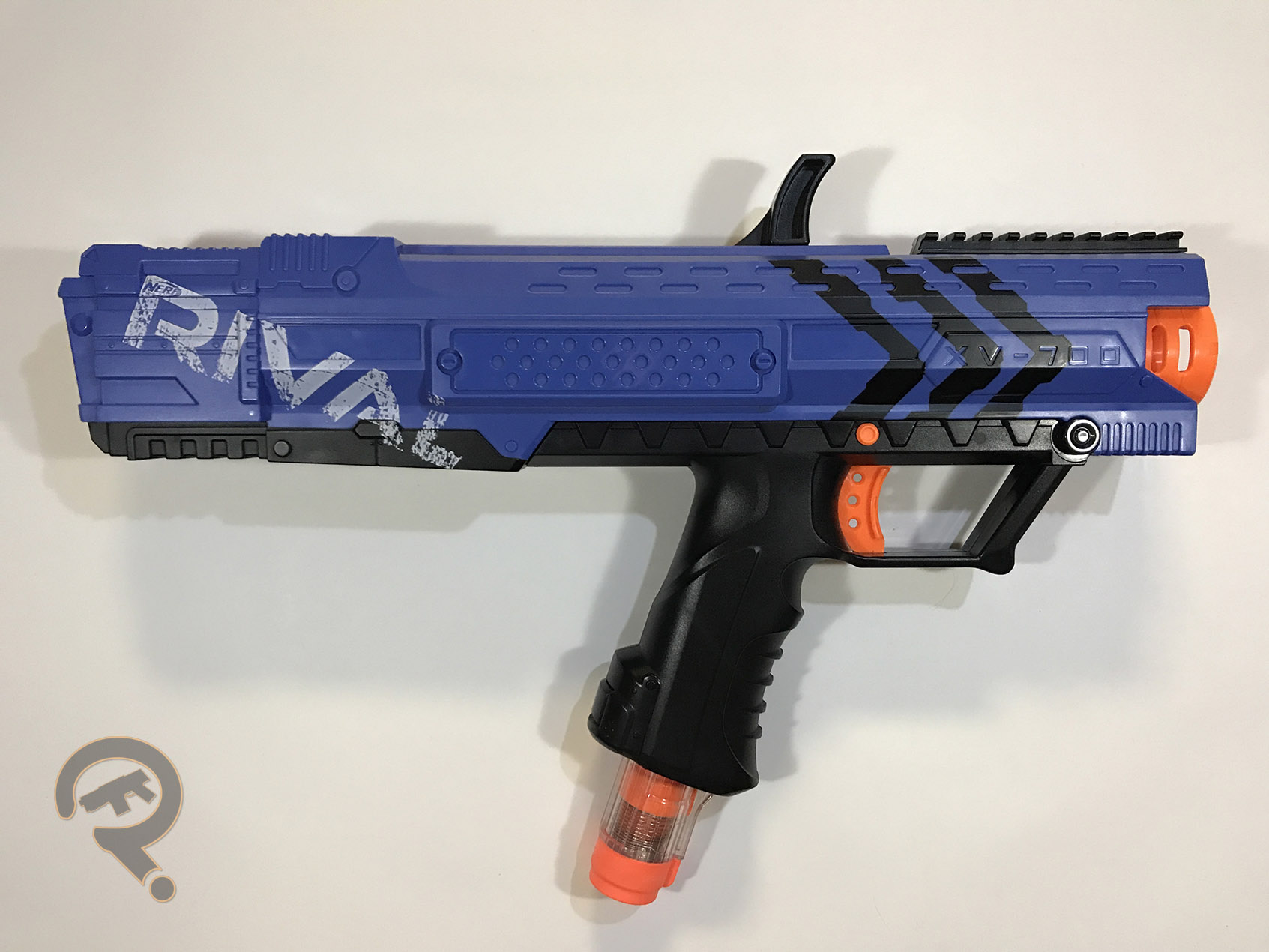
The Apollo hit retail in 2015 alongside the Zeus MXV-1200 to kick off the Rival brand.  I mentioned earlier that these blasters were entirely new and I meant entirely. They fire the golf-ball inspired High-Impact Rounds instead of traditional darts, which greatly contributes to their performance potential.  The magazines were also completely new, unsurprisingly, which in the case of the Apollo, meant we got the first magazine-fed Nerf blaster that loaded through the grip like a proper pistol.  Holding the Apollo in hand really gives away the fact that Nerf was really gearing these products toward an older demographic than their typical audience.  The grip is large and solidly made.  The priming handle on the top of the blaster requires a considerable amount of force to cycle it but it does make a very satisfying racking sound like cocking a shotgun, and it gives you a good idea of exactly how powerful the blaster is even before you fire it.  The Apollo has a short attachment rail at the front of the blaster for accessories, although it should be noted that it is a proprietary Rival rail and not the traditional Nerf rail found on dart- firing blasters.  The body of the Apollo extends a good ways behind the grip and can be effectively shouldered like a stock, which makes it odd in my opinion that the designers behind the blaster didn’t put one in.  That is one of my two very minor complaints about the Apollo, the other being that the priming handle prevents any kind of sighting along the top of the blaster unless you happen to have one of the awesome Rival Red Dot Sight attachments (sold separately) on hand.  Either way, these are petty complaints that do very little to sway my opinion of the blaster overall.  Being released alongside the Zeus, the Apollo definitely feels like it was intended as a sidearm and it can work as one of those if you should choose, but it can also hold its own as a primary if you feel like running it as one.  Reloading is super fast with the Rival magazines and with a little practice, you can fire off rounds in pretty rapid succession.  As with pretty much all Rival blasters, the Apollo is an outside blaster.  Shots travel fast and far and hit hard when they land.  Unless you have very very forgiving siblings, I would recommend not busting into their rooms and opening fire with this one.  It kinda speaks to the power of the blaster when Nerf feels the need to release full face masks for the Rival line.  The Apollo comes packaged with a 7-round magazine and 7 Rival High-Impact Rounds.

THE ME HALF OF THE EQUATION

I’ll be completely honest, I was expecting this review to be one of those counterintuitive moments where the blaster is awesome but the review is kinda dull cause it’s just me going on and on about how great the thing is.  Hopefully I didn’t bore you too badly.  When Rival first started hitting shelves, they were just about impossible to find anywhere in my area.  My boy Ethan managed to pick up a Zeus for me fairly early on, but the Apollo took me a good month or so of regular Target, TRU, and Walmart stops to find one.  The whole ordeal was a major pain, but I gotta say, it was super worth it.

The Blaster In Question #0014: Spider-Man Rapid Reload Blaster

RAPID-RELOAD BLASTER

SPIDER-MAN: HOMECOMING

Spider-gun, spider-gun, radioactive spider-gun. Ok, so it’s not radioactive, and the proper term is blaster, but it is indeed a Spider-Man blaster. Nerf and Hasbro in general have had several iterations over the years with varying mechanics and degrees of commercial success. Given the recent release of the Spider-Man: Homecoming film, I thought it was appropriate to review the tie-in Rapid-Reload Blaster, so let’s get right into it.

THE BLASTER ITSELF

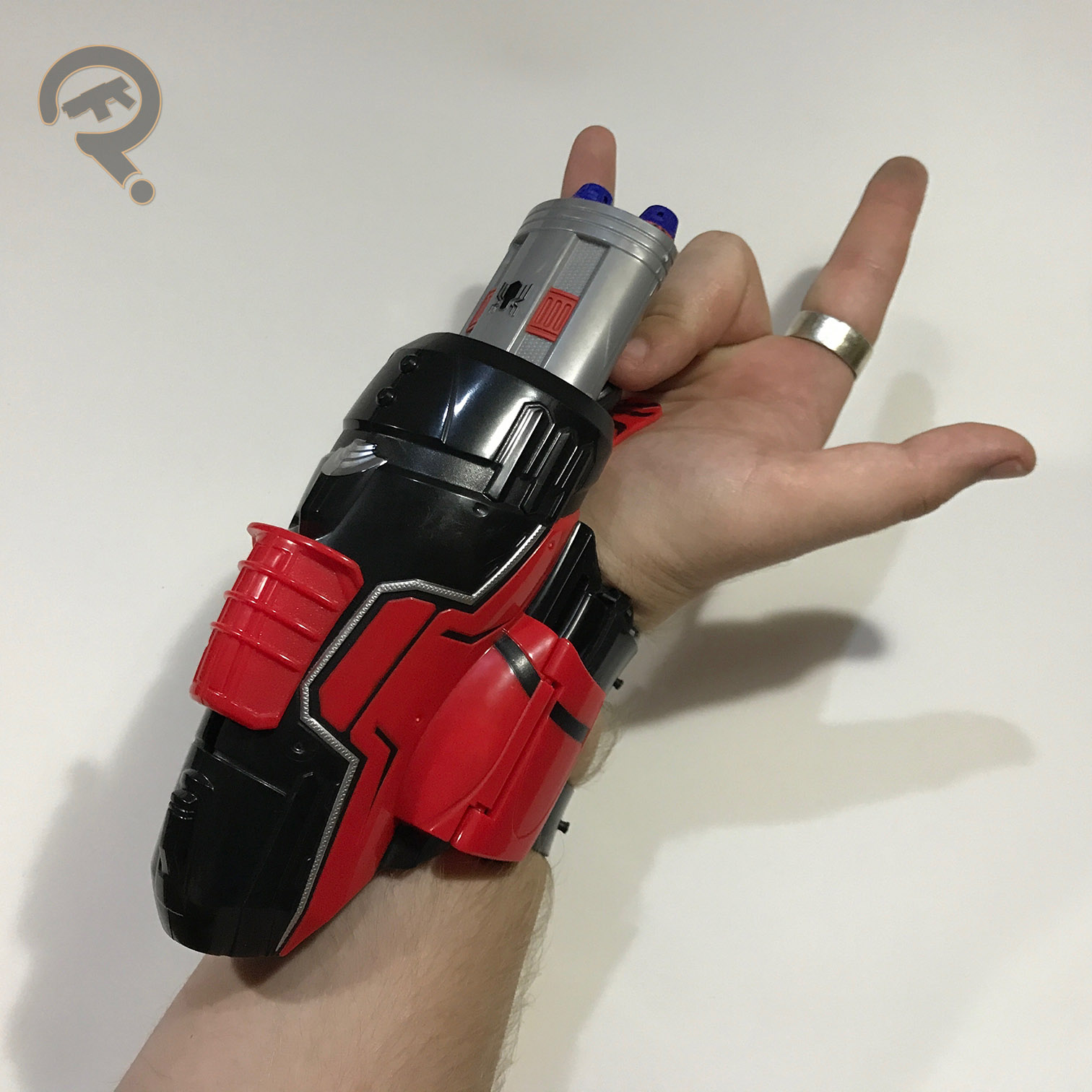
The Spider-Man: Homecoming Rapid-Reload Blaster was released in summer of 2017 to coincide with the July release of the movie. The exterior of the blaster is completely original and deco’d up to look like a part of Spider-Man’s costume, complete with straps for mounting to the user’s wrist. The internal mechanics are a mix of old and new, using a smart AR system arranged in a unique setup. The actual barrels that hold the darts are part of the detachable 3-round clips that let you reload quickly from the included clip holster, hence the name. The priming slide serves two purposes, first being to prime the blaster, obviously. It should be noted that the priming pull is very short, but I’ll get back to that in a bit. The slide also functions as the ejector for the clips by pushing it towards the front of the blaster. The blaster is one of the chunkier Spider-Man blasters I’m aware of, given the complexity of the internal mechanisms. The barrels protrude far enough forward that they cover the user’s palm, making grasping anything else while wearing the blaster clumsy and practically impossible for larger objects. This eliminates the use of this as a tactical backup blaster for Nerf wars and such, which was a popular use of the previous model of Spider-Man and Venom themed blasters. The rapid reload feature, while novel, doesn’t work quite as smoothly as I might like. The idea of jamming the blaster onto the clip holster to load a clip as the instructions suggest falls apart when you realize how much hand-eye coordination it must take to accomplish that effectively. As I mentioned earlier, the priming pull is exceptionally short, and fairly light, which means performance from the blaster is mediocre at best, and laughable at worst. Clunky form factor, awkward loading, and disappointing performance, that leaves just one thing left to consider. While this was clearly not designed as a competitive, performance driven blaster, it works quite well as a playing pretend kind of toy. Sure, you’re not gonna be sniping people from 50 feet, but you can still bust into your siblings’ rooms pretending to be Spider-Man and give them a sound pestering. I think that should be the main use of a blaster like this. All that matters is that it shoots something. The Spider-Man: Homecoming Rapid-Reload Blaster comes packaged with a clip holster, 2 3-round clips, and 6 funky Spider-Man darts, which even feature uniquely molded dart tips.

THE ME HALF OF THE EQUATION

You may have gathered that this isn’t my favorite blaster out there. It has plenty of issues, but that’s not to say I hate it either. It still has a decent potential for fun, just as long as you know exactly what type of play the blaster is suited for. Once I found that out, I began enjoying it a good deal more. Can it swing from a web? I don’t know. That’s a really odd question to ask. You’re weird for asking it. If I had to guess, though, probably not.


The Blaster In Question #0013: Dual-Strike

DUAL-STRIKE

N-STRIKE ELITE

Variety is the spice of life or something.  It keeps things interesting.  But what if you’re in the middle of a foam conflict and you find yourself thinking, “Something new and/or exciting better happen right now or I’m gonna lose it”?  The answer is simple.  Use the selector switch.  What does that mean?  Well, I’ll tell you.

THE BLASTER ITSELF

The Nerf Dual-Strike was released in 2016 as part of the N-Strike Elite series.  The mechanics present in the Dual-Strike are mostly reused with one big exception that I will get into later.  The blaster fires from one of two sets of three barrels linked via a smart AR system.  The interesting part is that one set of barrels fires standard Elite darts while the other fires Mega dartsOn top of that, you can manually control which type of ammo you want to use via the previously mentioned selector switch on the right side of the blaster.  The switch is quite clearly labeled so you know which setting it’s on.  It’s actually pretty impressive that the switch works as well as it does since it’s not uncommon for more complex smart AR setups to want to eject darts prematurely if there’s even the slightest increase in air pressure.  Since I’ve had the DS, I haven’t experienced any air interference from one barrel group to the other, so kudos to Nerf on the engineering behind that.  Now on the other hand, I do have a few mostly subjective complaints about the exterior of the blaster.  I’m not a fan of the style of priming handle on the DS.  I realize it’s simple and just works, but I really don’t like how it sticks way out the back of the blaster when it’s primed.  There are other Nerf blasters that use this same method of priming and I don’t like it on any of them either, all the way back to the Nitefinder.  I just wish there had been a more elegant solution because I know it’s possible.  Also, while the grip is mostly fine, the notch just below the trigger where your middle finger is supposed to sit is way too narrow for my hand, so instead of my finger getting a secure, comfortable hold on the blaster, I have one finger sitting on a random raised edge.  It would have been better if this had either been moved down slightly or just removed entirely.  Again, mostly just my personal preferences, but I figure you must at least slightly value my opinions since you’re most of the way through this post, and if you are, I appreciate that.  There’s also a single attachment rail on the top of the blaster.  As far as functionality is concerned, at it’s most basic, the DS is a more complicated than usual 6-shot pistol which is pretty oddly proportioned to boot.   The Elite darts fly reasonably far and hit as hard as you’d expect a blaster in the Elite series to hit.  The Mega darts, however, don’t have the power behind them that they would have in a dedicated Mega blaster, so shots leave just a little to be desired.  Overall, I’d say the DS is best suited to indoor use for those times when you can’t decide just how mean you want to be to your younger siblings.  The Dual-Strike comes packaged with 3 Elite darts and 3 Mega darts.

THE ME HALF OF THE EQUATION

The Dual-Strike is one of those kind of hard to place blasters.  It felt more like a proof of concept rather than a product made to fill a niche in the market.  That being said, it’s plenty of fun for just messing around.  I just see the idea behind it having more potential than the final product we got in the end.  Add that to all this switch and DS talk and I feel like I’m writing up a Nintendo press release.

The Blaster In Question #0012: Rey Jakku Blaster

REY JAKKU BLASTER

STAR WARS

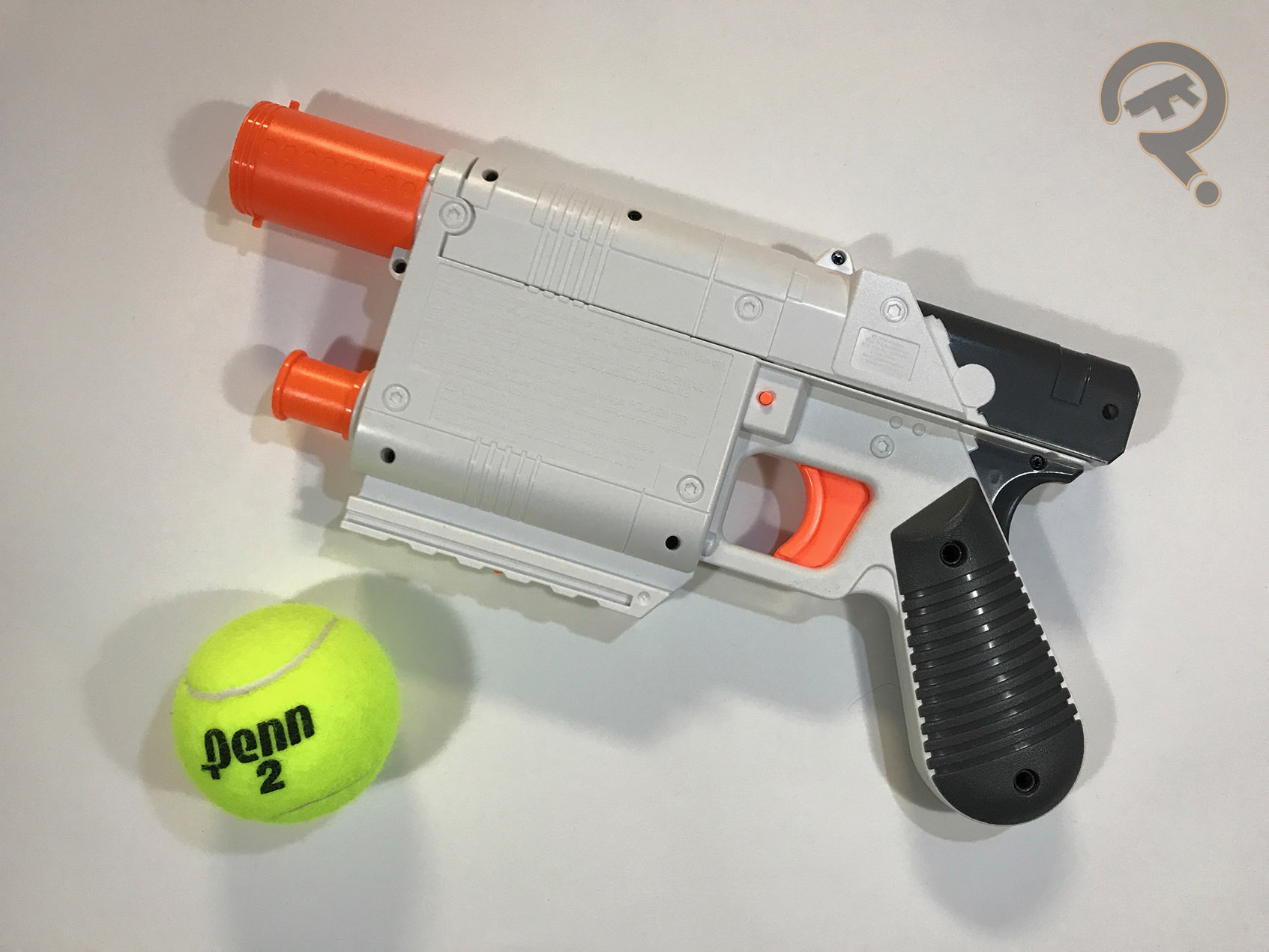
Why does everyone want to go back to Jakku?  It does’t make sense to me, especially in regards to today’s review.  Yes, Rey is from Jakku, and yes, she uses this blaster, but she never has the blaster ON Jakku.  Why is it named the Rey Jakku Blaster, then?  Beats me, but let’s get past that and take a look at the thing.

THE BLASTER ITSELF

The Rey Jakku Blaster was released in 2016 as a tie-in to the release of Star Wars Episode VII: The Force Awakens.  The shell of the blaster is completely original but the internals are identical to the Han Solo Blaster which was released at the same time.  Both of these blaster, in turn, are largely the same as the Mega series Magnus, just chambered for standard Elite darts and holding 4 rounds instead of 3.  Due to it being a licensed product, it is entirely devoid of any Nerf branding aside from a mention on the box, opting for the Star Wars logo as well as the crest of the rebel alliance.  The blaster is based off of the NN-14 blaster that Rey receives from Han on Takodana, AFTER they have fled Jakku.  The toy is substantially larger than the blaster in the film and, sadly, is not chrome but simply white.  Additionally, there is a sizable grey boxy part that sticks out the back of the Nerf blaster that is not present on the original from the film.  I understand that it needs to be there in order to house the internal mechanism, but it does alter the form factor quite a bit from that of its inspiration.  It seems like the proportions as a whole had a rough time being translated to a functional Nerf blaster.  Even the grip feels oddly oversized.  It’s not terrible, but it definitely doesn’t help, especially with such pronounced edges along the profile.  I’m also not sure why, but there’s an attachment rail on the underside of the blaster if you really wanted to accessorize, I guess.  Functionally, the blaster works just fine.  In fact, I might say it feels better to operate than the Magnus because the loading port on the RJB is long enough to fit a dart without having to bend it or load it at an angle.  The prime is also a good bit smoother than that of the Magnus, but this may be because of the severely weaker spring.  As such, operation is fine, but performance is pretty flaccid.  This shouldn’t be surprising since Nerf needs to keep its core products competitive, but it’s still a little disappointing.  The range from the RJB is laughably short if you see it fired outside, but even indoors, it’ll hit the floor about 10 feet short of a target across the room.  It’s fun for plinking and playing pretend, but unfortunately not much beyond that.  The RJB comes packaged with 4 blue Star Wars branded Elite darts that have transparent tips which is kinda cool.

THE ME HALF OF THE EQUATION

I don’t know if this has come across, but I have quite an interest in weapon design.  After seeing The Force Awakens, I do remember liking the little silver pistol that Rey has and thinking it would be easy to throw together my own prop version.  Then Nerf came along and handled it for me.  Sure, it’s not perfect, but I enjoy it, mainly for the novelty of having a Star Wars gun that actually shoots, and sometimes that’s all you need.

The Blaster In Question #0011: Crossbolt

CROSSBOLT

N-STRIKE ELITE

I’ve mentioned before that the vast majority of the bow and crossbow type Nerf blasters fall under the Rebelle series.  Every so often, however, one of the other lines will get a bow of some sort, and that is the case for this week’s blaster, the Crossbolt.  This blaster in particular also fits into the category of blasters that I greatly enjoy but is fairly widely disliked by other Nerfers.  I can maybe understand some of the more common complaints, but not enough for it to ruin the blaster for me.  I’ll get to that in a little bit.  Let’s take a look at the blaster.

THE BLASTER ITSELF

The Crossbolt was released in 2015 as part of the N-Strike Elite series.  It is a magazine-fed, elastic powered crossbow type blaster, which makes it very unique among Elite blasters as there are no other crossbows or “stringer” blasters in the line.  Additionally, it is one of the only two blasters to feature a bullpup configuration (firing mechanism behind the trigger) along with the Rayven.  Aside from this, the blaster is entirely original.  The main 3 of the aforementioned complaints about the Crossbolt focus around the ergonomics of the blaster.  The first issue concerns the bow arms protruding into the path one’s hand might take traveling from a forward grip to the priming slide at the top of the blaster.  While this is admittedly a hurdle few other blasters have, a simple twist of the firing-hand wrist solves the problem quite nicely.  This is also achieved without any of the straight up goofy flailing and fumbling I’ve seen some people do while trying to illustrate that plastic is solid and hands can’t go through it.  The second issue it the magazine release.  This, I can understand a little more because it is true that the placement and style of the magazine release make it fairly easy to accidentally bump the mag so that it falls out of the blaster.  I’ve even found that the release button doesn’t necessarily need to be pressed to cause the magazine to come loose.  The conclusion I came to was that the back of the blaster is not, in fact, a stock and that the blaster is not intended to be shouldered, a theory i felt was supported by how hard it is to line up the sights if it’s shouldered.  Could Nerf have designed it better to avoid this problem?  Yes, but it’s really the kind of problem you learn to avoid pretty quickly, so it’s still not a deal breaker.  Lastly, a lot of grown-up Nerfers like myself (but not including myself in this instance) complained that the dimensions of the thumb-hole grip were cramped and left parts of the blaster digging into their hands and/or wrists.  This, I absolutely don’t get.  Maybe I have weirdly perfect Crossbolt hands.  Either way, I’ve had zero problems with the grip and actually find it quite comfortable for such a compact blaster.  As I said, the Crossbolt features some fairly basic sights along the top as well as not one, but two jam access doors due to the slightly more complex internal structure of the blaster.  There is also an attachment rail on the underside of the barrel for accessories.  As with other stringer blasters, firing the Crossbolt is very quiet compared to an air plunger blaster, although priming each shot does make a good bit of noise as there are plenty of catches and latches along the stroke.  The string in the Crossbolt seems to have a noticeable amount more tension than with other stringer blasters and this definitely shows in performance as darts fly far and fast, hitting with good, solid impact, making this more of an outdoor blaster.  The Crossbolt comes packaged with a 12-round magazine and 12 Elite darts.

THE ME HALF OF THE EQUATION

I felt it was important to highlight the fact that this is a really fun, unique blaster because I remember, after it came out, seeing reviews with goofballs smacking their hands into the bow arms intentionally in an attempt to make their point like a cheesy infomercial.  I wouldn’t say it’s my favorite blaster, but it is entertaining in its own right, and entirely undeserving of the bad wrap it’s gotten over the years.

The Blaster In Question #0010: Stryfe

STRYFE

N-STRIKE ELITE

If you’re a regular Nerf-er, you probably looked at the title of this weeks review and thought “what could this chuckle-head possibly have to say about the Stryfe that hasn’t already been said?”  The answer is this: the Stryfe is vanilla ice cream.  Feel free to quote me on that. Lost?  That’s ok.  Stick around and I’ll explain it to you.

THE BLASTER ITSELF

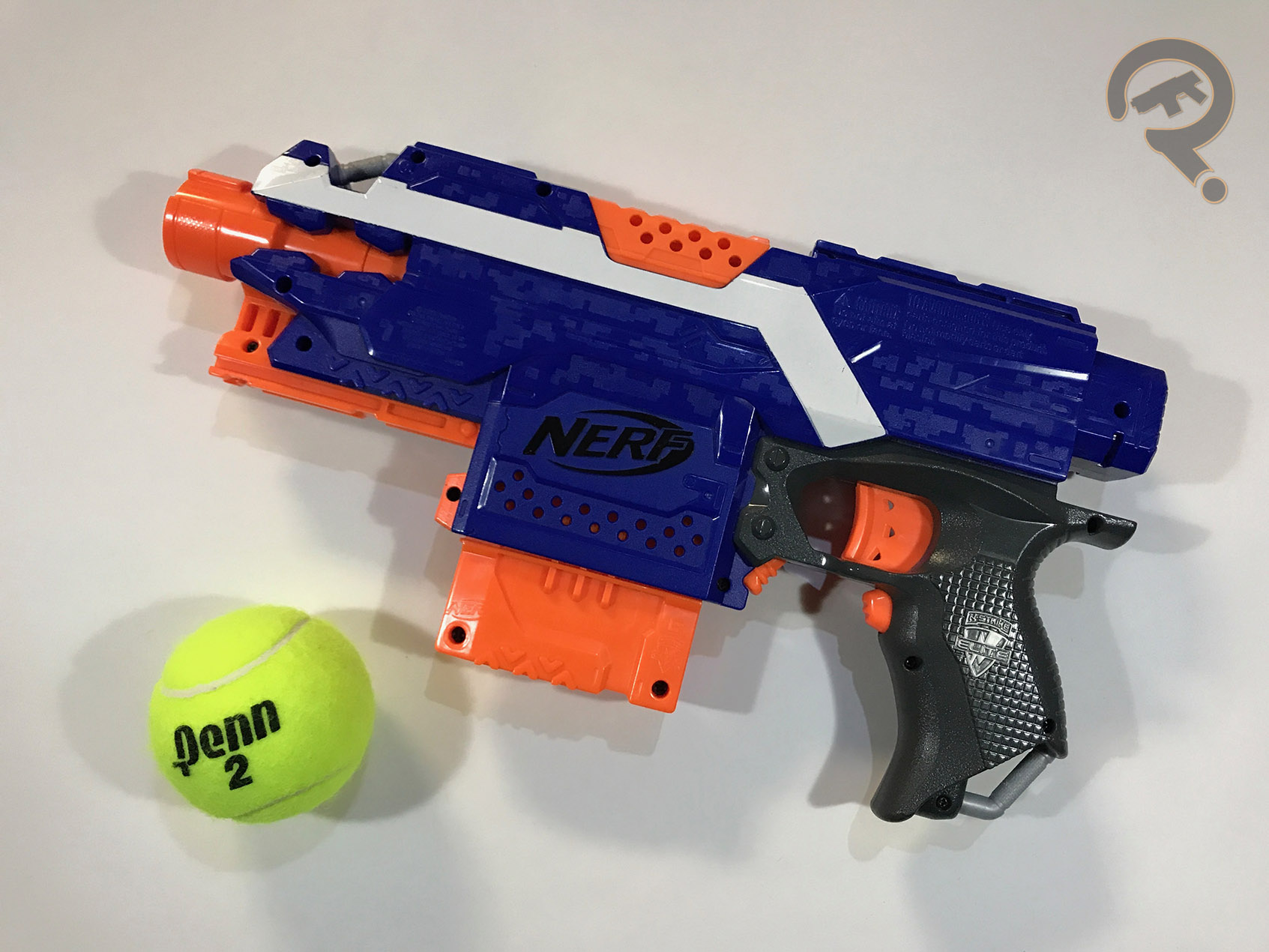
The Stryfe was released in 2013 as part of the N-Strike Elite series, which is Nerf’s core product line.  It is an electronic, semi-automatic, magazine-fed, flywheel blaster, much like the Rayven before it.  Really the only functional difference between the Stryfe and the Rayven is the position of the magazine.  Now, allow me to explain the vanilla ice cream.  The Stryfe is really nothing new (especially at time of writing this).  It doesn’t offer any huge breakthroughs in dart blaster tech.  Out of the box, it’s not a game-changer by any stretch of the imagination.  In this sense, it’s kind of plain, vanilla, if you will.  Now, this is not to say it’s bad either.  Vanilla is still a tasty flavor, and as such, the Stryfe is a perfectly fine blaster.  The grip is comfortable in-hand, magazines can be changed out quickly and easily and it only takes a couple seconds to rev up before firing.  Once revved up, darts fly pretty well and hit with some considerable force, just so long as it has fresh batteries.  Simple and mostly functional, but it doesn’t stand out in any real way, in fact, without some light modification, there’s a mechanical lock that prevents the trigger from being pulled if there isn’t a dart loaded and this lock doesn’t always work correctly.  The result can be a fully loaded blaster that refuses to fire, but this starts to get into where the Stryfe really shines.  I would say, tasty as it is, relatively few people eat vanilla ice cream entirely on its own.  This applies to the Stryfe as well.  While the blaster is serviceable out-of-the-box, the potential for modification is monumental and allows just about anyone to get in on it.  The Stryfe features one attachment rail on the top of the blaster and one on the underside of the barrel.  Additionally, the muzzle sports a barrel attachment lug, and there’s a connector to attach a stock as well.  When it was released, there were a handful or so attachments that could be fitted to the Stryfe and that number has increased many fold thanks, in no small part, to the launch of the Modulus line.  Throw some sprinkles on that ice cream.  Of course, these are all external modifications only and don’t really add to the basic performance of the Stryfe, but what if you’re looking for a more serious upgrade?  If you fancy yourself handy with a soldering iron, there’s no shortage of tutorials out there on how to rewire a Stryfe to increase voltage, swap out switches, use rechargeable LiPo batteries and so on.  Now you’re looking at a decent little sundae with hot fudge or whipped cream or whatever, but there’s even more than that.  Thanks to companies like Worker and a slew of others, there is a growing market for 3rd party modification kits, many of which are geared specifically for the Stryfe and they can get pretty in depth.  If you’re looking to dress a Stryfe up like real-steel firearm or replace the flywheels to rifle the darts as you fire them, there are kits for just about anything.  Now you’ve gone and stuck a brownie in with the ice cream.  A regular, unmodified Stryfe requires 4 AA batteries and comes packaged with a 6-round magazine and 6 Elite darts.

THE ME HALF OF THE EQUATION

After all that talking-up of the potential modification options for the Stryfe, it may be a little surprising to know that I’ve only ever modified them to the point of removing that irritating lock.  Maybe if I had more free time and money to spend on kits, I might have gotten more involved, but given the assortment of stuff available, I think it is more a question of when I get into more serious mods rather that if.  And for the record, I totally eat vanilla by itself.


The Blaster In Question #0009: Fair Fortune Crossbow

FAIR FORTUNE CROSSBOW

REBELLE (CHARMED)

If there’s one thing the Rebelle line can’t get enough of, it’s bows.  Early on in the series, these were mostly just regular air-chamber blasters dressed up to look and operate more like a conventional bow.  It took a couple releases before Nerf finally released an assortment of “stringer” elastic powered blasters that took another step toward proper bow mechanics.  Of course, with all these bows, you have to be able to distinguish them from each other otherwise the market gets flooded.  Today, we’ll be looking at one of the more visually unique bow (well, crossbow, but you understand) blasters from Rebelle, the Fair Fortune Crossbow.

THE BLASTER ITSELF

The Fair Fortune Crossbow was released in 2014 as part of the Charmed subset of Rebelle blasters.  It uses the same elastic chord system that first appeared on the Rebelle Diamodista, except instead of being a single shot blaster, the FFC features a 6 round rotating cylinder.  Given the unique aesthetics of the blaster, it shouldn’t be a surprise that all the hardware is original.  The ornateness of the faux filigree paired with the unusual upholstered patterning on the grip and slide gives the blaster a feel very reminiscent of something from the Bayonetta video game series, something I am rather fond of.  This point is further driven home when you attach the included charm bracelet (hence the Charmed moniker) to the blaster, adding a little bit of sparkle accompanied by a satisfying jingling sound.  The bracelets in particular surprised me.  When I initially heard about the upcoming release of this line, I thought it sounded gimmicky and pointless, and I guess I was kinda right.  However, the bracelets themselves are metal and so have a decent heft to them.  Additionally, the charms on each of the bracelets (which are all unique to their specific blaster) are well designed and eye-catching.  The one problem with the bracelets is their size.  I have two much younger sisters, and even they struggled getting the bracelets around their wrists.  Alright, enough about that, back to the blaster.  The grip on the FFC is a little odd.  First of all, it’s severely inclined, almost parallel with the body of the blaster.  Second, it has a loop for your middle finger just below the trigger, so only very specific ways of holding it are comfortable.  Once you’ve worked out how to hold the darn thing, it feels pretty good in the hand.  The aforementioned upholstery-like texture provide a decent amount of traction.  The plastic that surrounds the cylinder is a little on the thin side, but it’s not vital to the structure of the blaster so it’s fine.  The FFC has no sights of any kind, and I normally wouldn’t bother talking about what the blaster doesn’t  have, but the priming slide sticks up enough on the top of the blaster that it actually obscures your view, so it’s worth noting.  Because it uses the elastic to fire darts as opposed to an air plunger, the blaster is very quiet when firing.  It hits a little on the soft side of Nerf blasters and, in my experience, it seems like standard Rebelle and Elite darts are more prone to swerving than when fired from a more traditional blaster.  Taking these things into account, the FFC is definitely an indoor blaster, especially if you’re particularly attached to the collectible Rebelle darts that come packaged.

THE ME HALF OF THE EQUATION

I think this blaster is a good example of one that, while it doesn’t necessarily perform terribly well in comparison to others, is a lot of fun despite it’s shortcomings.  Personally, what attracts me to a blaster is often how easily I can fit it in with a particular pretend-play and the FFC has a lot of potential in this regard.  Whenever I pick it up, I can very easily form a story around it, and admittedly, this has occasionally included playing “Fly Me to the Moon (Climax Remix)” while making a number of stylish poses.